
The Grid’s Hidden Language: Decoding European Power Standards

What Actually Plugs Into What
You care about this section because nothing kills a trip faster than realizing your devices don’t work and you’re standing in a foreign apartment at midnight. The mechanism is simple: Europe doesn’t use one plug standard. It uses six. Type C is the two-round-pin plug you see everywhere, the default. Type E and F look identical at first glance but E has holes, F has clips. Type G is the British three-rectangular-pin design. Type J is Swiss only. Type L is the Italian three-round-pin in a line. Most travelers pack one adapter and wonder why it fails.
The real trap isn’t complexity. It’s that you’ll encounter two or three different plugs in a single country. France uses C and E. Italy uses C and L. Germany uses C and F. A single universal adapter won’t work everywhere because some sockets physically reject the wrong prong shape. The solution: buy country-specific adapters for each nation you visit, not a multi-plug brick that works nowhere perfectly.
Voltage Is Not Your Device’s Problem, It’s Your Device’s Design
Physics terms this impedance matching, but for power travel it’s really about transformation. Your device either handles 220-240V or it doesn’t. Most modern chargers, laptops, and phone power supplies print “100-240V” on the back. That’s the input range. They auto-detect and convert internally. Your 2000-watt hair dryer doesn’t have this label. It’s voltage-specific and will burn out in seconds on 240V from a European outlet.
The lazy advice says “get a voltage converter.” Wrong. Converters for high-wattage devices are bulky, expensive, and create fire risk. Instead, ship dual-voltage versions of devices you need. Bring a dual-voltage hair dryer or razor. Leave the single-voltage one home. For anything not marked 100-240V, assume it dies on European current and don’t pack it.
The Universal Adapter Illusion: Why “One Size Fits All” Fails

Grounded Outlets Versus Ungrounded Design
You want one adapter that works everywhere because buying multiple adapters feels like failure. The mechanism is this: Europe’s electrical safety evolved differently than North America’s, and that difference is written into the physical shape of every outlet. Most of continental Europe uses grounded outlets (Type C, E, F) with earth pins as standard. Britain, Ireland, and Cyprus use Type G with three rectangular pins. Switzerland uses Type J. These aren’t interchangeable by design, not accident.

Ungrounded adapters, which only convert the two round holes, work on some older outlets but leave you without ground protection on surge-prone devices. A laptop charger, phone battery, or camera might function on an ungrounded adapter for months before a voltage spike during a thunderstorm or grid fluctuation destroys the internal components. The ground pin isn’t cosmetic. It’s the difference between absorbing electrical faults harmlessly and sending them through your device’s circuit board. If you’re carrying sensitive electronics across multiple countries, you need country-specific grounded adapters, not one universal converter that handles the two hot and neutral lines.
Surge Protection Gaps In Budget Adapters
The common advice says “just get a travel adapter” and move on. That’s incomplete. Cheap adapters lack surge suppression entirely, which means any voltage anomaly travels directly into your device. Europe’s grid is stable compared to many regions, but thunderstorms and construction work cause transient spikes regularly. When you plug a 500 naira laptop charger into a sketchy adapter during a storm in Berlin, you’re not protected. The adapter is a passive mechanical converter, not a filter.
Real surge protection requires MOV (metal oxide varistor) components that absorb voltage spikes before they reach your device. Budget travel adapters skip this entirely to hit a lower price point. Spend the extra money on an adapter with integrated surge suppression or, better, carry a small power strip with surge protection and plug all your devices into that single grounded outlet. This consolidates your risk into one tested component instead of distributing it across five different cheap adapters that fail independently. Test the surge-protected strip at the outlet before plugging anything in.
The “Less Is More” Mandate For Carry On Packing

Minimalist Tech Prioritizes Multi Voltage Devices
You want to avoid the shame of asking a hostel staff member for an adapter at 11 PM. But the real mechanism is this: every device you pack is weight and bulk you’re physically moving through airports and between hotels. The constraint forces clarity. Multi-voltage devices run on 100-240V input, meaning they work in any European outlet without conversion. This isn’t a nice feature. It’s the filter that separates what you actually need from what you think you might need.

Your laptop charger, phone charger, and any modern USB power adapter already support multi-voltage. Check the fine print on the power brick. If it says 100-240V 50-60Hz, you’re covered across Europe without buying anything extra. A single universal power strip with multi-voltage support replaces three separate adapters and their cables. The math is simple: one item instead of four saves you a pound of luggage and eliminates decision fatigue at each border.
Leave Power Bricks, USB C Is The New Standard
Most advice tells you to pack multiple charging cables. This is outdated and wrong. USB-C became the EU’s mandatory charging standard, which means new devices across Europe use USB-C. Phones, tablets, and laptops increasingly ship with USB-C as the only port. You need fewer cables because one cable now works everywhere instead of Lightning plus micro-USB plus proprietary connectors.
Pack a single high-capacity USB-C power bank and one USB-C cable. Leave the USB-A to Lightning cable at home. Leave the 65W laptop brick at home if your device charges via USB-C at reasonable speed. A 25-30W USB-C charger the size of a deck of cards handles phone and tablet charging. This protocol cuts your power setup weight by 60 percent and eliminates the scramble for the right cable when your phone dies in Berlin.
The Travel Tech Power Pyramid: Prioritizing Your Charge

What Actually Needs Power
You’re worried you’ll look unprepared or miss something important, so you’re overthinking this. The mechanism is simple: most people pack tech because they own it, not because they’ll use it. Your phone handles 90 percent of what you’ll actually need on a trip. It navigates, communicates, captures images, reads, and entertains. Everything else is optional until proven otherwise.

An e-reader cuts your luggage weight by several pounds compared to physical books and runs for weeks on a single charge. A camera only matters if you shoot beyond phone capability, which most travelers don’t. Noise-canceling earbuds serve dual duty: audio and comfort during transit. These three devices justify their space. Everything beyond them requires honest assessment of actual use patterns, not just ownership.
Gear That Stays Home
The common advice here is hollow: “pack light” doesn’t explain what to cut. Most people pack laptops for trips under two weeks because they fear disconnection, not because work demands it. If your job requires real-time responses, you shouldn’t be traveling. If it doesn’t, the laptop wastes weight and mental space. Tablets occupy the worst middle ground: too large for pocket use, too limited for work, too expensive to risk.
Portable projectors, external hard drives, and backup camera gear belong in a category called “insurance items.” You might use them, but their weight-to-value ratio tanks when you calculate actual usage probability. Smart watches duplicate phone notifications and drain your attention further. Leave them. Evaluate each device by a single test: would the trip genuinely suffer without it, or would you just feel slightly anxious? Anxiety is not a valid packing reason. Cut anything that fails this test before you buy a charging cable for it.
The Local Grid Protocol: Adapting To European Outlets

Know Your Plug Type Before Landing
You’re anxious about this because you don’t want to waste money on adapters that don’t work. The real mechanism: Europe doesn’t use one plug standard. It uses multiple. Most of continental Europe runs Type C (two round pins) and Type E/F (two round pins plus grounding). The UK uses Type G (three rectangular pins). Switzerland uses Type J (three round pins in a triangle). This isn’t random—it’s the result of each country building electrical infrastructure independently before standardization efforts took hold.

Before you book your flight, identify which countries you’re visiting and which plug types they require. Then buy one adapter per type or a universal adapter that handles multiple standards. Don’t buy adapters at the airport. You’ll pay three times the price for the same product. Order online before departure and test it with a device in your home outlet first.
Finding Power Where It Actually Exists
The generic advice says European hotels have outlets everywhere. That’s incomplete. Hotels have outlets, but not always near where you need them. Airport lounges vary wildly in power availability. Train stations have charging stations but they’re often slow or occupied. Cafes in major cities (Paris, Berlin, Amsterdam) typically have outlets near seating areas, but staff won’t advertise this—you have to ask.
Your real power sources are accommodation first, then transportation hubs during layovers. Map out charging windows before your trip: charge devices fully before leaving your hotel, use airport time for top-ups, carry a portable battery for the gaps. The portable battery is the insurance policy that eliminates the need to hunt for outlets during sightseeing hours.
Beyond The Wall: Portable Power For Europe Packing List

Power Bank Capacity Vs Weight Trade Off
You want the power bank that makes you feel prepared without admitting you’re afraid of being stranded. Here’s the mechanism: portable batteries follow a weight-to-capacity curve that breaks at specific thresholds. Below 10,000 mAh, you’re carrying dead weight for a phone emergency. Above 20,000 mAh, you cross from pocket device to luggage item. The sweet spot depends on your actual charging needs, not your anxiety.
- 10,000 mAh (compact):Single full phone charge. Fits jacket pocket. Weighs 200-250 grams. Choose this if you charge nightly at hotels.
- 20,000 mAh (mid-range): Two full phone charges or one tablet charge. Fits backpack easily. Weighs 350-450 grams. Covers multi-day city exploration without power access.
- 25,000-30,000 mAh (high capacity): Extends to three phone charges or two tablets. Still carry-on legal. Weighs 600+ grams. Only worth it on 7-plus day trips with minimal charging infrastructure.
- USB-C PD capable models: Future-proofing. Powers laptops, tablets, phones from one device. Ten percent weight premium over basic models. Consolidates your charging cable count.
- Dual input (USB-C and Lightning): Fast charging compatibility across devices. Adds minimal weight or cost. Eliminates the need for separate Lightning power sources in your pack.

Most travelers overpack capacity because they don’t know their actual usage pattern. Europe has charging available everywhere: hotels, cafes, trains, airports. Calculate your real need: if you charge daily, skip the 30,000 mAh unit. If you’re on walking tours all day, 20,000 mAh covers you until evening.
Solar Chargers Reality Check
The consensus says solar chargers are travel freedom. The reality is harder. Solar chargers produce meaningful power only in direct sunlight, and meaningful means 5-10 watts on premium units under perfect conditions. Cloud cover cuts output to 20-30 percent. That’s not theoretical—it’s physics. Europe’s weather patterns, especially northern regions, make solar unreliable as a primary charging method.
Panel size matters more than marketing claims. A five-watt solar panel charges a phone in roughly six hours of unobstructed sun. Most ultralight travel panels are two to three watts, stretching that to 12-15 hours. You’re not buying emergency power. You’re buying supplementary trickle charge that works when conditions align. If you’re stationary at a beach or mountain camp for hours, it functions. In transit between cities, it doesn’t. Use solar as a backup topper-off on your main power bank, not as a charging solution itself.
The Smart Packing Conundrum: Chargers Vs. Cables
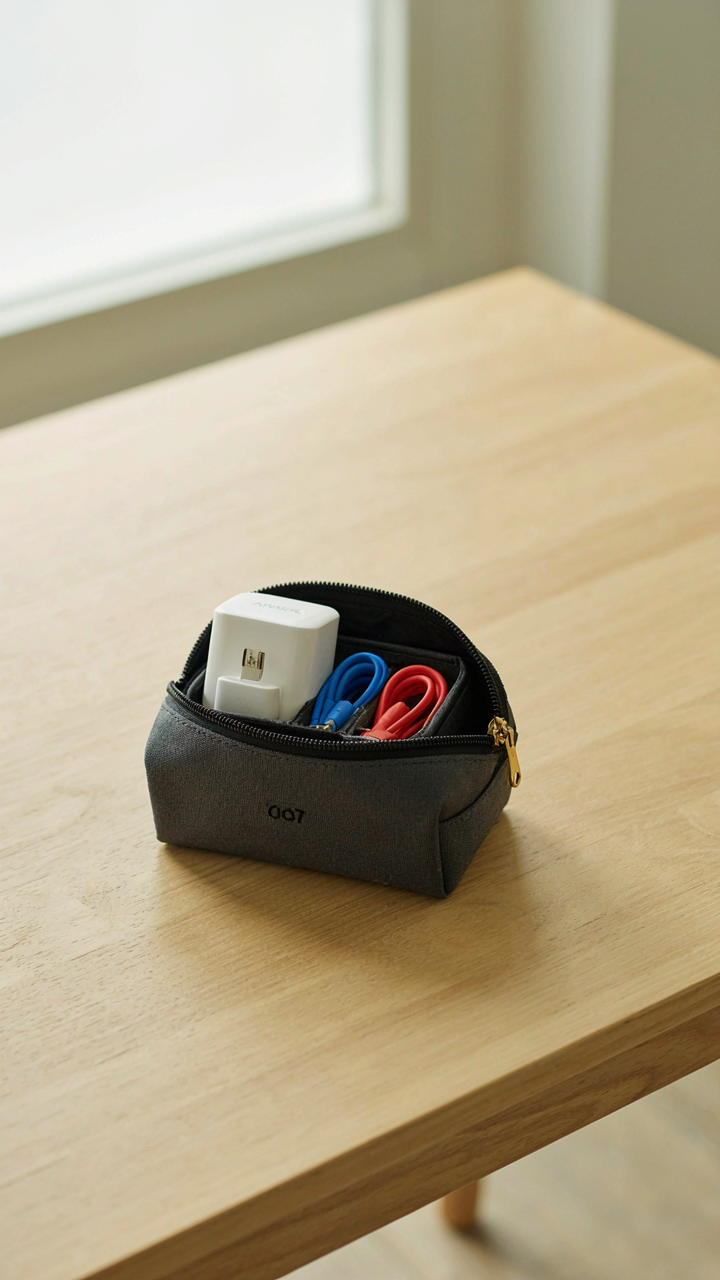
One High Wattage USB C Charger
You want to look like you have your life together, so you’re considering packing six chargers for six devices. The real mechanism here is redundancy theater. A single high-wattage USB-C power delivery charger (65W minimum) charges everything sequentially faster than multiple lower-wattage chargers charge things in parallel. Most modern laptops, phones, and tablets accept USB-C input. The math is simple: one charger weighs less, takes one outlet, and eliminates decision fatigue at midnight in a hostel.

The exception is older devices locked into proprietary connectors, which most travelers no longer carry. If you need to charge simultaneously, USB-C hubs with multiple ports solve the problem cheaper and lighter than multiple chargers. Your phone charges from that hub while your laptop charges from the main charger on a different outlet. European hostels and Airbnbs have outlets. The step: buy one Anker or Belkin 65W USB-C charger, verify it accepts 100-240V input, and test it with every device before departure.
Prevent Tangles And Damage In Transit
Cable management isn’t about aesthetics—it’s about survival rates. Cables fail from stress cycles: the repeated bending, crushing, and tension that happens when you shove a coiled cable into a backpack pocket a hundred times over two weeks. Tension creates micro-fractures at the connector base where the cable meets the plug. A cable organizer or simple cloth pouch prevents that mechanical damage. You’re not storing art. You’re storing components that need to survive pressure and movement without internal wire separation.
Use a slim cable pouch (Lowepro or Peak Design make reliable ones) that isolates each cable in its own compartment. Coil cables loosely with your fingers in an O shape, not tight coils that pinch the jacket. Keep the pouch in your backpack’s rigid section or an exterior pocket where it won’t live under your full weight. Don’t wrap cables around chargers—the connector gets kinked. Check cable integrity before departure and replace anything with visible damage to the outer jacket.
The Redundancy Paradox: Europe Must Haves For Backup Power

Systems Over Spares
You’re afraid of being stranded without power and looking foolish, so you pack three chargers instead of understanding what actually fails. Military logistics teaches us this: redundancy means different failure modes, not identical backups. One charger dies from a power surge. A second identical charger dies the same way. You need structural diversity—a system where no single point of failure kills all your options.

Build layers instead of duplicates. Your phone charger fails: you have a power bank. The power bank depletes: you have access to a wall outlet via adapter. The outlets don’t match: you already bought the right adapter. Each layer protects the one below it. This is resilience. Carrying two USB-C cables is not resilience. It’s just waste with a safety blanket attached.
Analog Wins When Digital Fails
When your devices die, the internet vanishes, or you lose a cable in transit, you pivot to what Europe already has everywhere: you buy locally. This isn’t a backup plan. This is the actual plan. Most Europeans use USB-C now. USB-A is standard. Micro-USB still exists in hotels. You can walk into a phone shop, supermarket, or train station kiosk and get a replacement cable for 5-15 euros within minutes.
Carry one premium cable per device type and zero spares. Lose it or break it: you replace it on-site. This saves weight, eliminates paranoia, and forces you to move through the place you’re visiting instead of staying in your room troubleshooting gear. Bring cash for local purchases. A 20-euro cable bought in Rome beats carrying a second cable from home that never gets used and adds dead weight to your bag.
Voltage Converters: The Overrated Travel Tech Accessory

When You Actually Need One
You want the converter because you fear breaking expensive gear. That fear is partly valid, but it’s pointing you at the wrong problem. Think of voltage like water pressure in plumbing: a device rated for 120V expects a certain force. Send it 220V without conversion, and the transformer inside burns out instantly. But most modern chargers handle both voltages already. You don’t need a converter for your phone, laptop, or tablet.

High-power appliances create the real risk. Hair dryers, electric kettles, and heated styling tools demand converters because they draw sustained current through resistive elements. These aren’t smart electronics with built-in voltage regulation. A 120V hair dryer running on 220V will overheat its coils and fail in seconds. If you’re bringing a high-wattage device from North America to Europe, you need step-down conversion. Check the device’s input label first. If it says 100-240V, you’re safe with just an adapter plug.
The Damage Threshold Nobody Names
Converters aren’t magic boxes that solve power mismatches perfectly, and pretending otherwise costs people money. This is an engineering constraint: converters reduce voltage through resistance or magnetic transformation, which generates heat as a byproduct. A cheap converter handling a hair dryer will get warm enough to smell. Run it for thirty minutes and you’re risking internal failure or fire in a hotel room.
The real mechanism is wattage capacity, not voltage. A 1600W hair dryer needs a converter rated for at least that load. Most travel converters max out at 50-100W before degrading. Converters also introduce latency with certain device types. If you’re charging a laptop while running a converter, the voltage regulation becomes unstable, potentially damaging the battery circuit. The protocol is simple: don’t bring high-wattage North American devices to Europe. Buy them there or go without. A converter is not your solution to this problem.
The Adaptable Traveler: Master Of The European Power Ecosystem

Stop Waiting For Perfect Conditions
You want this section because you’re afraid of being stranded without juice. The real mechanism is simple: Europe didn’t build its power infrastructure around your needs. Outlets vary by country. Voltage runs at 220-240V instead of your home’s 110V. Frequencies differ. The moment you accept this isn’t a problem to solve but a constraint to navigate, you shift from victim to operator.
Dependence kills adaptation. When you expect one universal solution, you panic at the first deviation. Self-sufficiency doesn’t mean carrying every adapter known to man. It means understanding the ecosystem you’re entering and building redundancy into your actual behavior, not just your bag. You know what you need to run. You know what Europe provides. The gap is where your strategy lives.
Inconvenience Builds Real Resourcefulness
This is an operational principle borrowed from military logistics: constraints force innovation. A soldier with unlimited supplies makes lazy decisions. A soldier with limited resources thinks three moves ahead. Your European power situation isn’t a limitation. It’s a filter that separates travelers who plan from travelers who panic.
Stop waiting for the hotel to have exactly your charger type at the front desk. Stop assuming a café’s USB port works. Stop treating a dead battery as a catastrophe instead of a predictable event you already solved. When you pack a small universal adapter, a portable battery rated for 220V input, and a second USB cable, you’ve eliminated the emergency. Now everything is just logistics. The inconvenience becomes invisible because you moved it from the trip to the preparation phase, where it costs almost nothing.
The True Bottleneck Isn’t Your Adapter; It’s Your Inflexible Mindset

Most travelers obsess over adapters when they should obsess over friction. You pack redundant cables you’ll never use. You buy expensive converters for devices that don’t matter. The real skill is deciding what you actually need before you leave, then committing to that decision. Pick your gear today. Test it all in your home outlet. Ship the rest. You don’t need options; you need clarity.