
Revitalize Your Ride Understanding Bluetooth FM Transmitters
What Is A Bluetooth FM Transmitter And How Does It Work?
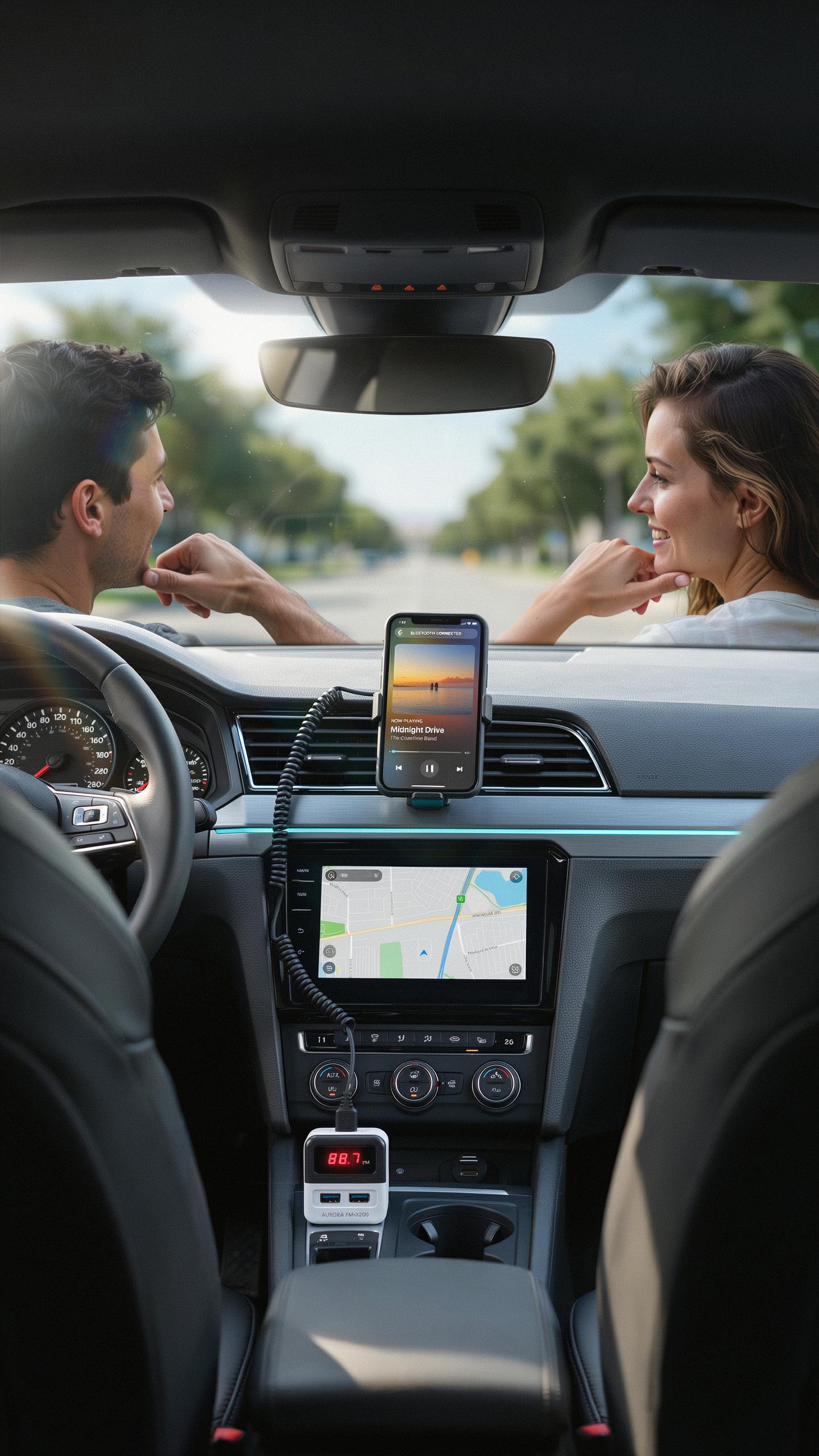
A Bluetooth FM transmitter is a device that receives audio from your phone or music player via Bluetooth wireless connection, then broadcasts that signal to an unused FM radio frequency in your car. Your car radio tunes to that frequency and plays the audio through your existing speakers. The device sits between your phone and your car’s audio system, converting a wireless digital signal into an analog FM broadcast your radio recognizes.
The transmitter contains a small radio transmitter chip that generates a weak FM signal. Your phone connects to the device wirelessly using Bluetooth technology. When you play music on your phone, it streams to the transmitter, which converts the audio into an FM signal. Your car radio picks up this signal just like it would a regular radio station. The range is typically 10 to 15 feet, making it functional only inside your vehicle.
Bridging The Gap: Why Older Cars Benefit From This Technology
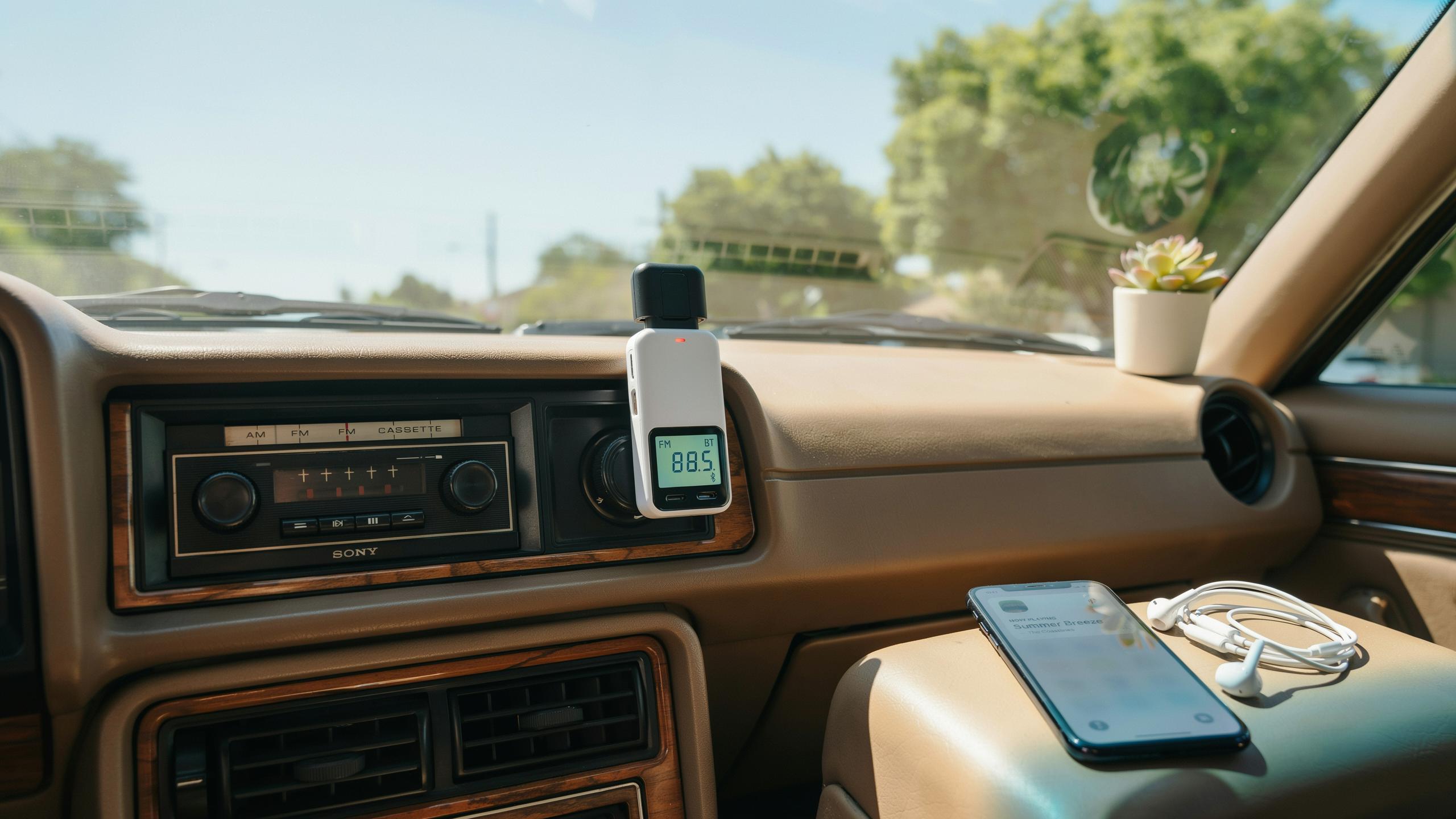
Older cars rarely include auxiliary input jacks or USB ports because those standards did not exist when the vehicles were manufactured. A Bluetooth FM transmitter solves this problem without requiring expensive head unit replacement or dashboard modifications. It works with your car’s existing factory radio, keeping your vehicle’s interior intact while adding modern streaming capability.
Most older cars have working FM radios but lack the inputs modern phones require. Bluetooth FM transmitters eliminate the need to buy new car audio equipment or deal with incompatible connection types. They cost between 20 and 50 dollars and install in seconds with no tools needed. Your original radio continues functioning normally, and you regain access to your phone’s music library, podcasts, and navigation audio through speakers already in your car.

Choosing The Right Car Bluetooth FM Transmitter For Your Needs
Key Features To Look For In A Bluetooth Transmitter
Transmitter range determines how far the signal travels from your device to your car radio. Most transmitters operate within 10 to 30 feet, which covers standard car interiors. Check the specifications before buying. Range varies by model and environmental interference. Walls, metal, and other electronics weaken the signal strength significantly.
Audio quality depends on the transmitter’s DAC (Digital to Analog Converter) and FM modulation quality. Cheaper transmitters produce audible hiss, static, or distortion during playback. Higher quality units minimize noise and deliver clearer sound at reasonable volume levels. Your listening experience suffers directly when you skip this specification.
Compatibility And Power Ensuring A Smooth Setup
Your car’s FM radio tuning range must match the transmitter’s broadcast frequency. Most transmitters in North America broadcast between 88.1 and 107.9 MHz, which aligns with standard FM radios. Some older vehicles have limited tuning ranges that exclude certain frequencies. Check your car’s manual to verify the full frequency range before purchasing any transmitter.

Power source options control convenience and reliability during daily use. Cigarette lighter adapters provide power but occupy that valuable socket for phone charging. USB or rechargeable battery models offer flexibility but require charging management. Wired connections to your car’s power system work best for permanent installations but demand technical skill or professional installation.
Installation Made Easy Setting Up Your Car FM Transmitter With Dual USB Ports
Step By Step Guide To Pairing Your Device
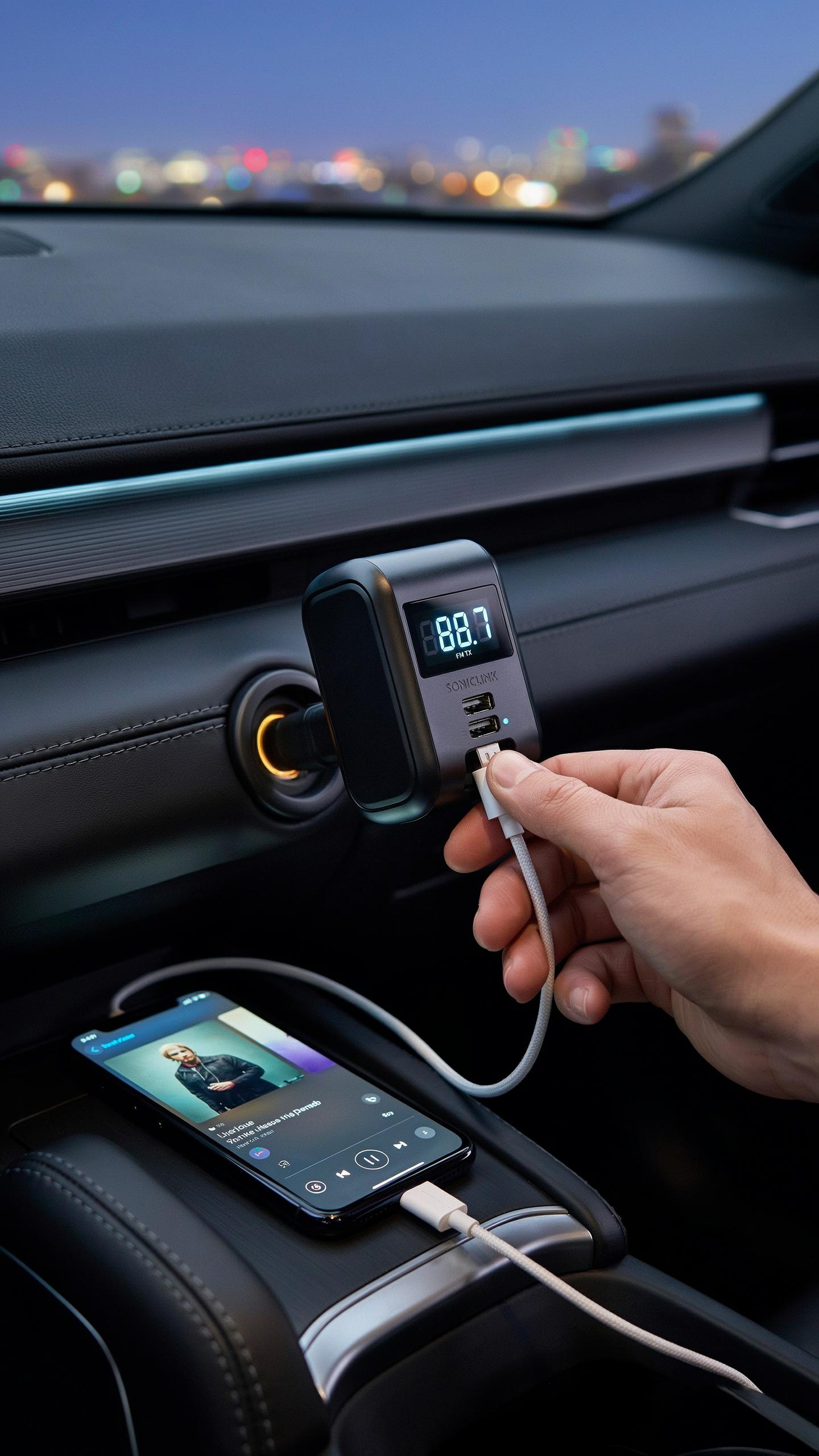
Power on your FM transmitter and locate the pairing button, typically found on the device face or side. Hold this button for 3 to 5 seconds until the LED indicator flashes blue, signaling Bluetooth pairing mode activation. Your transmitter becomes discoverable during this window. Open your phone’s Bluetooth settings, scan for available devices, and select the transmitter from the list that appears.
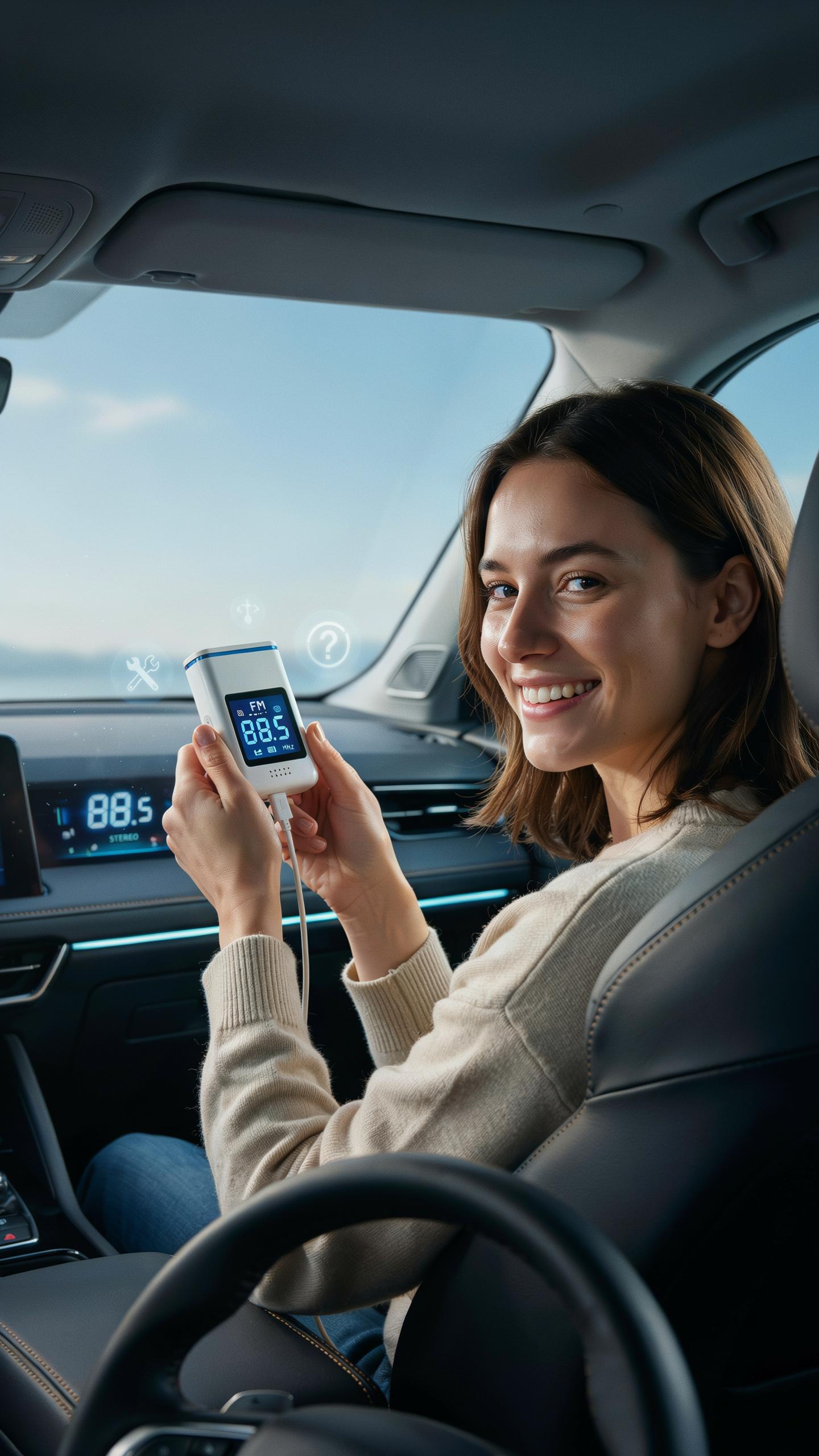
Once you select the transmitter, your phone initiates the connection handshake. The LED transitions from flashing blue to solid blue, confirming successful pairing. Your phone displays a connection confirmation message. Most transmitters remember paired devices, so reconnection happens automatically when you enter your car on subsequent trips. Complete the setup by tuning your car radio to the FM frequency displayed on the transmitter’s screen.
Even the most classic rides deserve a soundtrack that keeps pace with today’s adventures. Unlock new memories, one perfect song at a time.
Optimizing Sound Quality And Finding The Best FM Frequency
FM frequency selection directly impacts audio clarity. Scan your local radio dial to identify unused frequencies in your area. Most transmitters operate on 87.5 to 107.9 MHz. Choose a frequency with no active station broadcasting, as overlapping signals cause static and audio dropout. Test your selection by playing music through your phone and adjusting the transmitter’s frequency dial until interference disappears.

Audio quality depends on transmitter placement and cable routing. Position the transmitter close to your car’s antenna for optimal signal transmission. Avoid placing it near metal objects, as these create interference. If your transmitter includes a dual USB port, connect only one device at a time to prevent power distribution issues that degrade sound output. Test audio at various volume levels to confirm consistent performance.
Beyond Bluetooth Audio Additional Features And Functionality
USB Charging And Hands Free Calling Capabilities
Most Bluetooth FM transmitters include a USB port that charges your phone simultaneously while transmitting audio. This dual function eliminates the need for a separate car charger. The USB port typically provides 1 amp or 2 amp output, depending on the model. Your phone charges while you drive, solving the battery drain problem that occurs during long trips or constant navigation use.
Hands-free calling works through the transmitter’s built-in microphone. When a call arrives, the transmitter routes the call through your car speakers and captures your voice via the microphone. You accept or reject calls using button controls on the device or steering wheel controls if your car supports them. This setup keeps your hands on the wheel and eyes on the road during conversations.
Integrated Controls And Display Options
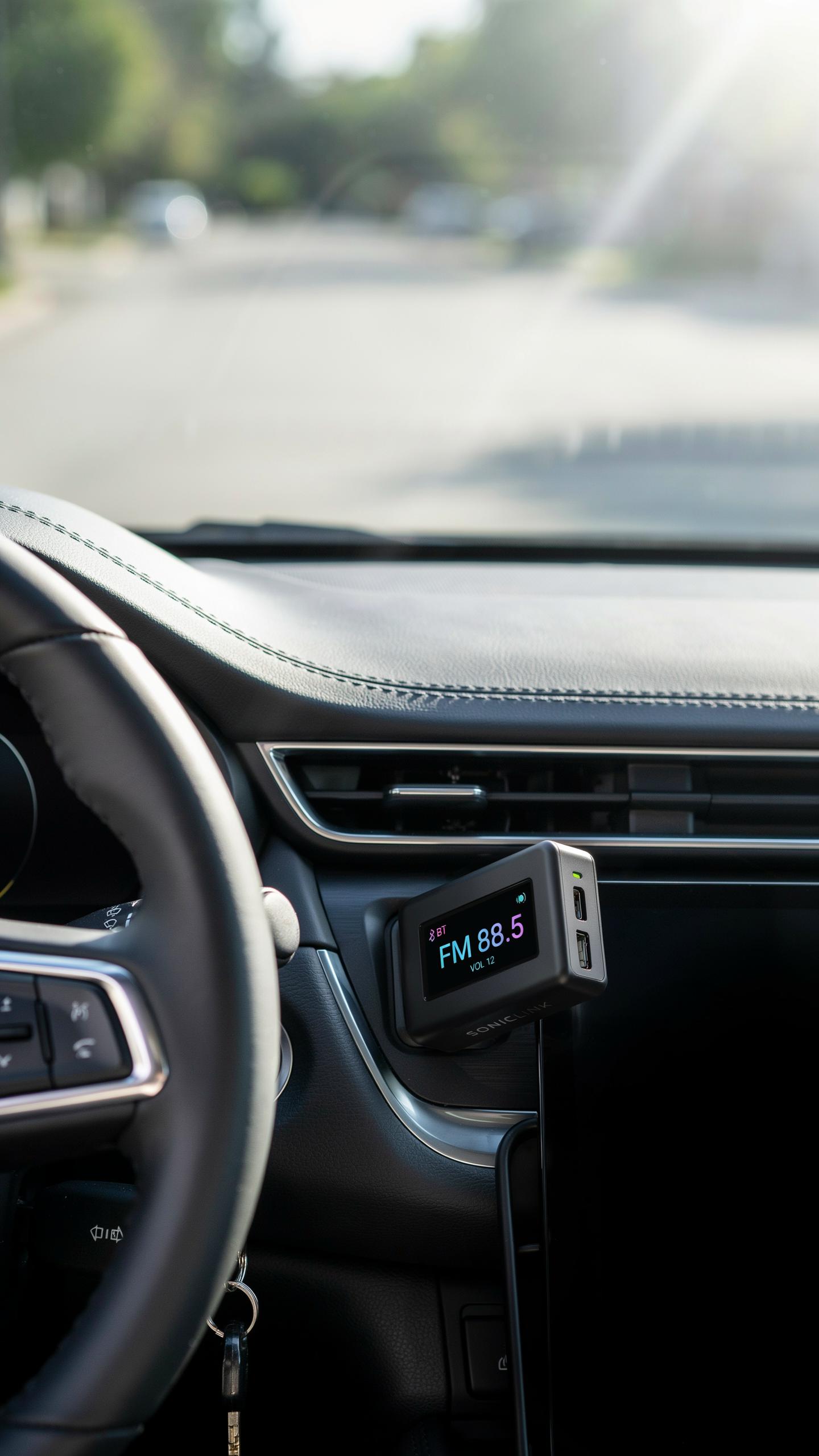
Bluetooth FM transmitters feature physical buttons for power, volume adjustment, and source selection. Most models include a small LED or LCD display showing the current FM frequency, battery level, or connection status. These displays range from basic single-color LEDs to small screens that show track information from your phone. Controls stay within reach on your steering wheel or dashboard mount.
Advanced models offer Bluetooth remote controls that let you manage playback without touching the transmitter. You can skip tracks, adjust volume, and answer calls from a detachable remote. This feature proves useful when your transmitter is mounted low on the dashboard or hidden behind your steering wheel. Quality and responsiveness of these controls vary significantly between budget and premium models.
Troubleshooting Common Issues With Your Digital Car FM Transmitter
Addressing Static And Interference Problems
Static occurs when your FM transmitter broadcasts on a frequency already in use by a nearby station. Your car radio picks up both signals simultaneously, creating audible noise. Check your transmitter’s frequency display and switch to an open channel. Scan your local FM band manually to find dead zones where stations don’t broadcast. Most transmitters operate between 88.1 and 107.9 MHz. Test each frequency for clarity before settling on one.
Interference also stems from electrical components in your vehicle. Ignition systems, alternators, and power windows generate electromagnetic noise that bleeds into FM signals. Move your transmitter away from the dashboard’s center console where wiring clusters exist. Keep the transmitter’s antenna fully extended and positioned toward the windshield. Reduce your transmitter’s power output if the device has a gain control setting. Lower output sometimes produces cleaner reception than maximum power in congested frequency environments.
Connectivity Drops And Pairing Glitches
Bluetooth connectivity drops happen when your phone moves out of range or obstacles block the signal. Most FM transmitters maintain reliable range up to thirty feet in open space. Inside vehicles, metal frames attenuate Bluetooth signals significantly. Keep your phone on the dashboard or center console rather than in a bag or pocket. Check that your transmitter’s Bluetooth is in pairing mode before attempting connection. Delete old pairings from your phone if you’ve connected multiple devices to the same transmitter previously.
Pairing glitches typically result from outdated transmitter firmware or incompatible phone settings. Reset your transmitter to factory defaults by holding the power button for ten to fifteen seconds. Restart your phone’s Bluetooth radio separately from the transmitter. Turn off both devices, wait thirty seconds, then power them back on in sequence. Ensure your phone’s Bluetooth setting shows the transmitter as a priority device. Some transmitters require you to manually select the correct audio output profile in your phone’s Bluetooth settings menu.
Maintaining Your Car USB And Bluetooth FM Transmitter For Longevity
Cleaning And Care Tips For Optimal Performance
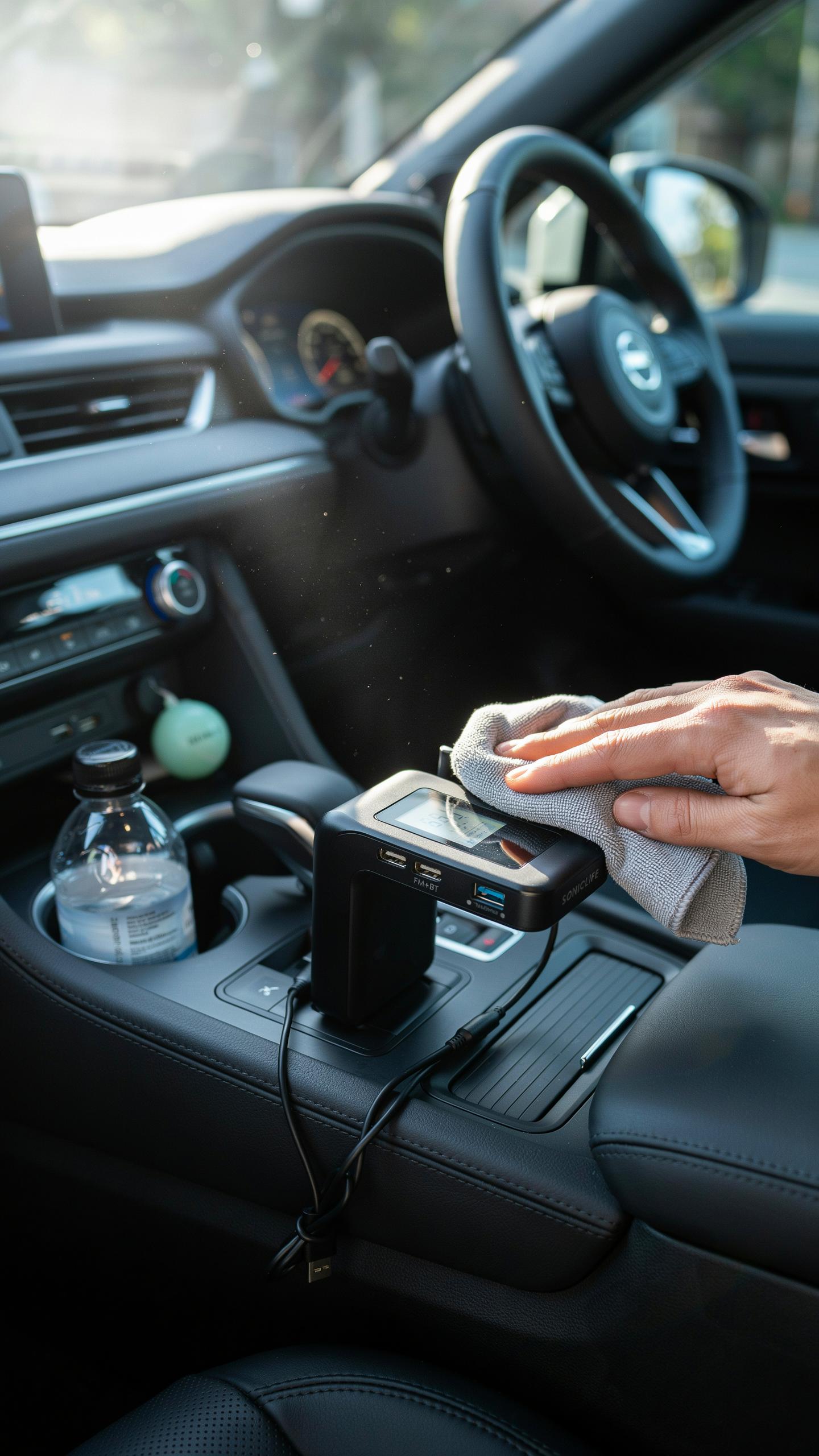
Dust and debris accumulate inside your FM transmitter over time, degrading audio quality and signal strength. Clean the device monthly using a soft, dry cloth. Never spray liquid directly on the unit. For stubborn debris, use compressed air to blow out ports and crevices. Keep the transmitter away from extreme heat and moisture, which damage internal components and reduce lifespan.
The USB charging port requires regular inspection for corrosion and lint buildup. Use a wooden toothpick or plastic cleaning tool to gently remove debris from the port opening. Avoid metal objects that short-circuit components. Store the transmitter in a cool, dry location when not in use. Protective cases prevent physical damage and extend operational life significantly.
Software Updates And Firmware Considerations
Most Bluetooth FM transmitters receive firmware updates through companion mobile apps or manufacturer websites. Check for updates quarterly to access bug fixes and stability improvements. Firmware updates often enhance Bluetooth connectivity and reduce pairing failures. Connect to a computer or smartphone to install updates before using the device in your vehicle. Outdated firmware causes audio dropouts and poor FM signal transmission.

Manufacturers release updates irregularly, depending on product demand and development resources. Verify your device model number before downloading any update to prevent installation errors. Some transmitters ship with outdated firmware from the factory, making initial updates critical for performance. Document your current firmware version before updating to troubleshoot issues if problems arise after installation.
Comparing Bluetooth FM Transmitters With Other Car Stereo Solutions
Why FM Transmitters Outshine Cassette Adapters And Aux Cables For Old Cars
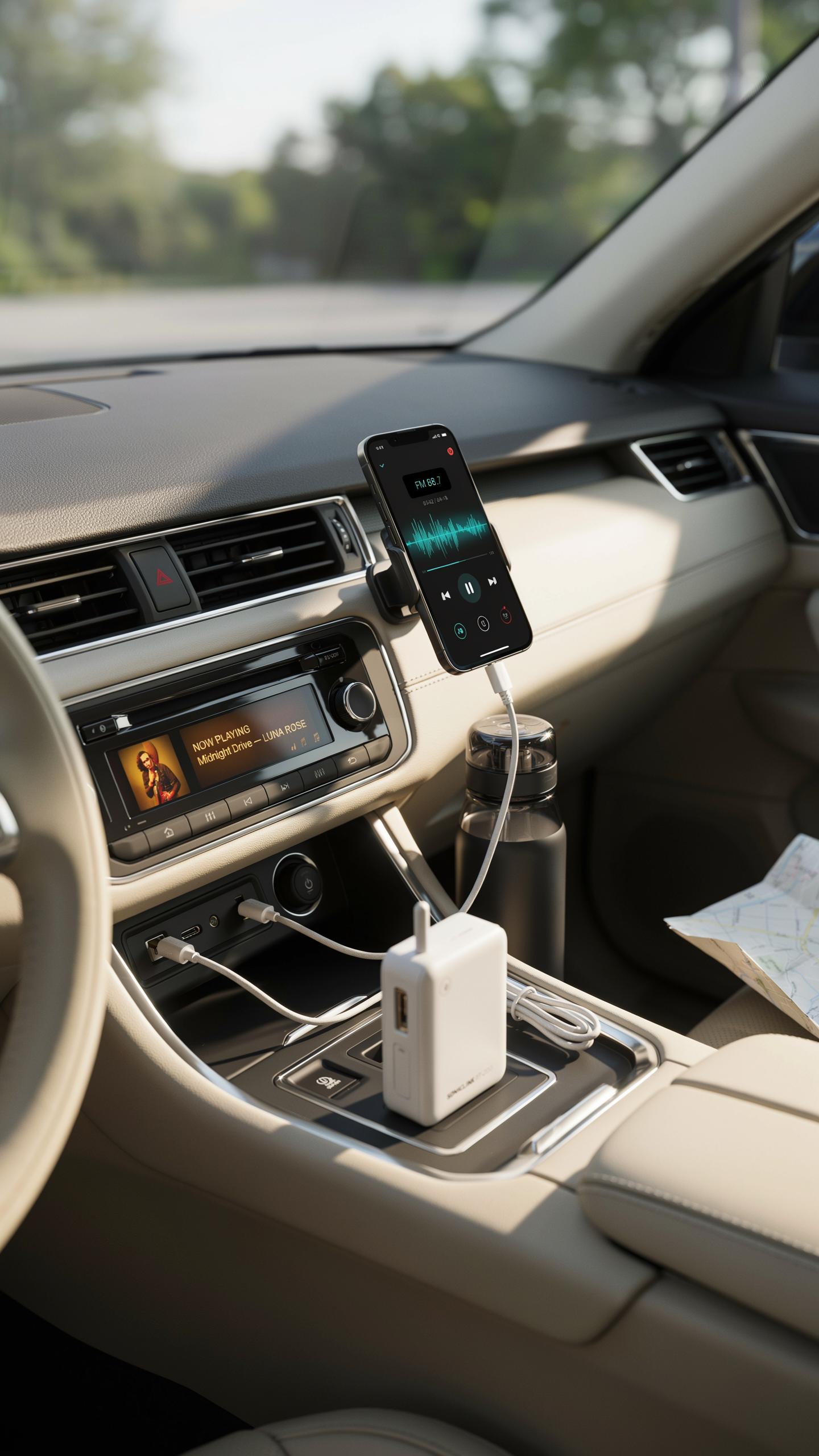
Cassette adapters died because cassette players themselves became unreliable. The rubber pinch rollers dry out and crack after decades of sitting unused. Aux cables require a working auxiliary input, which most cars built before 2005 simply don’t have. FM transmitters work with any car that has a functioning AM/FM radio, which accounts for nearly every vehicle on the road regardless of age.
FM transmitters beat both alternatives in installation speed and reversibility. You plug in the transmitter, tune to an empty frequency, and drive. No permanent modifications. No opening dashboard panels. Cassette adapters demand a working tape deck that often jams or eats adapters themselves. Aux cables force you to keep a phone tethered by cable, creating clutter and limiting phone placement in the cabin.
When To Consider A Full Car Stereo Upgrade Instead
Replace your stereo entirely when you drive the vehicle daily and money isn’t the constraint. A new head unit with Bluetooth costs 150 to 400 dollars installed and delivers superior sound quality compared to FM transmission. The installation process takes a few hours at a shop but eliminates all the compromises of wireless transmission and RF interference.

FM transmitters make sense for occasional drivers, beaters, or vehicles you’ll sell soon. Full stereo upgrades suit long-term owners who want reliable, high-fidelity audio. Consider your vehicle’s condition, how long you’ll keep it, and your listening habits. If your radio struggles with static or picks up interference, an upgrade becomes the smarter move than adding another wireless device.
The Future Of In Car Connectivity For Older Vehicles
Emerging Technologies In Bluetooth Audio Transmission
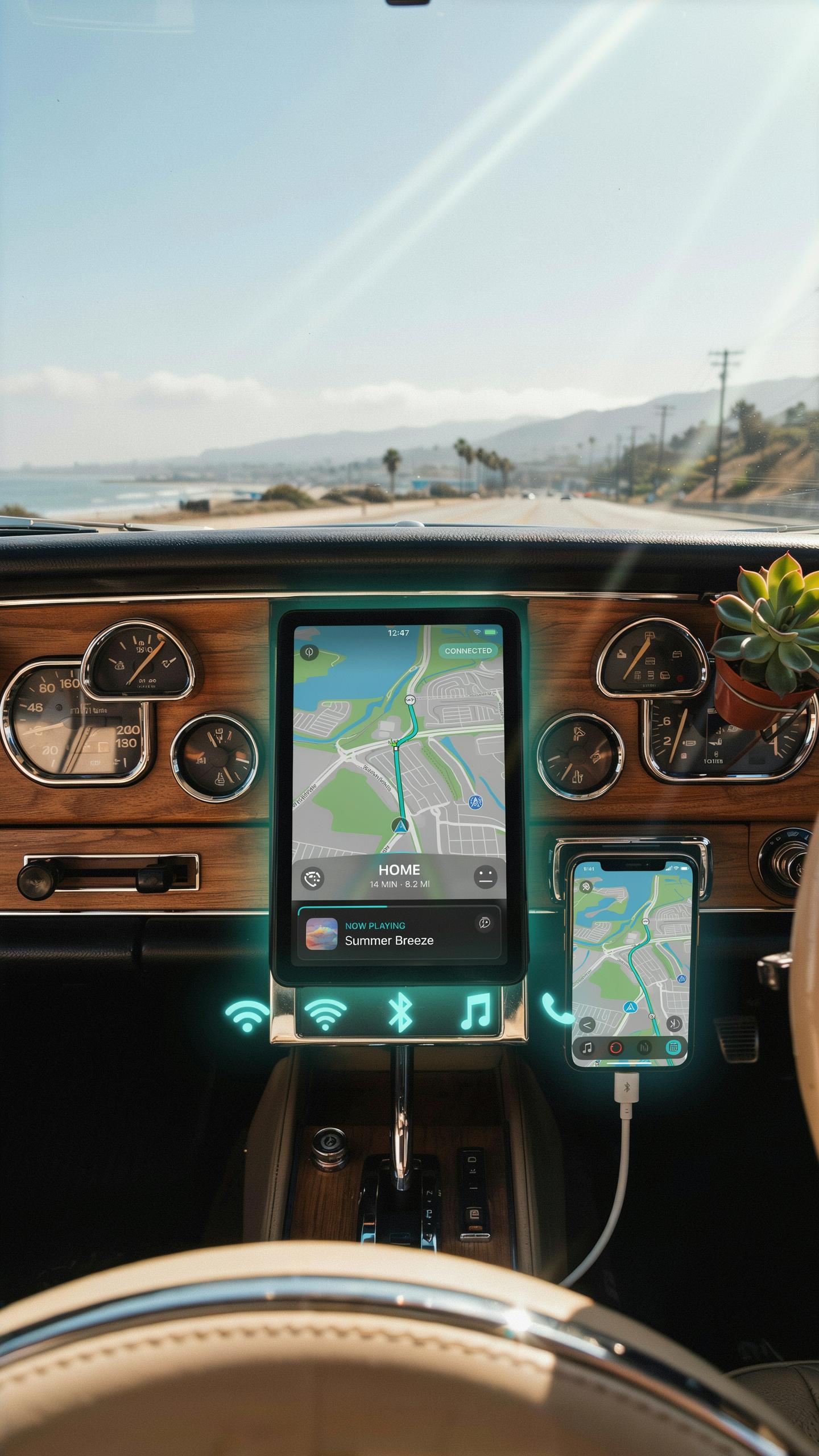
Bluetooth technology continues to evolve beyond current FM transmitter limitations. Newer Bluetooth standards like 5.0 and 5.1 offer improved range, lower latency, and better battery efficiency than earlier versions. Manufacturers are developing direct integration solutions that bypass FM radio altogether. Wired connections to head units remain the most reliable option for older vehicles without native Bluetooth support.
Proprietary receiver modules now target older vehicle markets specifically. These devices connect directly to factory radio wiring instead of using the FM band. Audio quality improves significantly when eliminating the FM transmission step. Installation difficulty varies by vehicle, but retrofitting head units with Bluetooth becomes increasingly practical for classic cars.
Sustainable Upgrades Keeping Your Classic Ride Modern
Keeping older vehicles functional reduces electronic waste and extends vehicle lifespan. Bluetooth FM transmitters offer the least invasive upgrade path for cars predating Bluetooth integration. They require no permanent modifications to factory radio systems and work immediately. This approach preserves the original equipment while delivering modern connectivity.

Aftermarket head unit replacement represents the sustainable long term solution. Modern head units with Bluetooth, USB input, and smartphone integration cost between 150 and 400 dollars. Installation typically takes one to three hours depending on dashboard complexity. Owners balance between preserving originality and accessing current technology standards.
Frequently Asked Questions

What exactly is a bluetooth FM transmitter for older cars and how does it work?
A Bluetooth FM transmitter for older cars is a handy gadget that lets you stream audio from your smartphone or other Bluetooth device through your car’s FM radio. You simply plug it into your car’s cigarette lighter, tune it to an unused FM frequency, and connect your phone via Bluetooth. Your car stereo then picks up the signal, bringing modern audio convenience to classic vehicles.
How do I choose the best FM frequency to ensure clear audio with my bluetooth FM transmitter?
To find the best frequency for your Bluetooth FM transmitter, tune your car radio to an empty, static-filled station. Many transmitters also have a “scan” function that will suggest optimal frequencies. Avoid frequencies used by strong local radio stations to prevent interference. A clear, unused channel ensures the best audio quality for your bluetooth fm transmitter for older cars.
Are bluetooth FM transmitters for older cars expensive, and where can I find a good quality one?
Bluetooth FM transmitters for older cars are surprisingly affordable, with many quality options available for under $30-$50. You can find them at most electronics retailers, auto parts stores, and online marketplaces like Amazon or Best Buy. Look for models with good reviews, a stable connection, and extra features like USB charging ports for added value.