

Why A Solar Charger Is Essential For Off Grid Backpacking
Staying Connected And Safe In Remote Locations
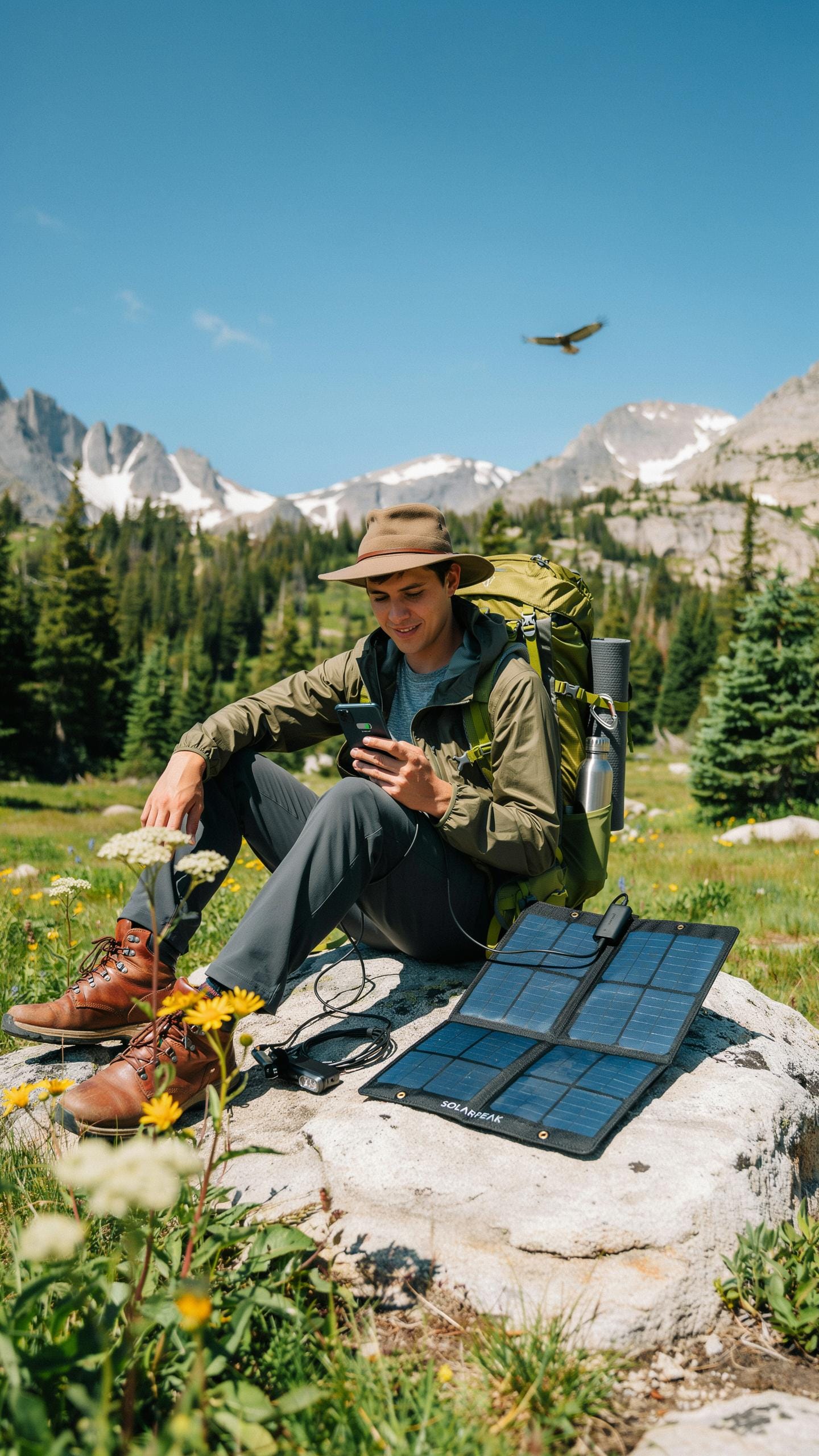
Your phone and GPS device die without power. A solar charger keeps these devices functional when you are miles from civilization. Emergency communication becomes possible if something goes wrong. You can call for help, share your location, or access offline maps. Dead batteries eliminate these options entirely.
Solar chargers convert sunlight into usable electricity instantly. No fuel delivery or external power infrastructure exists on remote trails. You generate power on demand throughout your trek. Battery-based devices fail after their stored charge depletes. Solar systems continue working as long as daylight remains available.
Reducing Environmental Impact On Trails
Disposable batteries create trash that backpackers pack out of wilderness areas. Solar chargers eliminate this waste stream entirely. You recharge existing batteries indefinitely without consuming new resources. Most backpacking regions discourage or ban single use batteries. Solar powered systems align with Leave No Trace principles that protect ecosystems.
Portable solar chargers weigh between 5 to 12 ounces for practical models. This minimal weight carries no fuel, no chemical batteries, and no hazardous materials into sensitive environments. Traditional power generation requires infrastructure that damages wilderness corridors. Solar technology delivers the same charging function without environmental extraction costs or pollution.
Understanding Solar Charger Portable Technology

How Photovoltaic Cells Convert Sunlight To Electricity
Photovoltaic cells convert sunlight directly into electrical current through the photovoltaic effect. When photons from sunlight strike semiconductor material, typically silicon, they knock electrons loose from atoms. This creates an electrical field that forces electrons to flow in one direction, generating usable electric current that charges your devices.
Silicon dominates portable solar chargers because it balances efficiency and cost. Most backpacking chargers use crystalline silicon cells rated between 15% and 22% efficiency. This means 15 to 22 watts of electrical output emerge for every 100 watts of sunlight hitting the panel. Real-world performance drops in clouds, low angles, and dust conditions.
The Role Of Battery Storage In Portable Solar Chargers
Battery storage decouples charging from sunlight availability. Solar panels generate power only during daylight hours, but you need electricity at night or in poor conditions. An integrated battery captures excess solar energy and releases it when panels produce nothing, enabling reliable charging on demand.

Lithium and lithium polymer batteries dominate portable solar chargers due to high energy density and low weight. Capacity ranges from 5,000 to 50,000 milliampere hours, with larger capacities weighing more. The battery’s capacity determines how many times it can fully charge your phone or how long it powers other devices when separated from sunlight completely.
Types Of Solar Power Bank Devices For Backpackers
Foldable Solar Panels Vs. Integrated Solar Backpacks
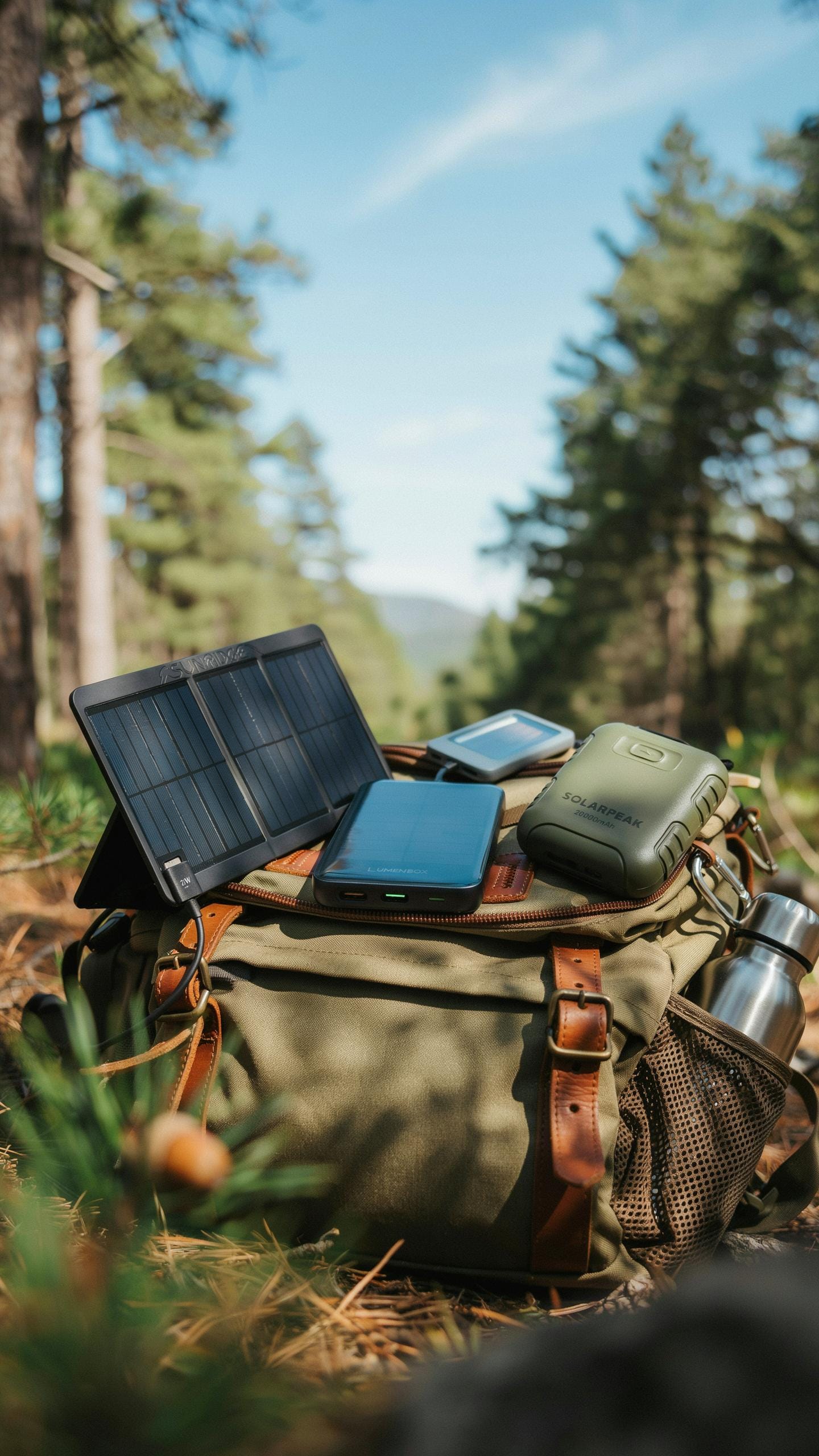
Foldable solar panels deliver higher efficiency because they use dedicated photovoltaic cells without material constraints. Most foldable panels range from 10 to 100 watts and achieve 15 to 22 percent conversion rates. Backpackers deploy them flat on rocks or ground to maximize sun exposure. They pack down to briefcase size and weigh between 1 and 3 pounds depending on wattage. This separation from your bag means flexibility in positioning.
Integrated solar backpacks embed panels into fabric, eliminating a separate piece of gear. They generate power during transit without setup time. However, fabric-integrated panels produce 5 to 15 watts maximum due to material limitations and angled surfaces. Conversion efficiency drops to 10 to 15 percent because the panels cannot track the sun’s position. Use integrated panels for passive charging during travel, not as primary power sources.
Comparing Charging Speeds And Power Outputs
Foldable solar panels charge a typical smartphone from zero to 50 percent in 4 to 6 hours under direct sunlight. A 20 watt panel outputs approximately 1 to 1.5 amps at 5 volts, matching standard USB charger speeds. Higher wattage panels reach 2 to 3 amps, cutting charge time roughly in half. Cloud cover reduces output by 40 to 60 percent. Most backpackers pair panels with power banks to store energy and charge devices at night.

Integrated solar backpacks require 10 to 14 hours of active sunlight to charge a smartphone fully due to low wattage output. They work best as supplementary chargers, not replacements for dedicated panels. A 5 watt integrated panel delivers 0.5 to 1 amp continuously in ideal conditions. Temperature and panel angle significantly impact real world performance. Backpackers relying solely on integrated panels should expect slower charging and bring a power bank for redundancy.
Choosing The Best Solar Backpack For Hiking

Factors To Consider Weight Durability And Capacity
Weight directly impacts how far you hike daily. Solar backpacks typically range from 2 to 5 pounds before adding gear. Calculate total load by adding solar panels, battery capacity, and frame weight. Heavier packs force your body to work harder, reducing distance covered and increasing fatigue on multi-day trips.
Durability determines how long your backpack survives trail conditions. Look for ripstop nylon or ballistic polyester fabrics that resist tears from branches and rocks. Seams need reinforced stitching at stress points like shoulder straps and bottom corners. Test zippers by opening and closing them repeatedly before purchase to verify smooth operation.
Top Features For An Efficient Solar Backpack
Panel placement affects charging speed and usability. Integrated panels on the backpack exterior should face outward for maximum sun exposure while you wear the pack. Removable panels offer flexibility to angle them toward the sun when stationary. Fixed panels save weight but limit your ability to optimize sun capture throughout the day.

Battery storage capacity determines how much charge you accumulate per day. Backpacks with integrated batteries store 10,000 to 30,000 milliamp hours typically. Separate battery compartments allow you to charge devices while leaving the main battery untouched. Quick access USB ports on the pack’s shoulder straps let you charge phones without removing the backpack.
Optimizing Your Solar Powered Phone Charger In Forest
Best Practices For Panel Placement And Sunlight Exposure
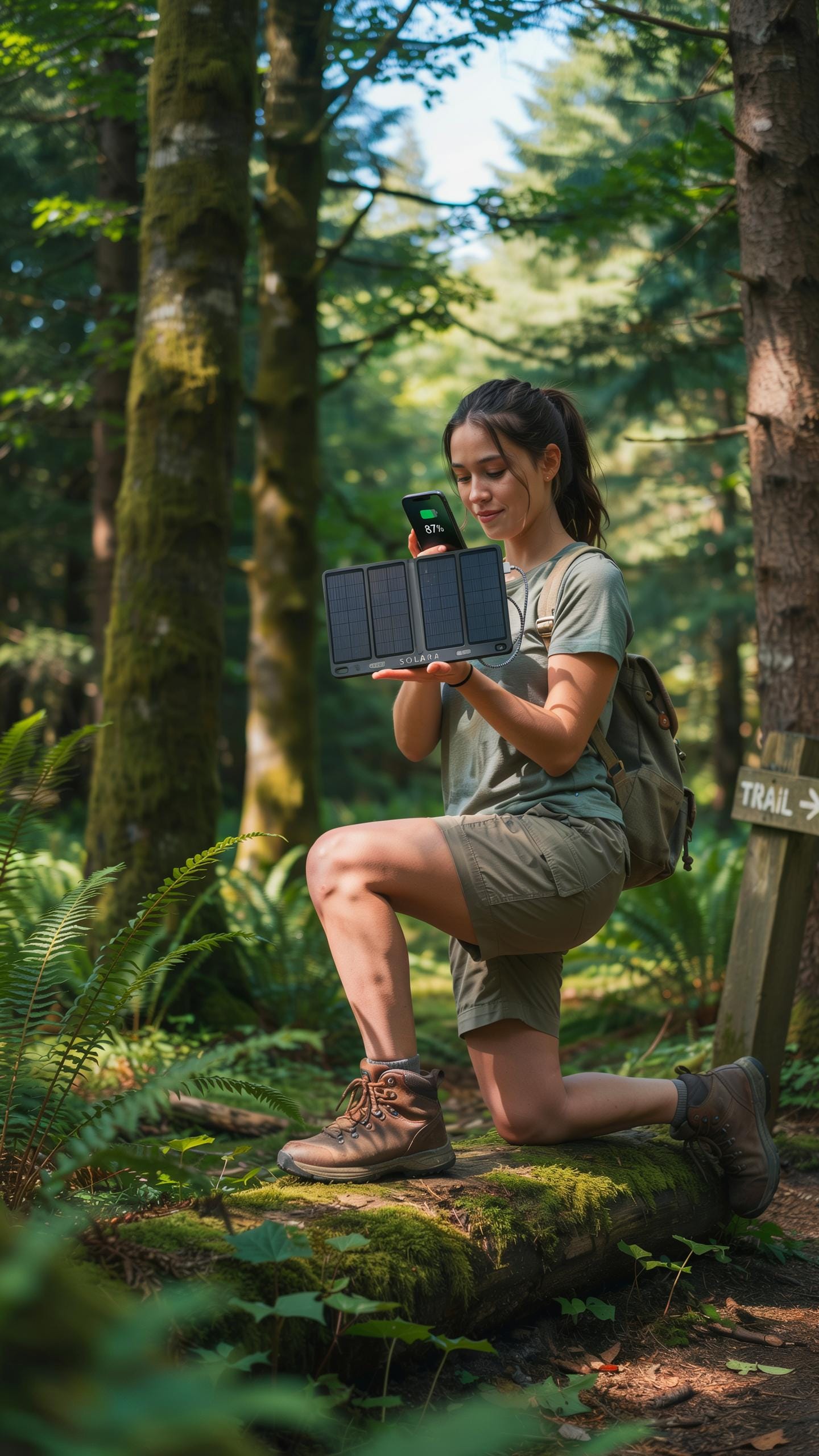
Solar panels generate power through photovoltaic cells that convert direct sunlight into electricity. The angle and direction of your panel matters more than you think. Position panels perpendicular to the sun’s rays for maximum energy conversion. In the Northern Hemisphere, orient panels south. In the Southern Hemisphere, orient them north. Adjust the angle throughout the day if possible to track the sun’s movement.
Forest canopies block direct sunlight and reduce charging efficiency significantly. Clear small patches of vegetation or move to forest edges and open meadows where sun exposure improves. Even partial shade cuts output by 50 percent or more depending on cloud cover and tree density. Morning and late afternoon sun angles penetrate trees better than midday sun. Test panel positioning before relying on it during critical charging situations.
Troubleshooting Common Charging Issues In Shaded Areas
Shade forces solar chargers to operate at reduced capacity because panels receive diffuse rather than direct light. Diffuse light still produces current but at 10 to 20 percent of peak output. Check your device’s charging requirements against the charger’s actual output in shaded conditions. Many portable solar chargers rate their power output under ideal laboratory conditions, not forest conditions. Read specifications carefully and expect significantly lower real world performance.

Battery banks solve shading problems by storing charge during sunny periods for later use. Deploy your solar panel in the open during peak sun hours, then use stored battery power to charge devices in camp. This strategy eliminates dependency on constant direct sunlight. Some chargers include built in batteries while others connect to external power banks. Always account for charging time when planning your off grid power strategy.
Maximizing Solar Charging Efficiency On The Go

Understanding Weather’S Impact On Solar Performance
Cloud cover reduces solar panel output dramatically. A single layer of clouds cuts efficiency by 50 percent or more. Heavy overcast conditions drop output to 10-25 percent of rated capacity. Rain itself doesn’t damage panels, but wet surfaces scatter light and reduce energy conversion. Dust and dirt accumulation matters more than most backpackers realize. Even light debris reduces output by 5-15 percent depending on coverage density.
Temperature affects panel efficiency in counterintuitive ways. Solar panels perform better in cold conditions than heat. High temperatures reduce output by approximately 0.4-0.5 percent per degree Celsius above 25 degrees. Morning and evening sun angles produce lower output than midday sun regardless of weather. Altitude changes impact available solar radiation. Higher elevations receive more direct sunlight due to thinner atmosphere. Plan charging during peak sun hours between 10 AM and 3 PM for maximum output.
The sun, that faithful friend, offers its light to power your journey, reminding you that even in the wild, warmth and connection are never truly lost.
Techniques For Securing Panels While Moving
Position panels perpendicular to the sun’s angle to maximize absorption. Use the shadow method to find optimal angle. When your shadow is shortest, the sun is highest and most direct. Tilt panels toward the sun’s trajectory during your hiking window. On flat terrain, props or stands adjust panel angle without added weight. Rocks, sticks, or dedicated lightweight stands work equally well. Angle matters more than perfect alignment for backpacking applications.

Prevent panel movement during transit with simple fixes. Secure panels to your pack using straps or carabiners on two points minimum. Avoid placing panels where they contact rocks or branches directly. Store panels in dedicated sleeves or pouches when moving between camps. Flexible panels roll or fold without damage. Rigid panels need protective cases. Keep panels accessible for midday charging windows during extended hikes. Quick deployment saves time and increases total energy captured.
Solar Backpack For Camping Beyond Phone Charging
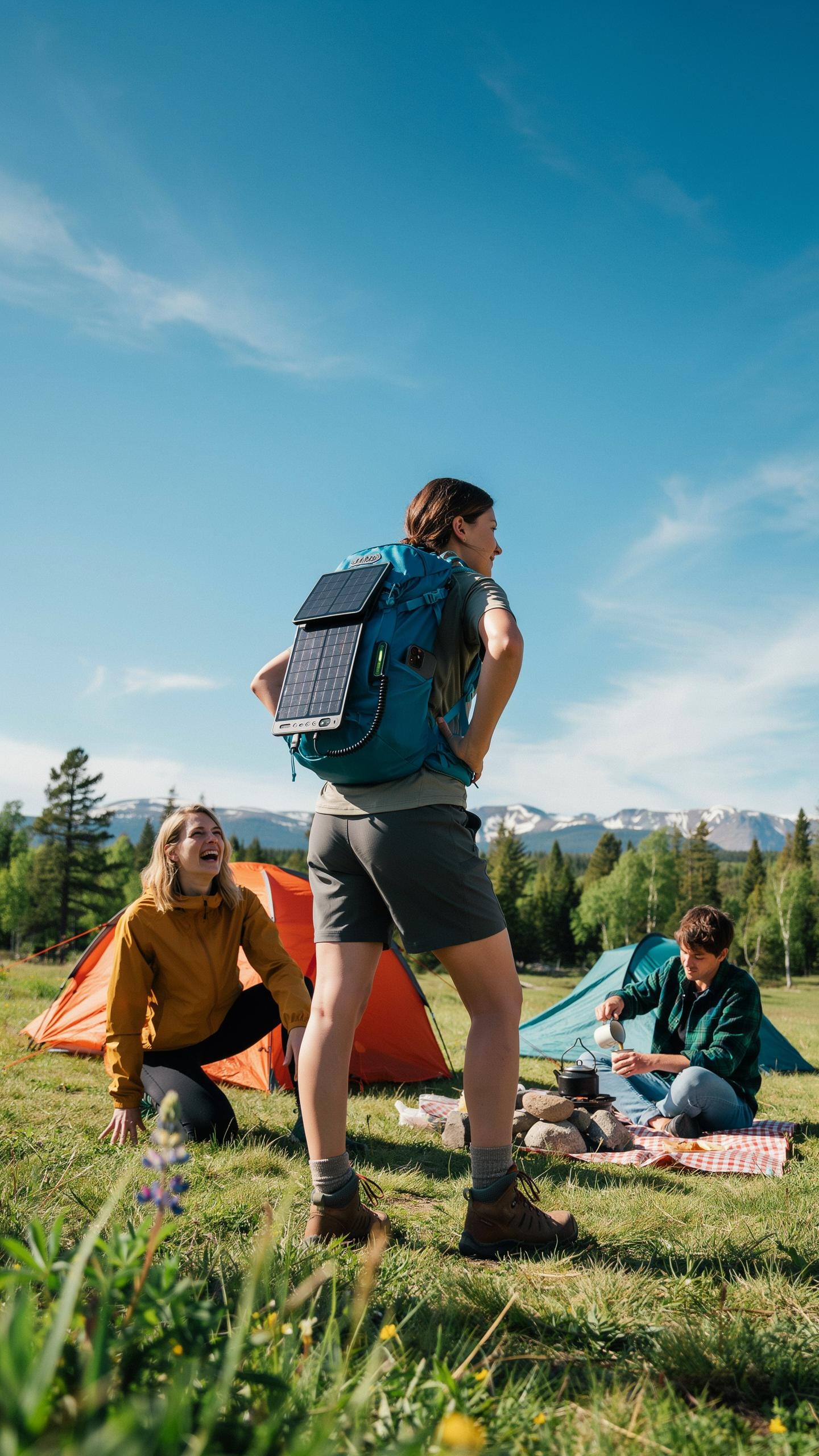
Powering Headlamps, GPS Devices, And Cameras
Headlamps, GPS units, and cameras drain batteries fast in the field. Solar chargers handle these power demands differently based on device type and battery capacity. Headlamps typically need 2000 to 4000 mAh daily, while GPS devices require 1500 to 3000 mAh depending on usage. Cameras vary widely, with mirrorless models consuming 1800 to 2500 mAh per charge. A 20-watt solar panel generates enough power to top off all three device types during a single day of sun exposure.
Matching solar output to your gear matters. Most backpacking solar chargers deliver 5V at 2 to 3 amps under direct sunlight. This powers headlamps and smaller GPS units simultaneously without issue. Larger cameras require longer charging windows or higher wattage panels. USB-C connections on modern devices speed up charging time by 30 to 50 percent compared to micro-USB standards. Bring a portable battery bank as a buffer. It stores solar energy when devices don’t need immediate charging, maximizing efficiency throughout your trip.
Integrating Solar Power With Camp Lighting And Entertainment
Solar chargers power camp lighting systems beyond headlamps. Lanterns with built-in batteries charge from the same panels that top off your phone. Portable LED lights ranging from 5 to 20 watts run 8 to 12 hours on a single solar charge. These lights reduce reliance on headlamp batteries, extending their lifespan for critical moments. Integrate solar charging into your daily camp routine by positioning panels during breakfast and lunch breaks.

Entertainment devices extend your trip quality without sacrificing battery life. Portable speakers with 2000 to 5000 mAh batteries charge fully in 4 to 6 hours of sun. E-readers and tablets consume 5000 to 8000 mAh daily, requiring a 25 to 30 watt panel for reliable recharging. Digital weather radios and communication devices like satellite messengers charge from the same solar setup. Stagger charging priorities based on necessity. Charge safety devices first, then lighting, then entertainment to maintain power for emergency situations.
Durable And Reliable Solar Backpack For Hiking Durability

Weatherproofing And Impact Resistance Features
Solar chargers for backpacking face constant exposure to rain, dust, UV radiation, and physical damage. Manufacturers use polyethylene terephthalate (PET) or monocrystalline silicon panels sealed with ethylene vinyl acetate (EVA) encapsulation to block moisture penetration. This lamination process prevents water from reaching electrical components and corroding solder joints. Most quality units achieve IPX4 rating minimum, meaning they withstand splashing water from any angle but not full submersion.
Impact resistance depends on panel construction and frame materials. Rigid frames use aluminum or reinforced plastic to absorb shock from drops and compression in backpacks. Flexible solar chargers sacrifice some durability for packability. Connectors use waterproof USB-C or micro-USB ports sealed with rubber gaskets. The cable strain relief prevents internal wire breaks from repeated bending during travel and setup.
Long Term Maintenance For Your Solar Gear
Solar panels degrade over time due to UV exposure and environmental stress. Expect 80 to 85 percent output retention after five years of regular use. Dirt and salt spray accumulation reduces efficiency by 15 to 25 percent if left uncleaned. Simple maintenance involves rinsing panels with fresh water and drying with a microfiber cloth monthly during backpacking season.

Battery components inside the charger require minimal maintenance but demand protection from extreme temperatures. Store units in cool, dry places when not in use for extended periods. Check connectors annually for corrosion or debris buildup. Replace damaged cables immediately to prevent short circuits. Keep firmware updated on chargers with smart chips to maintain safe charging protocols and efficiency optimization.
Setting Up Your Solar Panel Charger For Overnight Stays
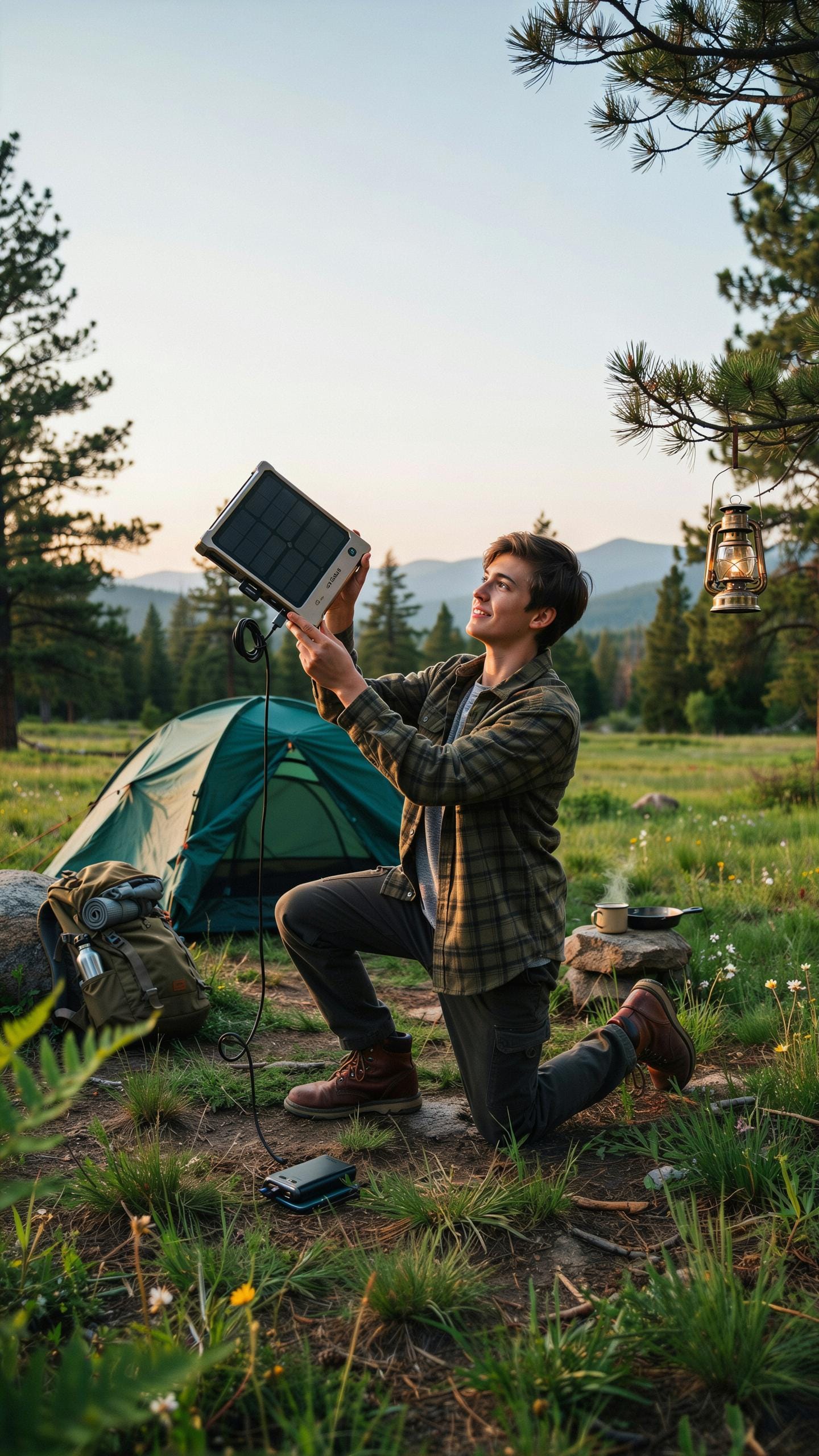
Strategic Placement For Continuous Charging
Position your solar panel to face south in the Northern Hemisphere and north in the Southern Hemisphere during daylight hours. Angle the panel toward the sun at a 45-degree slope when possible. This maximizes solar exposure and charging speed. Place panels on high ground away from tent shadows. Trees, rocks, and your own shelter block sunlight and reduce charging efficiency significantly.
Mount panels on a secure surface that won’t shift during wind or movement. Use rocks or stakes to angle panels toward peak sun hours between 10 AM and 2 PM. Tether panels to prevent theft or loss during overnight stays. Before leaving camp, orient panels to catch early morning sun for the next charging cycle. This planning reduces setup time and increases total energy collection.
Utilizing Power Banks For Nighttime Device Charging
Store charged power banks in an insulated bag or sleeping compartment before sunset. Power banks retain charge better in warm conditions than cold environments. A full power bank delivers reliable charging when your solar panel stops working after dark. Most quality power banks hold charge for weeks without use, making them backup power for multiple days. Rotate which devices you charge nightly to extend all power sources.
Charge your power banks during peak sun hours before your batteries deplete. Stack multiple power banks in your pack to create a multi-day buffer for critical devices. Prioritize charging communication devices first, then headlamps and GPS units. This strategy keeps you powered through extended cloud cover or consecutive overcast days in the backcountry.
The Future Of Solar Power For Backpacking

Advancements In Flexible And Lightweight Solar Technology
Monocrystalline and polycrystalline solar cells continue to dominate backpacking chargers, but manufacturers now integrate these into flexible panels using thin-film technology. This approach reduces weight without sacrificing output. Modern chargers weigh between 5 to 16 ounces depending on wattage. Efficiency ratings hover around 20 to 23 percent for quality units, meaning more usable power per square inch of panel.
Material science drives real improvements. ETFE plastic coatings replace glass covers on premium models, cutting weight by 40 percent while maintaining durability. Temperature resistance improves heat dissipation, which extends battery lifespan. Foldable designs pack tighter than rigid panels. Most backpacking chargers now feature integrated kickstands or loops that eliminate bulk when stored.
Sustainable Energy Solutions For The Modern Adventurer
Solar chargers eliminate dependence on grid electricity and reduce battery waste in remote areas. A 20-watt portable panel generates enough power to charge a smartphone in four to six hours under full sun conditions. Users need realistic expectations about weather variables and seasonal sun angles. This technology directly addresses the problem of limited charging infrastructure on extended backcountry trips.
Pairing solar chargers with power banks creates practical redundancy for multi-day trips. The system charges batteries during daylight while you hike, then provides power at camp. Battery capacity and solar output determine how many devices you can support. This combination gives backpackers genuine independence from external power sources without compromising essential device functionality.
Frequently Asked Questions

What exactly is a solar powered charger for backpacking, and how does it work?
A solar powered charger for backpacking is a portable device that uses photovoltaic cells to convert sunlight into electricity. This energy is then stored in an internal battery or delivered directly to your electronic devices, like your phone or headlamp, allowing you to recharge them even when you’re far from traditional power sources.
How do I know which solar powered charger for backpacking is best suited for my trip duration and device needs?
To choose the right solar powered charger for backpacking, consider the total power consumption of your devices and your typical exposure to sunlight. For shorter trips or smaller devices, a compact panel with a lower wattage might suffice. Longer treks or multiple devices often benefit from higher wattage panels and larger battery capacities for consistent power.
Are there affordable options for a reliable solar powered charger for backpacking, or are they generally expensive?
Absolutely! While some high-end models can be an investment, there are many affordable and reliable solar powered charger for backpacking options available. Look for chargers with good reviews from reputable outdoor brands. Often, slightly older models or those with fewer extra features can offer great value without compromising performance.