
The “Vintage Electronics” Illusion: What You’re Really Buying

Sentimental Value Versus What Actually Sells
You’re drawn to this section because you want permission to believe the radio you found is worth restoring, not because you’ve done the math. Here’s the mechanism: vintage electronics operate under two separate value systems, and you conflate them constantly. Sentimental value is what you feel. Asset value is what a buyer will actually pay. A 1970s stereo receiver might trigger nostalgia for a decade you didn’t even live through, but that emotion has zero correlation to market price.
The flea market encourages this confusion deliberately. Sellers price items based on category and condition, not on what they’ll move. A working vintage tube radio might cost fifteen dollars. Restoring it consumes forty hours of your time, replacement parts, and electricity. You now own a twenty-dollar radio that cost you the equivalent of a full workday. The gap between what you paid and what the market values it at determines whether you have an asset or an expensive hobby purchase masquerading as investment.
The Real Cost Of Potential
Economics calls this concept sunk cost fallacy, and vintage electronics flea markets are designed to exploit it. You see a broken amplifier. Your brain calculates: missing tubes, maybe a blown capacitor, probably works after repair. The asking price is five dollars. You ignore what actually matters: whether that five-dollar item will ever generate revenue, or whether you’re buying the possibility of revenue, not revenue itself.
The trap deepens because restoration creates asymmetric returns. You succeed at the repair and still lose money if the market doesn’t value the result. You fail at the repair and lose both the item and your time. Potential is not an asset. Potential is a liability wearing a hopeful expression. The only cost that matters is this: after purchase, parts, and labor, what will someone else pay for it right now, today, without you needing to convince them it’s worth their time?
The Zero Sum Game Of Restoration At The Flea Market
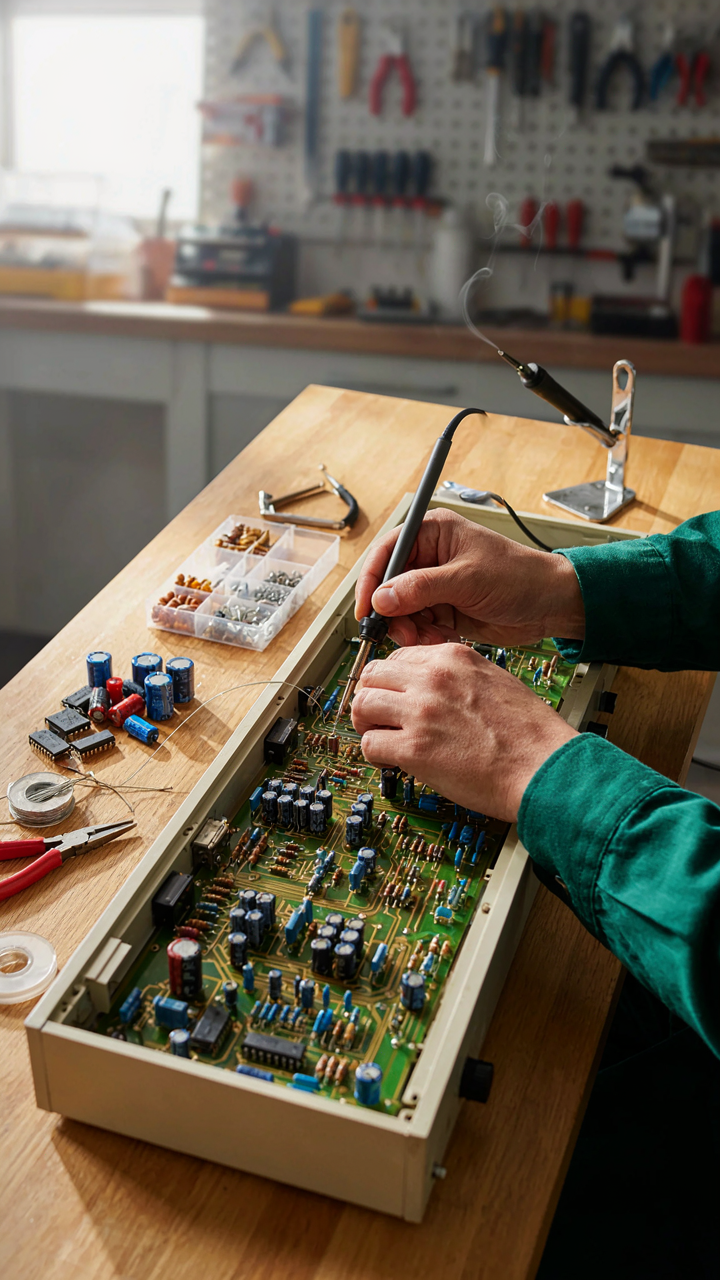
Time Is Your Actual Constraint
You want to believe the vintage radio on the table is a hidden gem waiting for your skilled hands. The real reason you care is you’re afraid you’re missing money or status by walking past it. Here’s the mechanism: restoration economics work like energy conservation in thermodynamics. Energy input never returns as useful output at the same ratio. You spend eight hours cleaning, testing, and replacing capacitors on a 1970s receiver. You sell it for $85. You made $10.63 per hour before parts cost. The flea market doesn’t reward sweat equity. It rewards scarcity, original condition, and documentation. Your time compounds nowhere in this trade.

Most people frame restoration as a hobby that pays. It doesn’t. It’s a hobby that costs time you could spend finding better deals, learning to grade condition accurately, or building relationships with dealers who move inventory faster. The vendor who bought that receiver for $8, cleaned the exterior with a cloth, and listed it online made twice your hourly rate. Restoration projects consume the one resource you cannot manufacture again. Before touching anything at a flea market, calculate: hours needed multiplied by your actual hourly rate versus the realistic resale price after all parts and shipping.
The Economics Of What You Don’t Pick Up
Every vintage electronics flea market visit has a finite window. You can examine maybe forty to sixty items in two hours before decision fatigue kills your judgment. Economics calls this opportunity cost, and it’s invisible until you frame it correctly. That vintage Zenith television you spent thirty minutes evaluating? You didn’t negotiate its price, test all functions, or research comparable sales. Meanwhile, three other booths had working Panasonic boomboxes priced $12 below market that sold before you got there.
Opportunity cost on the flea market floor means every minute spent on a broken item is a minute you’re not sourcing a working one. The restoration narrative promises future value. The working item delivers present value. Most restorers fail because they optimize for the story they tell themselves instead of the money in their pocket. You identify projects, not deals. A deal moves fast and requires minimal labor to monetize. A project requires you to believe your labor has market value. The flea market doesn’t trade in belief. Price the item as it sits. If the asking price plus your realistic labor cost exceeds the market price of a working equivalent, walk past it.
The “Flea Market” Filter: What To Ignore, What To Acquire

The 80/20 Rule For Acquisition
You’re afraid you’ll miss the one good deal while wasting money on garbage. Here’s the mechanism: flea markets exploit recency bias. You see 100 items, your brain flags the last ten you touched, and you convince yourself one of them matters. In reality, 80% of vintage electronics at flea markets are broken beyond economic repair or have been stripped for parts already. Sellers know this. They price accordingly, banking on your decision fatigue.

The actual filter is ruthless scarcity of fixable units. A working Heathkit radio from the 1960s appears once per season at a given market, not once per month. A Sony Trinitron CRT monitor with clean capacitors shows up maybe twice a year. When you see something repairable with original components intact, you already know it’s the 20%. The mistake is treating every acquisition as a potential win instead of waiting for the architecture that makes restoration economically sensible.
Pre Mortem Analysis On Impulse Buys
Most advice says “inspect before you buy.” That’s incomplete. You need to run a pre-mortem on yourself, not the device. A pre-mortem is a project management technique where you imagine a failure has already happened, then work backward to identify what killed it. Apply this to your impulse: assume you bought it and the project failed six months later. Why? You couldn’t source a specific capacitor value. You didn’t have the soldering skills for that board layout. You discovered it requires a proprietary power supply that costs more than the unit itself.
Write down three failure scenarios before your money leaves your pocket. Don’t buy the unit unless you have documented solutions to two of them. This eliminates 90% of impulse purchases that seemed sharp at the moment. The ones that survive this filter are the ones you’ll actually finish, which is the only metric that matters. Ask the seller specific technical questions about missing components or visible damage. If they can’t answer, or their answers contradict the board markings you see, walk.
The Nostalgic Electronics Display Fallacy: Value Beyond Sentiment

What Actually Moves Vintage Tech
You want to believe that finding a dusty Sony Trinitron or Zenith radio matters because it means something—because you’re preserving history, honoring craftsmanship, or tapping into authenticity that modern garbage can’t touch. That’s the real reason you’re reading this. The mechanism is simpler: vintage electronics hold value only when there’s an active buyer willing to exchange cash for them right now. Sentiment is the tax you pay for being wrong about price discovery.

The flea market creates an information gap. Sellers price based on guesswork, nostalgia, or what they paid decades ago. Buyers price based on actual demand—repair shops needing parts, collectors hunting specific models, or hobbyists willing to restore for YouTube content. The disconnect means most vintage gear sits unsold because nobody actually wants to pay what the seller thinks it’s worth. Before you restore anything, run the math on who buys it and at what price point.
Restoration As A Revenue Channel, Not A Hobby
The advice you’ll hear everywhere says “restore what you love.” That’s how people turn hundred-dollar finds into thousand-dollar projects that sell for eighty dollars. Economics doesn’t care about your effort. The real model works backward: identify what sells, then acquire it cheap enough to restore profitably.
Three monetization patterns actually work. First, parts harvesting—a dead CRT television becomes capacitors, resistors, and transformers for someone else’s repair. Second, refurbished units sold to niche markets like vintage gaming communities or radio enthusiasts who’ll pay a premium for working condition. Third, content creation where the restoration itself is the product, monetized through video platforms. Pick one before you buy anything. The restoration pathway determines whether you break even or lose money on every purchase.
The “Retro Gadgets” Gambit: Strategic Repair Vs. Deep Dive Restoration

Know When To Stop
You want to believe every dusty radio deserves full restoration because that’s what separates serious collectors from casual buyers. The real mechanism is triage. You have limited capital and time, so you must sort finds into three buckets immediately: surface clean only, targeted component replacement, or full circuit reconstruction. Most people waste money restoring devices that only needed cleaning. The price you paid determines what you can afford to spend.

A 1970s Sony Walkman with a dead motor needs maybe ten dollars and an hour. A tube radio with burnt resistors needs thirty to fifty dollars and judgment about whether the chassis justifies the labor. You decide this at the flea market, not after you get home. Sellers already priced items based on cosmetics, not function. Your edge is knowing which devices fail predictably and cost almost nothing to fix.
When To Replace Vs. Rebuild
Economics governs restoration like it governs manufacturing. The decision framework is identical: do you repair the existing component or replace it entirely. Original 1960s electrolytic capacitors fail reliably due to dielectric breakdown. You can rebuild that power supply with modern caps for eight dollars, or hunt original stock for forty. The device functions identically either way. Your choice depends on collector value, not authenticity theater.
- Electrolytic Capacitors: Original units dry out and lose capacitance. Modern replacements cost under two dollars per unit and restore function completely without altering performance or sound quality.
- Potentiometers: Vintage volume and tuning knobs develop crackling or dead spots. Replacement pots run five to fifteen dollars depending on ohm rating and resistance tolerance specifications.
- Speaker Cones: Paper and cloth cone materials deteriorate after decades. Reconing services exist, but new period-correct speakers often cost less than professional restoration labor.
- Power Transformers: Lamination corrosion and winding insulation failure occur over time. Replacement transformer cost typically runs thirty to eighty dollars based on wattage and voltage specifications.
- Output Transistors: Germanium and early silicon transistors fail without warning. Sourcing original types costs significant money while modern equivalents run two to five dollars with identical performance.
Build a cost ceiling before you touch any device. Add parts cost, labor hours at your actual rate, and a buffer for failed experiments. If the total exceeds resale value by more than thirty percent, stop. The flea market taught you nothing if you lose money proving you can fix things.
The Antifragile Approach To Old Technology: Built To Last (And Fail)
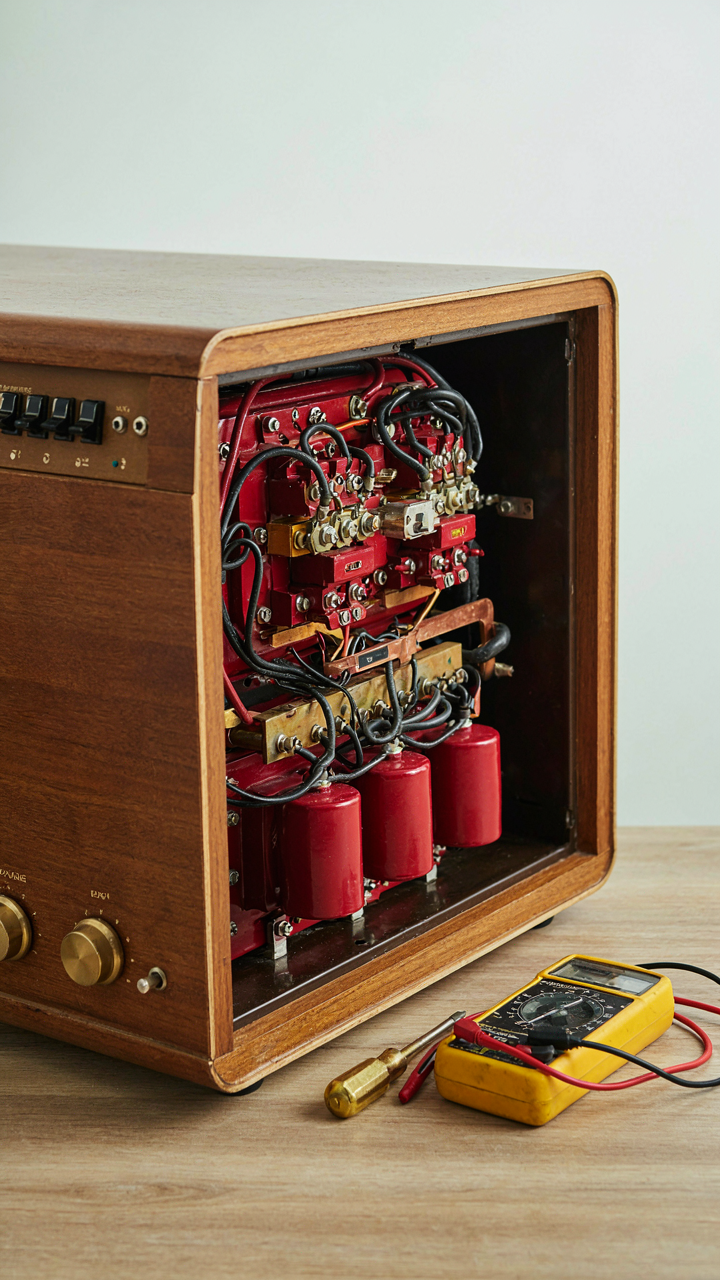
Redundancy Is The Actual Design Rule
You want to believe old electronics were built better. That’s not the mechanism at work here. Cybernetics—the study of feedback loops and system control—reveals the real pattern: older gear survived because engineers designed for graceful failure, not perfection. They built redundancy into signal paths, power distribution, and component tolerance because they knew components would fail. A 1970s amplifier has duplicate power supplies, parallel output stages, and transformer-based protection. Modern devices fail catastrophically because they’re optimized for cost and density, not recovery.

The flea market advantage isn’t nostalgia or quality in the abstract sense. It’s that systems designed with redundancy can absorb damage and still function. A tube-based radio with one dead tube still broadcasts something. A solid-state device with a failed capacitor often won’t power on at all. When you restore vintage gear, you’re not fighting poor engineering. You’re working with intentional design choices that treated failure as a given condition to manage, not a defect to hide.
Failure Points Teach You The System
Most restoration guides tell you to replace all capacitors at once. That’s inefficient and misses the education. Learn where failure actually occurs first. Electrolytic capacitors in power supplies fail predictably because they run hot and age. Coupling capacitors in audio stages fail from leakage, not time. Resistors drift, not break. By identifying which components failed in a specific unit, you see exactly how that designer built the device and what shortcuts they took under cost pressure.
The real skill is reading failure backwards into intent. If a radio’s original filter capacitors are still working but the output coupling cap is open, the designer knew the output stage would draw more current and age faster, so they used a better-rated component there. If transformers are intact but tube sockets corroded, the designer accepted that environmental exposure would happen and made the active components replaceable. Your protocol: document all original failures before touching anything, categorize them by component type and location, then replace only what actually failed plus predictable follow-ups in that same subsystem.
The “Vintage Radio” Protocol: Decoding Actual Value
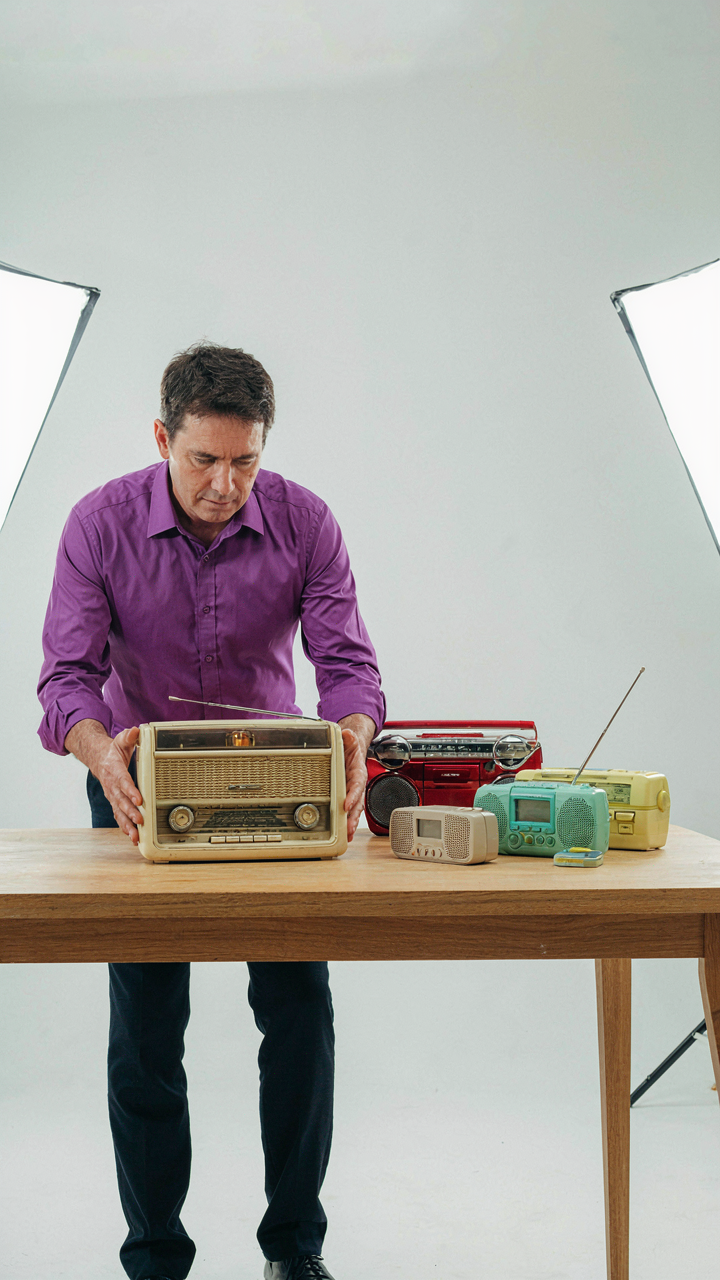
What Actually Separates Trash From Treasure
You’re hoping someone else has already done the research so you don’t have to. That’s the real motive here. The mechanism that separates signal from noise at a flea market is borrowed from information theory: you need a filter that rejects the common baseline before it wastes your time. Most radios from the 1960s through 1980s are worthless because factories produced millions of them. A working Zenith transistor radio from 1975 has zero collector value. You need to know what didn’t get made in volume.

The filter works like this: era, scarcity, and condition operate as a three-point gate. A 1950s tube radio in non-working condition might still hold value if it’s a brand that was produced in limited runs. A 1980s digital clock radio in perfect condition is landfill. The people selling at flea markets rarely know this distinction, which is why you see the same worthless units priced identically week after week. Spend fifteen minutes before you go learning which manufacturers produced fewer units and which design features command premiums among actual restorers, not fantasizers.
Recognizing What Restorers Actually Buy
The common advice says “buy what interests you.” That’s incomplete. Restorers buy specific vintages because the parts ecosystem still exists and schematic documentation is accessible. A 1960s Philco radio has both because thousands of enthusiasts maintain forums and archive schematics. A 1991 Bose sound system has neither, which makes it dead weight no matter how clean it looks. Condition matters only after you’ve confirmed the model has active collector demand and available repair documentation.
Check what sold recently on eBay, not what’s listed. Listings stay up for months. Sold listings show actual demand and realistic prices in your region. If a specific model hasn’t sold in six months, nobody wants it restored. The mechanism here is simple: a radio is worth restoring only if someone will eventually pay for the work, which only happens when parts suppliers and technical guides still service that model’s user base. Before you carry anything to the register, verify that at least three people have bought a similar unit in the last 90 days.
The “Old School Electronics Display” Trap: Curation As Value Creation

Less Is The Only Competitive Move
You want people to think you know something they don’t. That’s the real reason you care about display. Most sellers at vintage electronics flea markets pile everything visible at once, banking on volume to trigger impulse buys. This fails because attention works like signal-to-noise ratio in electrical circuits: too many inputs collapse into static. Buyers see noise, not value.

Strategic scarcity forces the buyer’s brain to do the work. Remove 60 percent of what you’d normally show. Display one restored radio instead of four half-cleaned units. One pristine piece communicates mastery. Ten mediocre pieces communicate desperation. The mechanism is simple: constraint creates narrative.
Where You Place The Object Changes Its Meaning
Positioning isn’t decoration. It’s context engineering. A Sony Trinitron monitor sitting at eye level on a clean cloth surface reads as “this works and matters.” The same monitor stacked under a pile of tangled cables reads as “junk.” You’re not selling the object. You’re selling the story the position tells about what you know about that object.
Eye-level placement near a business card establishes expertise. Grouped with tools or matching-era pieces creates collection coherence. Isolated on its own table says “this is the feature.” The buyer interprets position as proof. They assume if you took the time to stage it deliberately, you vetted it. Stage everything or stage nothing. Half-measures broadcast uncertainty.
The Unspoken Cost: Your Attention As The Ultimate Currency

Focus As A Non Renewable Resource
You’re worried you’re wasting time on the wrong projects. Here’s the mechanism: every hour spent restoring a broken Zenith radio is an hour you can’t spend restoring something with actual resale or use value. This is an economics problem, not a nostalgia problem. You have a fixed pool of restoration hours per year. Spend it poorly and you’ve manufactured sunk cost.

Most people treat flea market finds as free because they paid thirty dollars. They’re not free. The restoration economics only work if the item justifies the labor. A 1970s Sony Trinitron television might take forty hours to recap, calibrate, and verify. That’s forty hours that don’t come back. If you sell it for two hundred dollars, you’ve earned five dollars per hour. A job at minimum wage beats that math every single time.
Eliminating Distraction Driven Projects
The common advice says “follow your passion” and “work on what excites you.” That’s how you end up with six half-finished Commodore 64 motherboards and no completed units. Passion is a terrible project filter because it doesn’t account for completion rate. You need a pre flea market screening protocol that eliminates projects before they drain your attention.
Before you buy anything, answer three questions: Does this item have documented schematics available online? Can you source replacement parts within two weeks? Will someone actually buy this when finished? If you answer no to any of them, the item stays at the table. This rule cuts your projects from twelve down to two. You finish both. You sell both. You’ve now proven you complete work, which changes everything about your next buying decision.
The Real Obstacle Isn’t A Faulty Capacitor; It’s Your Inability To Define Done

Most people walk away from a vintage electronics flea market with junk because they never decided what “restored” actually means. You’ll restore something forever if you don’t know when to stop. Pick one device today. Spend thirty minutes listing exactly what “done” looks like for that device. Then work backward. You don’t need perfect. You need finished, because finished teaches you what restoration actually costs. Obsession without an endpoint is just expensive procrastination.