
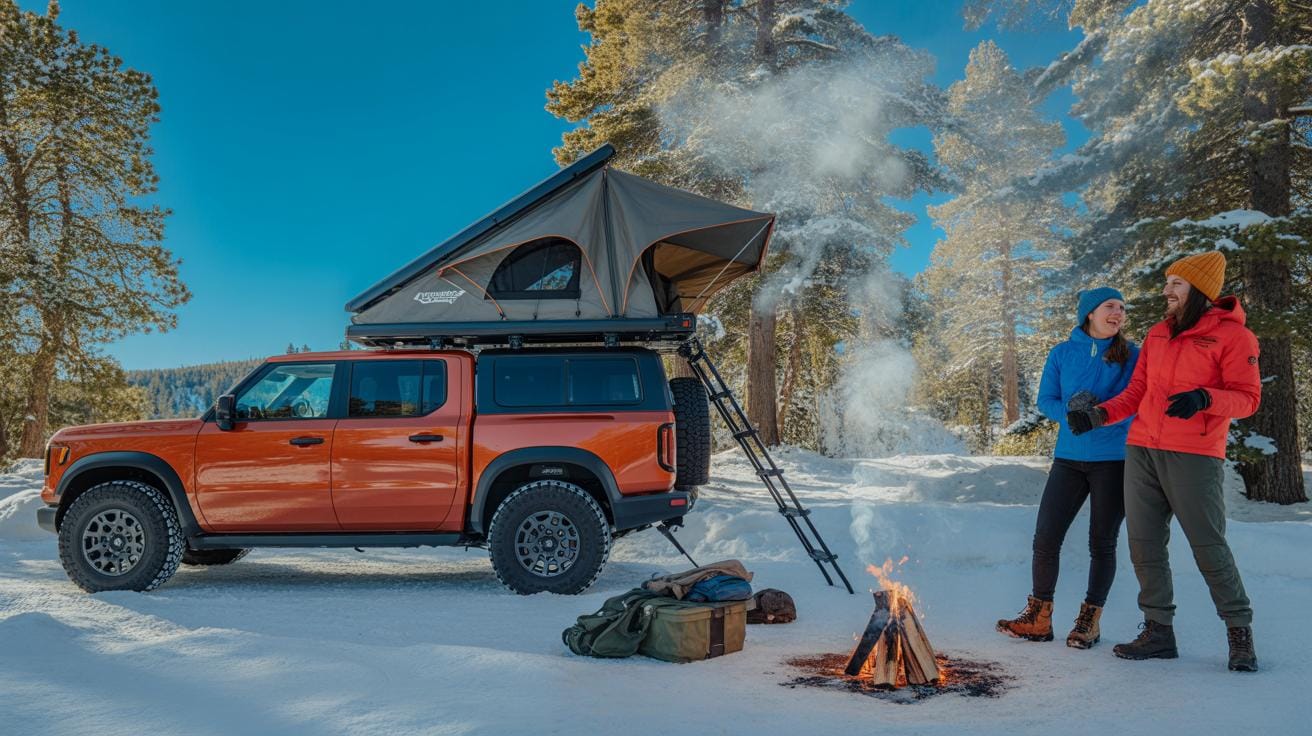
Preparing Your Winter Outdoor Adventure Vehicle For The Cold
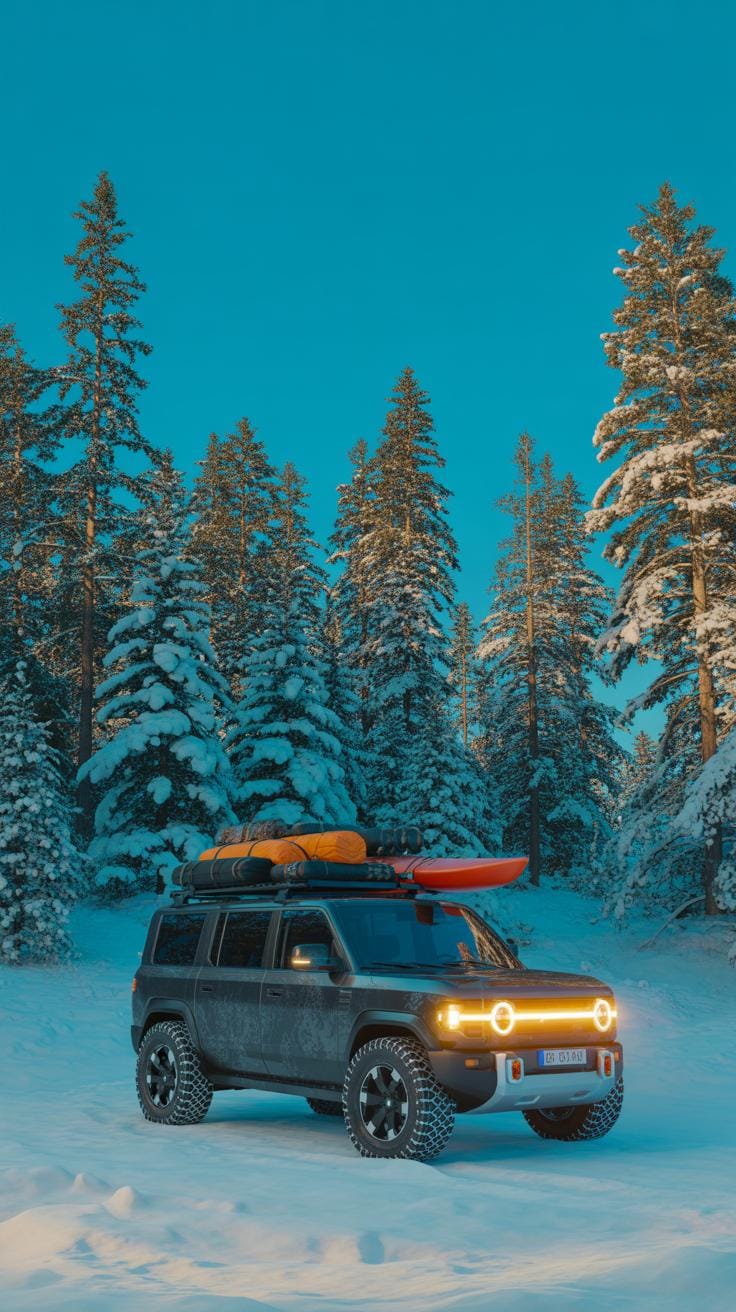
Battery And Fluid Maintenance
Cold weather saps lead-acid battery capacity by up to fifty percent. You must inspect your terminals for corrosion and test the cold cranking amps before Winter Camping begins. Upgrade to an AGM or Lithium-iron phosphate battery if you plan on Snow Camping in extreme low temperatures. A dedicated engine block heater or a battery wrap prevents frozen cells and ensures your Off-road Camper Truck In Snow starts every single morning.
Standard lubricants thicken in the cold and starve your engine of oil. Switch to full synthetic oil with a lower winter viscosity rating to maintain flow during a cold start. Check your coolant mixture to ensure it can withstand freezing without expanding and cracking the block. This maintenance is essential when driving a Snowy Off-road Vehicle In Mountains where mechanical failure can lead to life-threatening situations in deep powder.
Heating Systems For Overlanders
Maintaining a safe internal temperature is the main goal when Camping In The Snow. Diesel air heaters are the industry standard for efficiency and dry heat. These units tap directly into your fuel tank and exhaust gases outside the cabin to prevent carbon monoxide poisoning. They consume very little power and keep your Winter Outdoor Adventure Vehicle warm enough to prevent condensation from freezing on the interior surfaces.
Propane heaters offer an alternative for those without diesel tanks but requires strict ventilation. Modern portable units include oxygen depletion sensors to shut off if air quality drops. If you are going for a Vintage Off-road Jeep In Snow or a Land Rover Winter Scenery look, choose a heater that fits your interior space without blocking exits. Proper heating setup improves your Winter Camping Aesthetic and ensures you remain mobile during multi-day snow storms.
Essential Gear For Camping In The Snow And Ice
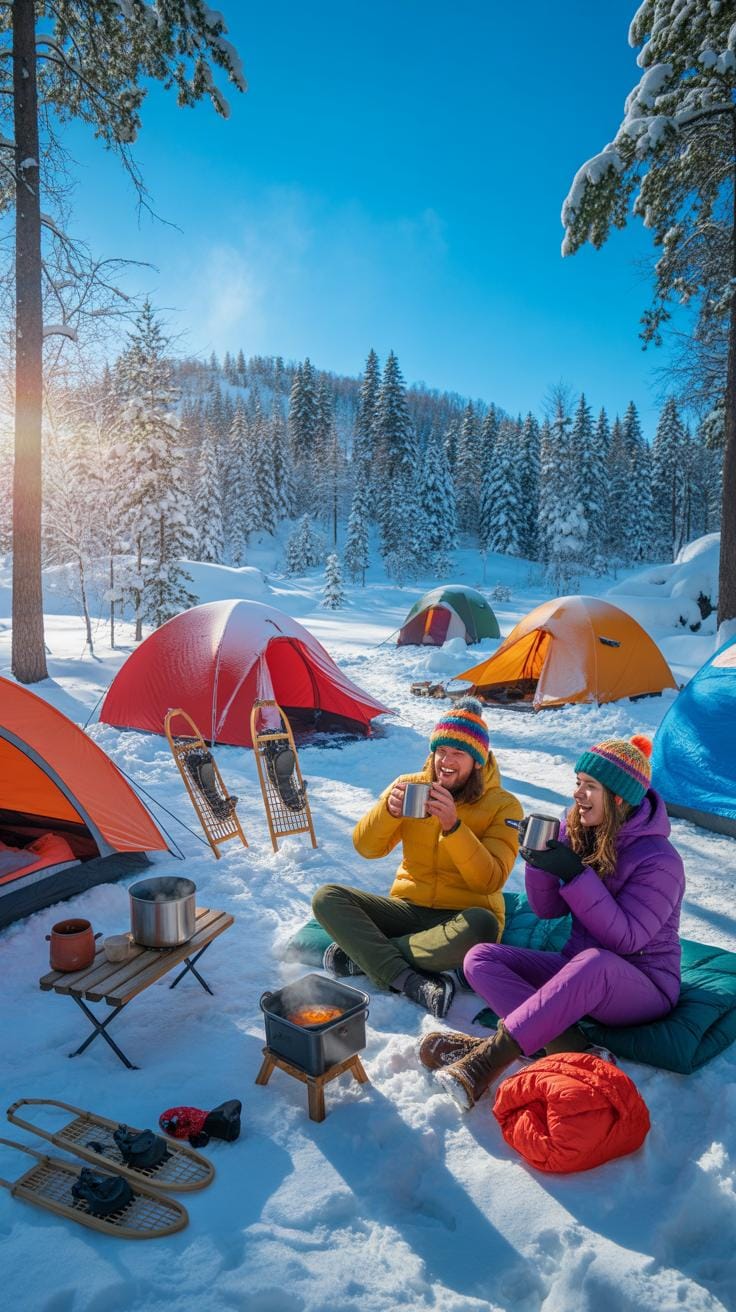
Overland Recovery Equipment Checklist
Snow camping requires specific tools to handle high-friction loss and frame-drag. Your winter outdoor adventure vehicle must carry equipment that functions in sub-zero temperatures. Standard mud tactics fail in deep powder or on ice sheets. Traditional recovery boards work, but specialized metal tracks or sand ladders provide better bite on frozen crusts. You must prepare for high-centered scenarios where the vehicle weight compresses snow into solid ice.
- Maxtrax or Sand Ladders: These provide the necessary friction when tires spin on ice. In snow camping, they act as a solid bridge over soft voids. Choose UV-stable materials that do not become brittle and crack in extreme cold temperatures.
- High-Lift Jack: This tool is essential for lifting a snowy off-road vehicle in mountains. It allows you to fill holes under tires or break the suction of deep slush. Always use a wide base plate to prevent the jack from sinking into the soft ground.
- Long-Handled D-Grip Shovel: Moving volume is the priority when cleared paths vanish. A metal blade is mandatory for breaking through frozen sleet or packed ice. This tool is the most used item for any off-road camper truck in snow during recovery operations.
- Kinetic Recovery Rope: Use these ropes to pull a stuck vehicle with centrifugal force. Unlike static straps, kinetic ropes stretch and reduce the shock load on frame points. This is critical when metal components are cold and prone to stress fractures or snapping.
- Full-Size Spare with Chains: A vintage off-road jeep in snow needs mechanical grip. Tensions-fit chains provide the bite needed for steep icy inclines that tires alone cannot manage. Ensure your chains fit your specific tire diameter before you head into the remote backcountry.
Tire pressure management is the most effective way to gain traction in winter camping environments. Lowering your PSI increases the tire footprint and allows the vehicle to float over the snow rather than digging in. You must carry a high-volume air compressor to reinflate tires before hitting the pavement. Never rely on gas station pumps which may be frozen or inaccessible in remote winter mountain areas.
Insulating Your Sleeping Quarters
Heat loss occurs primarily through conduction and convection in a camping in the snow scenario. Glass windows act as thermal bridges that drain cabin heat rapidly. You must install custom-fit Reflectix or closed-cell foam inserts over every window pane. This creates a dead-air space that keeps the interior warm. If you use a roof-top tent, add a quilted thermal liner to combat the thin fabric walls.

Moisture management is as important as heat retention for an off-road camper truck in snow. Occupant breath creates condensation that freezes on internal surfaces. Use a diesel heater or a propane heat exchanger to introduce dry air into the sleeping area. This keeps the bedding dry and prevents ice from forming on the ceiling. Proper ventilation ensures a safe environment while maintaining the winter camping aesthetic of a cozy dry cabin.
Choosing The Perfect Off Road Camper Truck In Snow Terrain
Weight Distribution And Traction
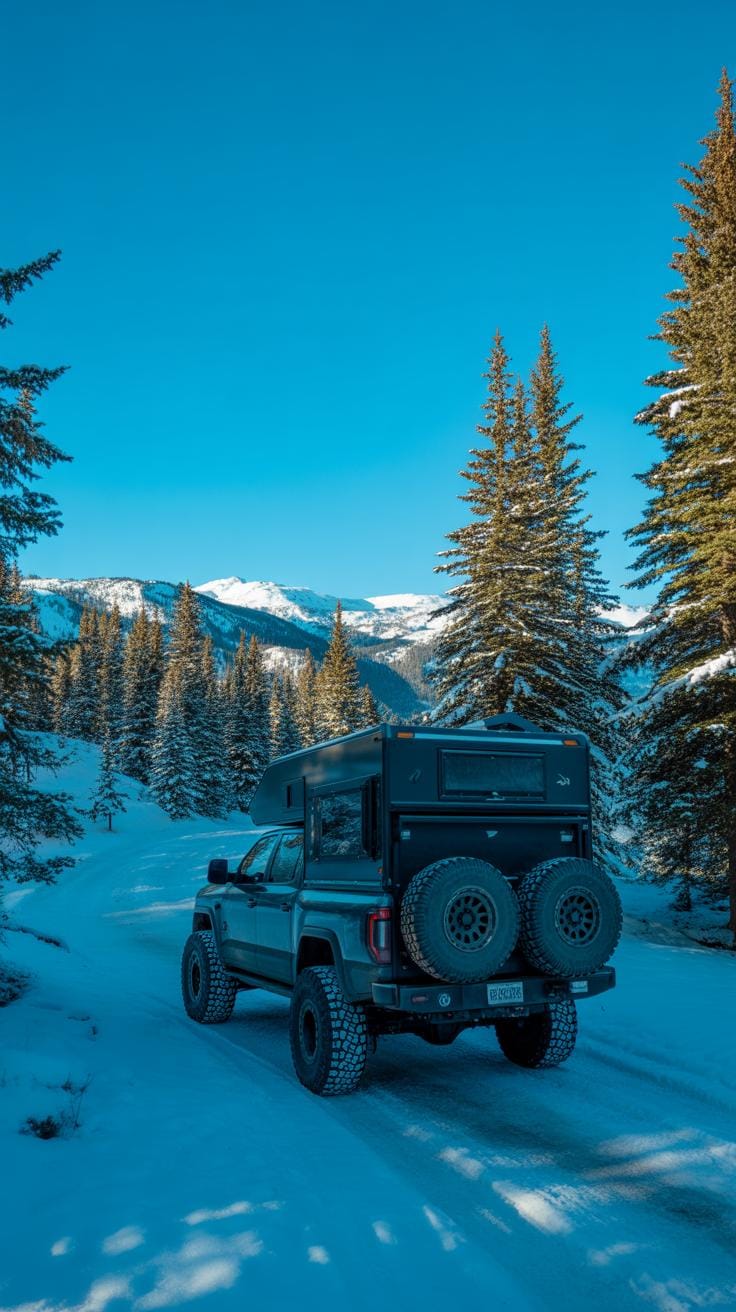
A balanced Off-road Camper Truck In Snow environments maintains a consistent center of gravity. You must store heavy recovery gear, water tanks, and batteries low in the chassis. This placement prevents the vehicle from tipping on uneven drifts or icy grades. Proper Weight Distribution ensures that each tire applies equal pressure to the ground. This stability is vital for Winter Camping when navigating unpredictable mountain passes or frozen creek crossings.
Center your heaviest loads between the axles to maximize grip. Do not overload the rear bumper as this lifts the front wheels and reduces steering control. This tactical approach mirrors a Land Rover Winter Scenery setup where engineers prioritize balanced loads for deep Snow Camping. Strategic packing prevents the vehicle from fishtailing on slick surfaces. Keep your Winter Outdoor Adventure Vehicle agile by keeping weight low and centered for better overall traction.
The light of a winter campfire warms the soul long after the logs have turned to ash. There is no greater peace than waking in a rugged rig surrounded by the silent, frozen majesty of the wild.
Tire Pressure And Tread Patterns
Airing down your tires is a non-negotiable tactic for Camping In The Snow. Lowering the pressure expands the tire footprint and allows your rig to float on top of the pack. This technique prevents the tires from digging into soft powder and hitting the frame. A wider contact patch is essential for a Snowy Off-road Vehicle In Mountains to maintain momentum. Use a dedicated deflator to reach optimal low-pressure levels quickly.
Choose a tire with a dedicated winter compound and deep siping for maximum grip. Modern rubber stays soft in freezing temperatures unlike standard mud-terrain tires that harden and slide. This functional choice matters more than a Vintage Off-road Jeep In Snow for practical safety. High-quality tread patterns clear slush from the grooves to prevent ice buildup. Reliable equipment ensures your Winter Camping Aesthetic is backed by real performance and safety on technical trails.
Driving Your Snowy Off Road Vehicle In Mountains Safely

Navigating Steep And Icy Grades
Driving a Snowy Off-road Vehicle In Mountains requires tactical throttle control and gear selection. Gravity is your enemy on frozen inclines. Low range and lower gears provide the resistance needed to check your speed without locking your tires. You must avoid sudden braking at all costs. Modern ABS systems often fail on deep slush or sheer ice. This creates a dangerous slide that removes your ability to steer.
Maintain a steady momentum when climbing during Winter Camping. If your tires spin, stop immediately to avoid digging 4×4 graves. Lower your tire pressure to increase the contact patch for better grip. Camping In The Snow means managing weight distribution carefully to keep the rear end from swinging out. Use engine braking to descend. This mechanical method keeps your wheels turning. Turning wheels allow you to maintain directional control on the trail.
The Importance Of Snow Chains
Snow chains provide the mechanical bite that rubber tires cannot achieve on ice. Even a high end Off-road Camper Truck In Snow needs metal traction aids for steep mountain passes. These tools cut through the frozen top layer to reach solid ground or pack the snow into the links. Always fit chains to all four wheels on a 4WD for balanced braking and turning. This prevents the rear end from overtaking the front.

Carry a heavy duty set of chains for your Winter Outdoor Adventure Vehicle. Practice installing them before you leave home. Cold fingers and deep drifts make the first attempt difficult in the field. This preparation is a staple of the Land Rover Winter Scenery found in professional expeditions. Whether you drive a modern rig or a Vintage Off-road Jeep In Snow, chains are mandatory safety gear. They turn a dangerous slide into a controlled drive during Snow Camping.
Capturing The Classic Land Rover Winter Scenery Aesthetic
Photographing Your Rig In The Wild
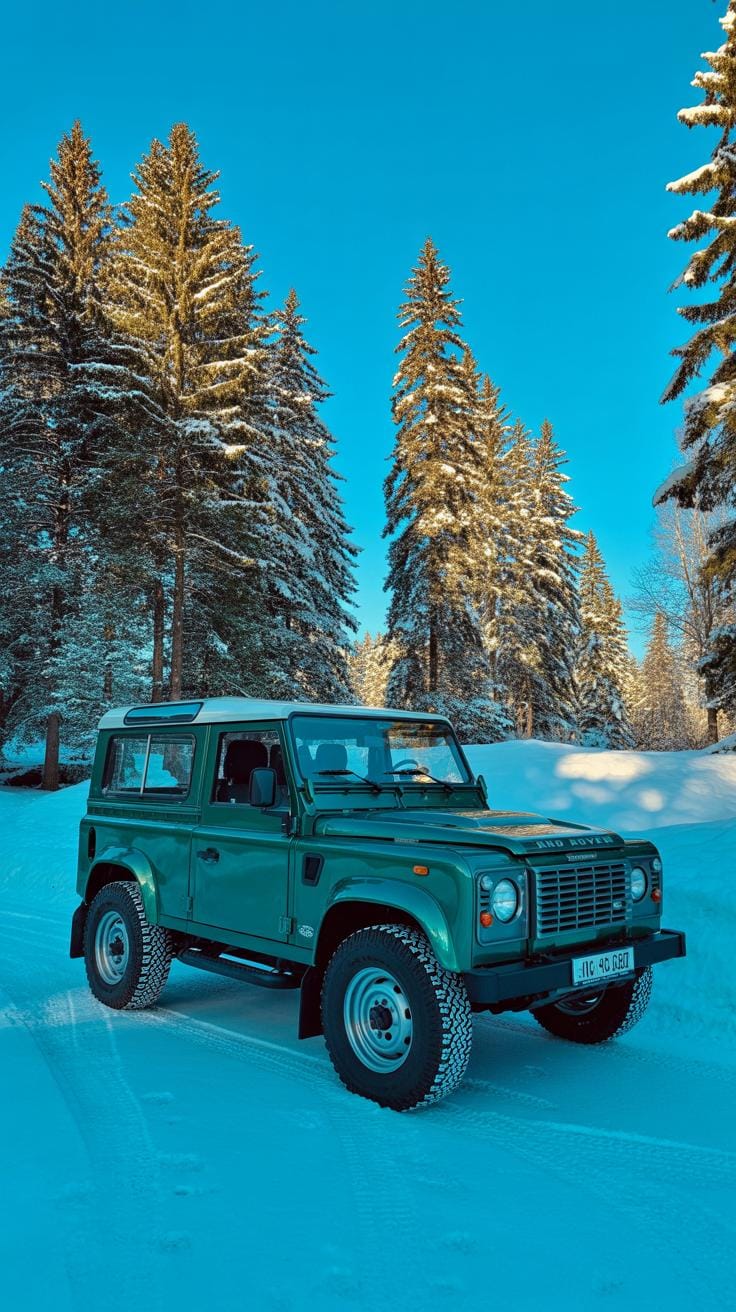
Low winter sun angles create long shadows and high contrast. This lighting improves Land Rover winter scenery photos by defining the square edges of the body panels. Park your off-road camper truck in snow away from cluttered treelines to ensure the silhouette remains sharp. Using a white backdrop forces the camera sensor to underexpose. You must manually adjust exposure to ensure the vehicle does not appear too dark against the drifts.
Winter camping offers a unique visual depth that summer lacks. Position your snowy off-road vehicle in mountains during the golden hour for the best results. This timing emphasizes the texture of the snow and the metallic sheen of the paint. Capture your vintage off-road jeep in snow at a three-quarter angle to show both the front grille and the side profile. This angle communicates the scale and capability of the rig effectively.
Winter Maintenance For Classic Steel Bodies
Corrosion is the primary threat to aging steel when camping in the snow. Road salt and slush trapped in the chassis will accelerate oxidation on classic frames. Apply a lanolin or wax based undercoating before your first winter outdoor adventure vehicle trip. This barrier prevents moisture from reaching the bare metal. Check your drain holes regularly to ensure melting snow does not pool inside the bulkhead or door bottoms.

Snow camping requires diligent post-trip cleaning to preserve the winter camping aesthetic. Use fuel stabilizers if your vehicle sits for long periods in sub-zero temperatures. Inspect all rubber seals around doors and windows to prevent them from freezing shut or cracking in the cold. Keep a light coat of oil on exposed hinges and latches. Maintenance ensures your rig survives the season without structural damage from the harsh alpine environment.
Setting Up Your Snow Overland Camping Basecamp
Clearing And Leveling The Site
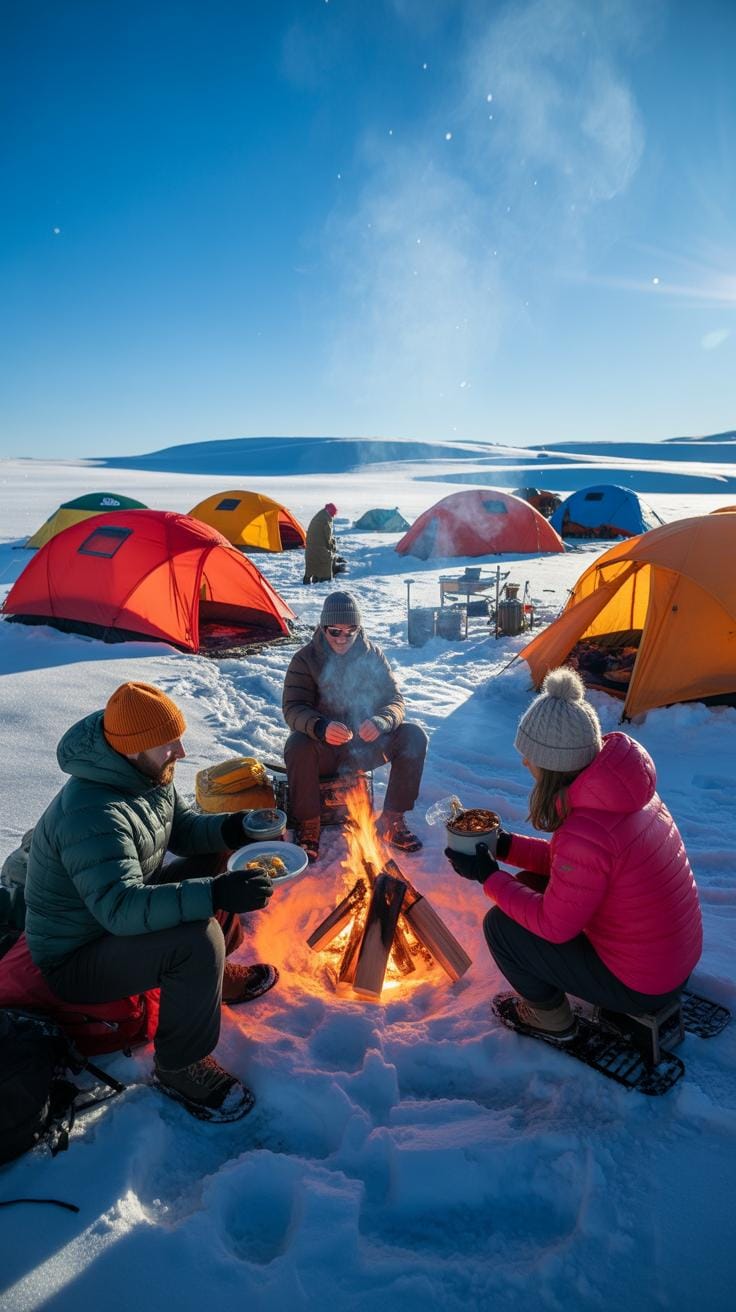
Begin by assessing the terrain for hazards. Drive your Winter Camping rig onto the chosen spot to compact the snow. Use a metal snow shovel to remove excess depth. Clear a wide perimeter around your tires. This prevents the chassis from bottoming out if the snow softens. A level Off-road Camper Truck In Snow ensures internal heaters and refrigerators function within their design parameters.
Finalize your position by carving out flat tracks for each wheel. Use sand ladders or recovery boards to create a stable foundation if the ground is soft. You want your Snowy Off-road Vehicle In Mountains sitting perfectly horizontal for sleep comfort. Avoid parking under heavy snow-laden branches. Proper site preparation mimics a Land Rover Winter Scenery setup by emphasizing stability and safety over speed.
Managing Moisture And Condensation
Interior moisture is your primary enemy during Snow Camping operations. Your body releases substantial water vapor through breath and skin. Without ventilation, this moisture hits cold metal surfaces and freezes into ice. This ice melts once you heat the cabin, ruining your gear. Cracking a window or roof vent creates the necessary cross-flow air exchange to move humid air outside.

Prioritize dry air over maximum heat retention for a Vintage Off-road Jeep In Snow. Use a diesel heater or external heat source to pump dry air into the cabin. Dry heat forces moisture out through the cracked windows or vents. Managing humidity maintains the Winter Camping Aesthetic and keeps your insulation effective. Wet down jackets or sleeping bags lose their loft and fail to keep you warm.
Maintaining A Cozy Winter Camping Aesthetic At Night
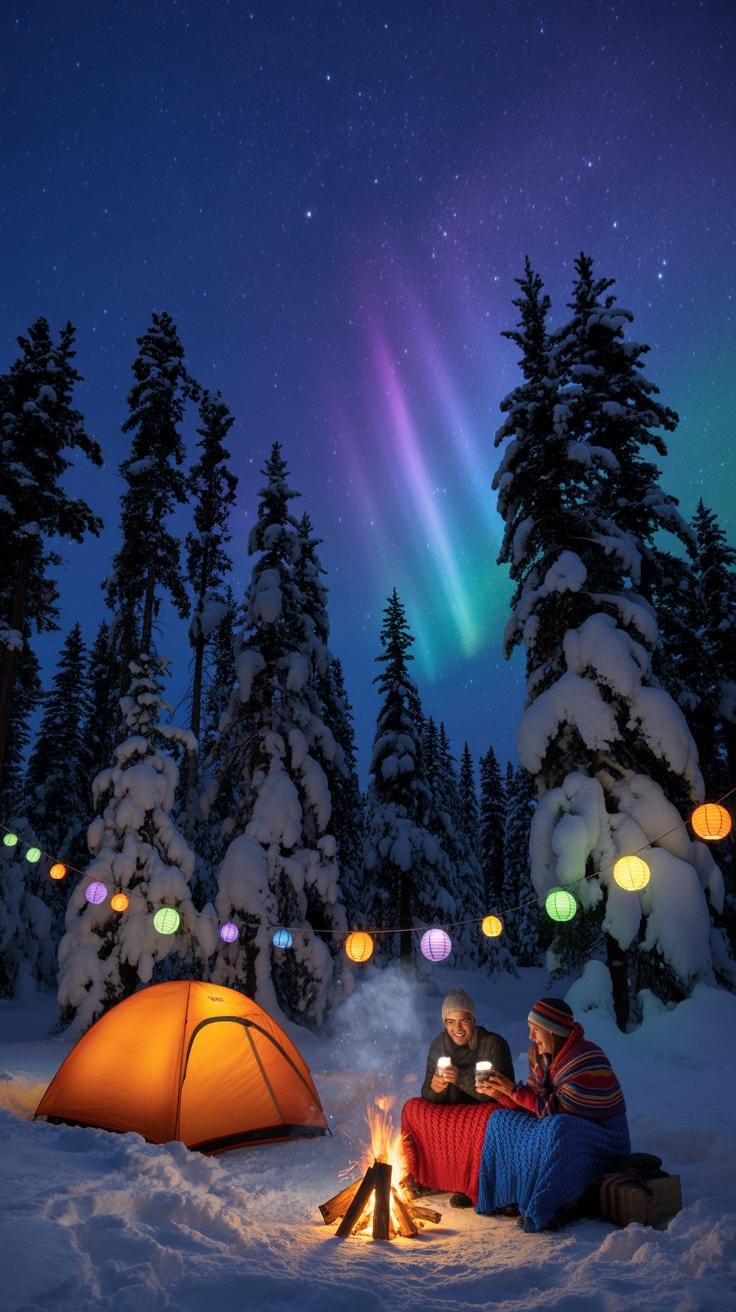
Lighting And Warm Ambiance
Effective Winter Camping requires managing color temperature to counteract low light. Use amber-toned LED lights with a Kelvin rating between 2000K and 2700K. This spectrum provides better visibility in heavy snowfall by reducing glare compared to harsh white light. Proper lighting transforms an Off-road Camper Truck In Snow into a visible beacon. Position lights low to the ground to highlight the snowy terrain safely.
A portable fire pit is the primary tool for Camping In The Snow at night. It provides a central heat source and creates a sharp visual contrast against the blue twilight of the mountains. This setup mimics a Land Rover Winter Scenery by balancing industrial utility with natural elements. High-quality fuel prevents excessive smoke in cold, dense air. Maintain a clear perimeter to prevent melting snow from flooding the fire base.
Warm Textile Layers
Functional heat retention defines a high-quality Winter Camping Aesthetic inside your rig. Deploy wool blankets and down-filled accessories to trap air and provide insulation. These materials have a long history of use in harsh environments for their thermal properties. They improve the interior of a Snowy Off-road Vehicle In Mountains by adding mass that holds heat. Natural fibers outperform synthetics in moisture management when temperatures drop below freezing.

Your sleep system must reflect the rugged nature of a Vintage Off-road Jeep In Snow. Layering heavy canvas and specialized wool creates a thermal barrier against metal surfaces. This technique is a staple of Snow overland camping strategy to prevent heat loss through conduction. Use these heavy textiles to cover windows and doors at night. This practice reduces drafts and maintains a stable internal temperature for the occupants inside their vehicle.
Taking Your Vintage Off Road Jeep In Snow And Cold
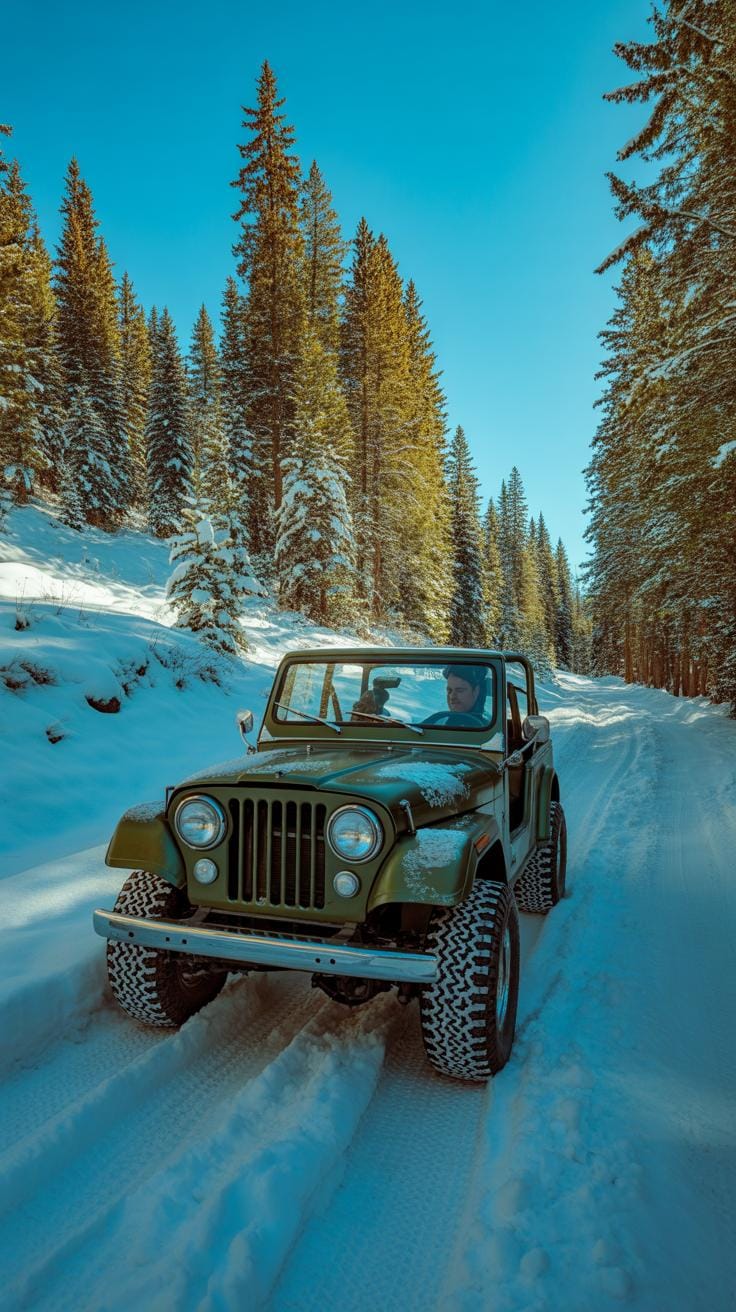
Hard Top Vs. Soft Top Insulation
Vintage soft tops offer zero thermal resistance for Winter Camping. The thin fabric allows heat to escape instantly while cold air penetrates through plastic windows and door seals. Choosing a fiberglass or steel hardtop is the only way to retain cabin heat during Snow Camping. Hard structures provide a solid base for insulation kits that reflect radiant heat back into the interior space.
Structural integrity is the second reason to ditch the soft top. Heavy snow loads can stretch or tear vinyl tops and snap thin metal supporting bows. A hardtop handles the weight of accumulated snow without collapsing. This setup allows your Vintage Off-road Jeep In Snow to function as a reliable shelter. It transforms a leaky utility vehicle into a viable Winter Outdoor Adventure Vehicle for overnight stays.
Mechanical Reliability In Deep Freeze
Older engines require specific preparation for success in a Snowy Off-road Vehicle In Mountains. Carbureted systems often face iced fuel lines and poor atomization in sub-zero temperatures. You must use fuel stabilizers and ensure your choke is adjusted correctly for cold starts. A weak ignition system will fail when the mercury drops. Upgrade to high-output coils and fresh plugs to ensure the engine fires every time.

Check all fluids for their pour point and viscosity before Camping In The Snow. Thick gear oil in differentials and manual transmissions can make the vehicle difficult to move until it warms up. Switch to synthetic lubricants to maintain flow in extreme cold. Reliable mechanicals prevent you from becoming a static part of the Land Rover Winter Scenery. Proper maintenance keeps your Off-road Camper Truck In Snow moving through the harshest conditions.
Cooking And Nutrition While Snow Camping
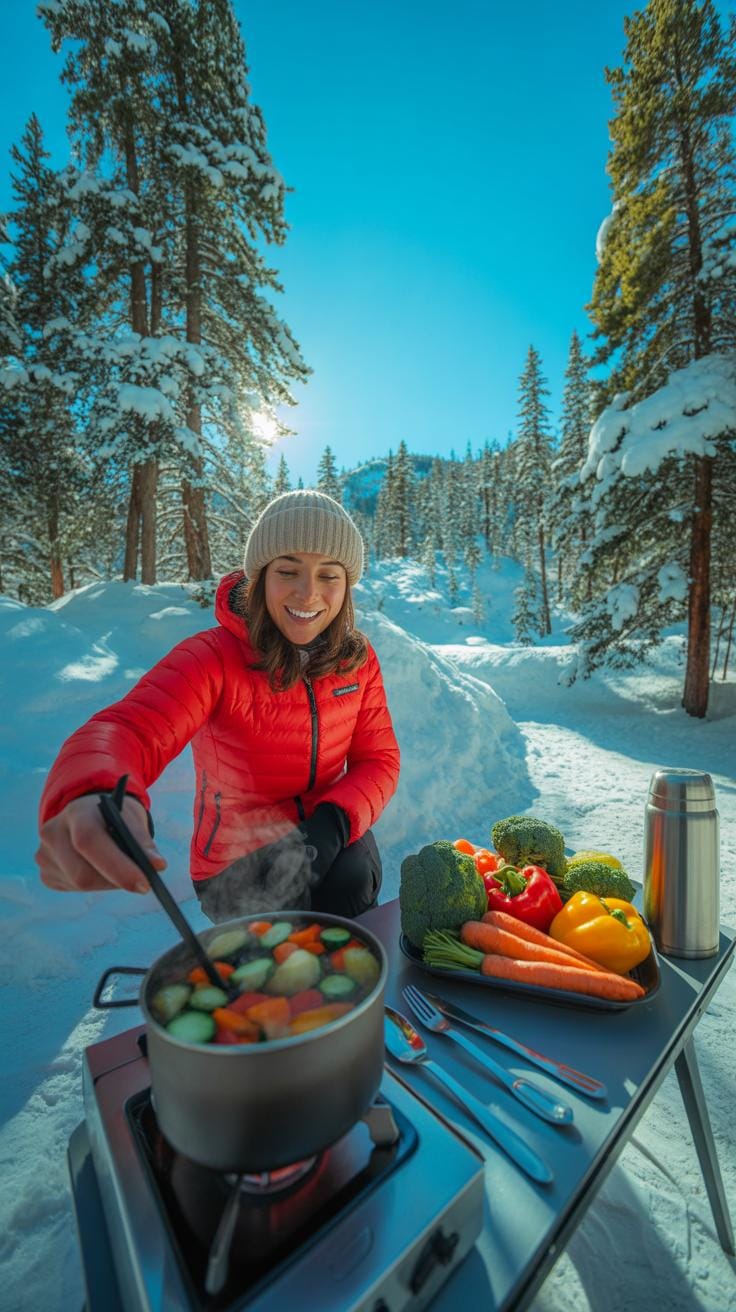
High Calorie Winter Meal Ideas
Your body demands massive energy to maintain core temperature during Winter Camping. Thermogenesis consumes calories at a higher rate than in mild weather. Focus on high-fat and high-protein foods to fuel this process. Minimize complex recipes that require excessive water or clean-up. Frozen liquids in your Off-road Camper Truck In Snow make hydration difficult, so prioritize ingredients with high moisture content or short cook times.
- Dehydrated Beef Stew: High-protein meals provide sustained energy for shoveling or recovery. Use boiling water to rehydrate quickly. This method preserves heat and limits fuel consumption when Camping In The Snow.
- Pre-baked Breakfast Burritos: Wrap these in heavy-duty foil for easy heating on your engine block or a small heater. The fats in cheese and eggs offer immediate fuel for a Snowy Off-road Vehicle In Mountains journey.
- Loaded Mashed Potatoes: Instant potato flakes require minimal water and provide fast-acting carbohydrates. Mix in butter and bacon bits to increase caloric density. This strategy is essential for maintaining warmth during long Snow Camping nights.
- Pemmican or Meat Bars: These traditional high-density foods require zero preparation. Keep them in your pocket to prevent freezing. They are tactical snacks for scouts operating a Vintage Off-road Jeep In Snow.
- Nut Butter Packets: Fats provide the most energy per gram of weight. Squeeze these directly into oatmeal or eat them plain. They stay shelf-stable and provide the necessary lipids for a Land Rover Winter Scenery expedition.
Prep all meals at home to reduce time spent exposed to the elements. Precision planning ensures you spend less time cleaning dishes and more time inside your Winter Outdoor Adventure Vehicle. Use insulated containers to keep food from freezing before you eat it. Fat remains your best friend in the cold. It burns slower than sugar and keeps your internal furnace running while you sleep.
Propane Performance In Cold Weather
Standard propane struggles as temperatures drop toward its boiling point of negative forty degrees. Low vapor pressure causes stove flames to sputter or fail entirely. You must understand the physics of gas expansion to operate your Winter Outdoor Adventure Vehicle kitchen. As the tank cools, the liquid inside stays liquid instead of turning into gas. This makes your high-output burners useless when you need them most for survival.
Keep your fuel canisters inside your jacket or sleeping bag before use to maintain pressure. For permanent vehicle tanks, use heating blankets or move the stove closer to the heat source. Switch to isobutane or pro-mix fuels for better performance in the cold. If you operate an Off-road Camper Truck In Snow, consider liquid fuel stoves that use white gas. These systems use manual pumps to create the pressure that Mother Nature takes away.
Safety And Ethics Of Winter Camping In The Wild
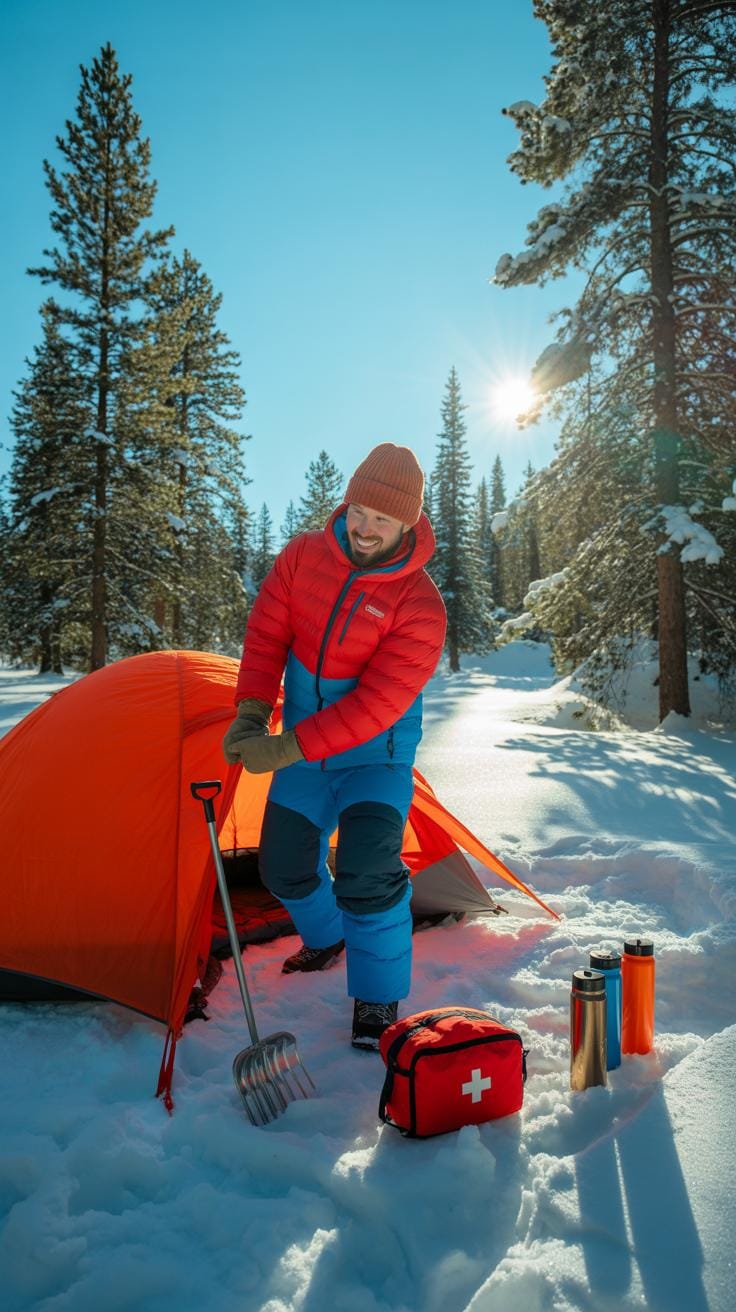
Leave No Trace In Snowy Environments
Winter Camping requires strict waste management because the frozen ground prevents natural decomposition. Human waste and trash do not disappear when buried in snow. They reappear in spring as a mess that ruins the mountain environment. You must use a portable toilet system or WAG bags to pack out all waste. Keep your Off-road Camper Truck In Snow clean by securing trash in airtight containers.
Environmental protection is vital for anyone engaging in Snow Camping. Do not hack live branches for firewood or shelter. Use a raised fire pit to prevent scorching the soil underneath the snow layer. Your goal is to leave the area exactly as you found it. Professional Snow overland camping demands discipline. Clean sites preserve the land for the next adventurer and protect local water sources from contamination.
Emergency Communication And GPS Tracking
Standard cell service fails in deep backcountry. Cold temperatures also drain mobile batteries rapidly, leaving you stranded. You must carry a dedicated satellite messenger with a subscription. This tool allows you to send an SOS signal if your Snowy Off-road Vehicle In Mountains breaks down or gets stuck. A Vintage Off-road Jeep In Snow lacks modern tracking, making external GPS devices essential for your safety.
Real-time tracking lets family members monitor your progress. Share your route before you leave the pavement. If you do not check in, rescuers know where to start looking. Reliability is everything when Camping In The Snow. A Winter Outdoor Adventure Vehicle like a Land Rover Winter Scenery setup needs more than just recovery gear. It needs a lifeline. Navigation and communication are the two most critical tactical tools in your kit.
Frequently Asked Questions

Is my standard 4WD vehicle prepared for snow overland camping?
While most stock 4WD vehicles are capable, snow overland camping requires specific upgrades for safety and comfort. At a minimum, you should swap standard tires for winter-rated or dedicated snow tires to handle icy trails. Additionally, ensure your battery is in peak condition, as cold temperatures significantly reduce cranking power. Starting with shorter, local trips allows you to test your rig’s gear performance before heading into deep, remote winter wilderness.
How do I keep my rooftop tent warm during a freezing night?
Staying warm starts with proper insulation and airflow. Use an anti-condensation mat under your mattress and add an insulated inner liner to your tent walls to trap heat. For the ultimate cozy setup, many enthusiasts use a diesel heater to duct warm air directly into the sleeping area. Layering with a high-quality down sleeping bag rated for sub-zero temperatures ensures you stay comfortable throughout your entire snow overland camping adventure.
Can I enjoy winter overlanding without spending thousands on specialized gear?
Absolutely! You don’t need a fully built expedition vehicle to get started. Focus on the essentials: a high-quality shovel, recovery boards, and affordable heavy-duty wool blankets. Instead of expensive built-in heaters, a reliable propane heater can work well if you follow strict ventilation safety protocols. By prioritizing safety equipment and thermal clothing over flashy vehicle modifications, you can experience the beauty of the winter season on a realistic budget.