
The Illusion Of Silence: Why Basic Earplugs Fail

Foam Traps, Not Transforms, Sound
You want to believe cheap earplugs work because admitting they don’t means you wasted money and will suffer through another flight. Here’s the mechanism: foam earplugs compress into your ear canal and physically obstruct sound waves. They don’t eliminate noise. They trap it by blocking the path to your eardrum, but the energy itself doesn’t disappear. It dissipates as heat inside the foam material. This works for mid and high frequencies, not the low rumble of jet engines.
Airplane cabin noise peaks between 80 and 100 decibels, with the heaviest energy below 500 hertz. Generic foam plugs reduce noise by 20-30 decibels across all frequencies, but that attenuation is weakest where engine noise dominates. The foam’s cellular structure wasn’t designed for sustained, low-frequency vibrations. You insert them, they feel tight, your brain signals relief, and you miss the actual performance gap. Most passengers confuse comfort with protection.
Passive Reduction Versus Intelligent Filtering
Signal processing borrowed the concept of filtering from electrical engineering. A filter lets certain frequencies pass while blocking others. Passive earplugs are blunt filters—they reduce everything equally and do it poorly at low frequencies where jet noise lives. Active noise cancellation headphones use a different approach: they generate an inverted sound wave to cancel incoming noise. The mechanism is phase opposition, not obstruction.
The tradeoff is real. Passive earplugs cost two dollars and stay in your ear for eight hours without batteries. Active systems cost 200-400 dollars and die mid-flight if your battery drains. Passive plugs never fail mechanically. Active systems require perfect fit and consistent power. Neither solves the core problem: engine noise at frequencies below 200 hertz requires either massive foam density (uncomfortable) or genuine active cancellation (expensive). Most travelers pick whichever fits their budget, not their actual noise exposure on the specific aircraft they’re flying.
Beyond Decibels: The Cognitive Drain Of Unfiltered Noise

How Low Frequency Depletes Your Brain
You care about this because you think you can just tough it out—that noise is noise and willpower handles it. Wrong. Borrow from neurobiology: your brain treats sustained low-frequency sound like a constant stressor, identical to how your nervous system responds to threat. Engine noise sits at 70-80 Hz, below the threshold of conscious annoyance but well within the range that triggers baseline cortisol elevation. Your prefrontal cortex, which handles decision-making and emotional regulation, has to work harder to filter it. This isn’t discomfort. It’s metabolic drain.

The mechanism is straightforward. Low-frequency drones bypass your ear’s natural filtering and lodge in the brainstem before conscious awareness kicks in. Your body mobilizes a mild stress response—not fight-or-flight, but enough to keep your nervous system in a state of readiness. Over four to six hours, that readiness burns through glucose and depletes neurotransmitters. Good earplugs cut those frequencies at source, preventing the activation entirely. Without them, your brain arrives at your destination already exhausted, even if you slept.
Decision Fatigue Starts Before You Land
The common advice ignores the real cost: you don’t just feel irritable after a flight—your decision-making capacity is genuinely compromised. Unfiltered cabin noise forces continuous micro-decisions about attention. Your brain keeps asking itself: Do I ignore this sound? Do I tense against it? Do I try to focus through it? Each decision is small, but they stack. By hour three, you’ve burned through decision-making bandwidth. Irritability isn’t a mood. It’s the symptom of resource depletion.
Earplugs reset this equation. They eliminate the source of micro-decisions, freeing your cognitive budget for actual tasks or rest. The difference appears immediately—not as calm, but as clarity. You can read without re-reading sentences. You can work without checking the time every twenty minutes. You land ready to function, not primed to snap at the first person who talks to you. Quality foam or silicone plugs reduce cabin noise by 15-30 decibels, which is enough to drop the frequency stimulus below the threshold of active processing.
The Auditory Bio Hacking Protocol For Air Travel

Noise Reduction As Cognitive Preservation
You want earplugs for flights because you’re terrified of landing worse than you took off. The real mechanism is this: jet engine noise sits between 80 and 140 decibels depending on cabin position and aircraft type. Your brain treats sustained noise above 85 decibels as a threat, triggering cortisol release and shallow breathing. You don’t recover from that during flight.

Foam earplugs rated at 20 to 33 decibels NRR (Noise Reduction Rating) aren’t luxury. They’re triage. Molded custom earplugs perform better because they seal the entire ear canal instead of leaving gaps where low-frequency rumble leaks through. The difference between generic foam and a proper seal determines whether your nervous system stays in sympathetic overdrive for eight hours or stays neutral enough to sleep.
Layering Against Engine Frequency Bands
The common advice is dead wrong: earplugs alone don’t solve flight noise because jet engines produce noise across multiple frequency bands simultaneously. Think of it in acoustic engineering terms. Low-frequency rumble (50 to 500 Hz) requires mass and compliance to attenuate. High-frequency whine (2000 to 8000 Hz) responds better to foam absorption. You need both, not just one.
Combine earplugs with noise-canceling headphones that actively counter low-frequency vibration. Play white noise or brown noise through them at modest volume. The active cancellation handles what earplugs miss. Start with 15 to 20 minutes before takeoff to let your ear canal acclimate to the seal, then activate the headphones once the cabin doors close and engines spool up.
Travel Earplug Recommendations: The Filters, Not The Plugs
Clarity Over Decibel Count
You want to sleep on the plane without missing the flight attendant or your boarding announcement. That’s the real reason you’re reading this. The mechanism is simple: most people buy earplugs that flatten sound equally across all frequencies, which leaves you deaf to speech while the engine drone still penetrates. You need selective attenuation, not blanket silence.

Engine noise lives in the low frequencies, below 500 Hz. Speech and announcements sit higher. A proper travel earplug doesn’t block everything equally—it targets the rumble while preserving intelligibility. This is the difference between waking up confused and waking up on time. The foam plugs from convenience stores don’t discriminate. They muffle your phone alarm as badly as they muffle turbulence.
How Materials Actually Stop Sound
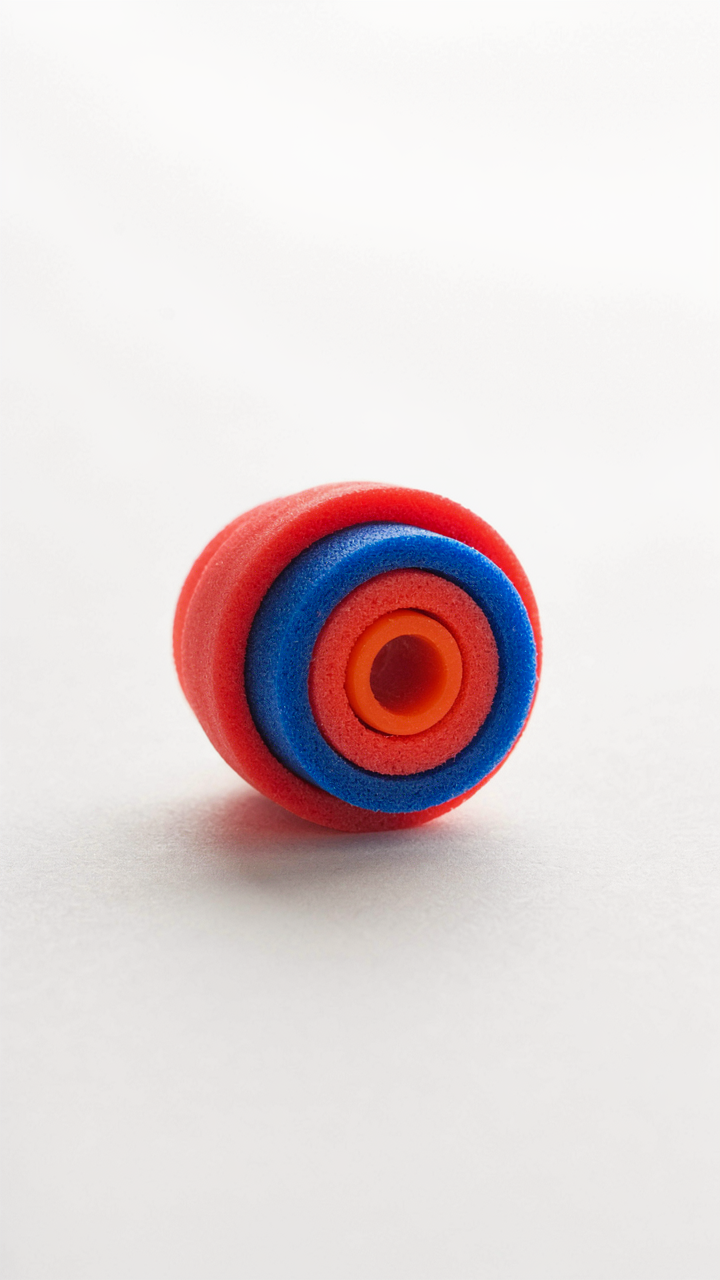
Physics teaches signal-to-noise ratio: the relationship between what you want to hear and what you don’t. For earplugs, that ratio depends entirely on the material’s cell structure and density. Cheap foam uses uniform, larger cells that stop mid-range frequencies well but let low-frequency pressure waves pass through. Advanced earplugs use layered, closed-cell foam with microscopic, graduated density—denser on the outside to catch high frequencies, progressively softer inside to absorb low-frequency energy through friction rather than reflection.
- Melamine Foam: Open-cell structure with excellent low-frequency absorption due to high internal friction. Used in aviation acoustics for cabin linings. More expensive but proven in commercial aircraft design.
- Polyurethane Foam: Standard earplug material. Denser varieties offer better attenuation across frequencies, but uniform density limits selective filtering capability.
- Silicone Rubber: Non-foam option with consistent density. Provides stable attenuation but doesn’t perform as well on ultra-low frequencies below 200 Hz without significant bulk.
- Composite Foam Blends: Combines polyurethane with viscoelastic or melamine layers. Engineered to target specific frequency ranges. More expensive per unit, requires careful insertion technique for full benefit.
- Waxed Cotton: Traditional material still used in some products. Compressible for custom fit but degrades over time and loses performance when exposed to moisture or repeated insertion.
The cost difference isn’t marketing. A multi-layer earplug with graded density costs more to manufacture because it requires precision molding or layering processes that single-material foam doesn’t. When you insert the plug correctly—rolled thin, held in place while it expands—the layered structure actually works. Most people fail insertion and blame the product. Proper seating in your ear canal activates the material’s design. That’s when engine drone finally becomes manageable.
Airplane Ear Pressure Relief: The Eustachian Tube Advantage
How Pressure Equalization Actually Works
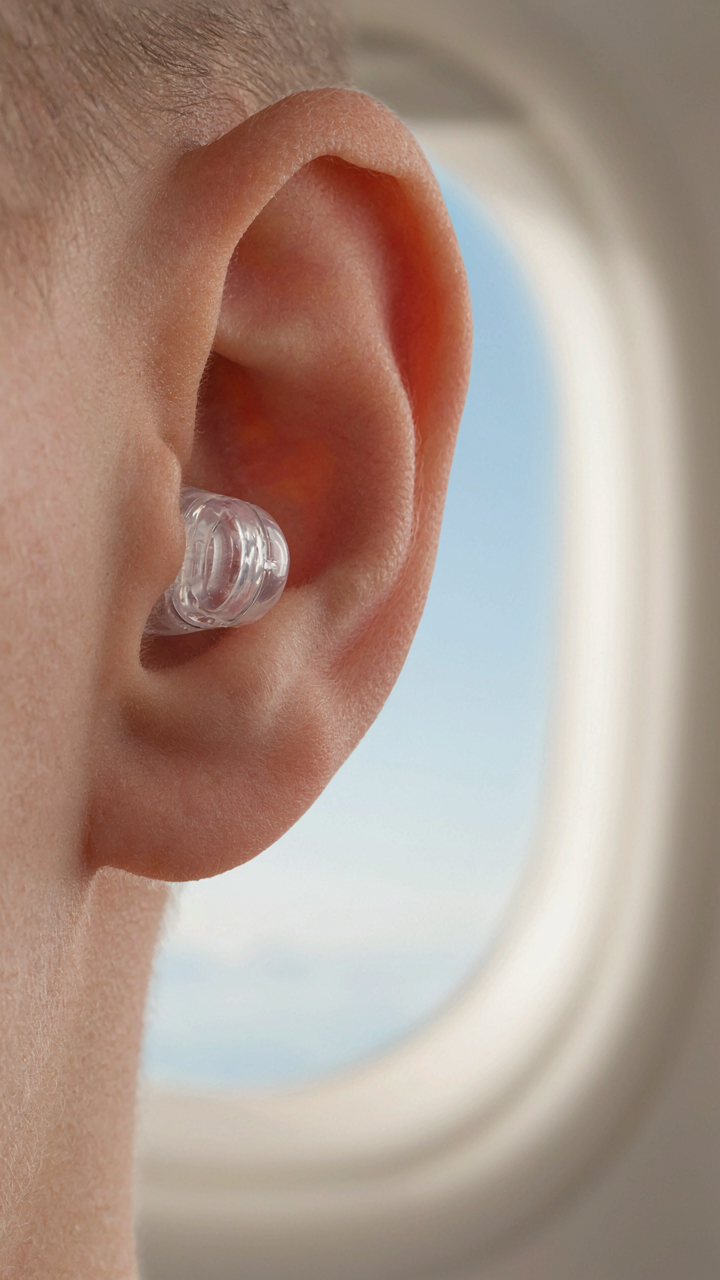
You want earplugs that promise painless flights because ear barotrauma sounds like a future problem you can avoid by buying the right gear. The mechanism is simpler than you think. Physics dictates that pressure differentials across a membrane create force. Your Eustachian tube is that membrane’s gatekeeper. It opens and closes to balance cabin pressure with middle ear pressure. When descent happens faster than your tube can equalize, pressure builds behind the eardrum. The right earplug slows air pressure change around your ear canal, extending your equalization window and giving your Eustachian tube time to do its job.

Passive earplugs don’t block pressure—they regulate it. Foam earplugs trap air in their cells, creating acoustic dampening but minimal pressure control. Vented plugs, particularly those with graduated air channels, function as pressure valves. They allow slow pressure equalization while blocking rapid shifts that trigger barotrauma. The earplug becomes a buffer, not a barrier. During descent, pressure enters through the vent at a controlled rate instead of forcing your tube shut abruptly.
Military Decompression Protocol Applied To Comfort
Military aviation learned decades ago that pressure tolerance correlates with controlled descent rates. Fighter pilots use pressure equalization techniques during altitude changes because their cabins depressurize faster than commercial aircraft. Earplugs designed for that environment use the same pressure-relief principle: graduated venting. One military-derived design integrates internal channel geometry that mimics staged decompression chambers. The plug vents air in phases, not all at once, matching the physiology of tube opening and closure timing.
Commercial earplugs copied this framework but stripped the precision. Most brands claim “pressure relief” without specifying vent diameter or channel configuration. The ones that work follow the military model: specific vent sizing that slows pressure change to roughly 100 pascals per second during descent. This matches the maximum rate your Eustachian tube can handle during a typical 20-minute descent. Insert the plug correctly, and pressure equilibrates passively without you performing active Valsalva maneuvers. The plug does the decompression work your tube cannot handle alone.
The “Travel Essentials For Noise Reduction” Deception

What Actually Works Against Engine Noise
You want to feel like you’ve solved the problem without actually solving it. The mechanism is simple: most flight noise lists bundle random items together because they sound related, not because they address the physics of cabin noise. Jet engines produce low-frequency rumble between 80-140 decibels. Generic foam earplugs block high frequencies. They fail at the root problem. You need attenuation across the spectrum, not just comfort theater.
The noise isolation you get depends on how well material seals your ear canal and what frequencies it absorbs. Foam earplugs with a noise reduction rating of 25-30 decibels perform best when inserted correctly into the canal, not just placed at the opening. Most travelers insert them wrong, cutting effectiveness by half. Wax and silicone options sit shallower but seal faster. This detail matters more than brand selection.
Weaponizing Layering Over Single Solutions
In signal processing, you don’t solve complex noise by adding one filter. You stack complementary filters across different frequencies. Flight noise isolation works the same way. One layer of defense fails. Multiple layers with different mechanisms create redundancy. Most travel guides miss this entirely, recommending one earplug type as if cabin noise were monolithic.
Pair foam earplugs with over-ear headphones that deliver white noise or music at 60-70 decibels. The foam blocks engine rumble in the 500-4000 hertz range. The headphones mask remaining low-frequency vibration through active or passive masking. This combination requires testing beforehand. Experiment on a shorter flight first. The goal is blocking what matters while staying comfortable for six-plus hours without ear fatigue or pressure damage.
Beyond The Buzz: Mastering Your Sonic Landscape

The Layering Principle
You want proof that earplugs work so you don’t waste money on a solution that fails. Here’s the mechanism: sound travels as waves, and earplugs interrupt those waves through absorption and barrier density. Foam earplugs compress into your ear canal and expand to fill the space, trapping air molecules that would otherwise transmit cabin noise. The denser the material, the more frequencies it blocks. Cheap foam stops high frequencies better than low ones because longer sound waves penetrate thinner barriers.

Engine noise sits primarily between 80 and 120 decibels, concentrated in lower frequencies where foam alone struggles. This is why dual-layer systems work: foam handles mid-range turbulence noise while a secondary barrier addresses the bass rumble. Combining earplugs with noise-masking strategies or active noise-canceling headsets exploits a principle from acoustics called destructive interference. Two opposing sound waves cancel each other out. You’re not fighting noise with one tool; you’re stacking barriers that each handle different frequency ranges.
Attention Recapture Under Pressure
The cabin environment kills focus not because noise exists, but because your brain treats it as a threat it must monitor. Sleep researchers call this the “cocktail party effect”—your nervous system locks onto unpredictable sounds even when you try to ignore them. Engine noise meets that criteria: it fluctuates, it’s involuntary, and your body treats inconsistency as a signal to stay alert. Most people don’t isolate from noise; they dissipate mental energy defending against interruption.
Earplugs lower the signal below your threat threshold, which frees cognitive resources for sleep or work. The reduction doesn’t need to be total silence—research shows that dropping cabin noise from 85 decibels to 70 decibels shifts your nervous system from defensive to resting state. Pair earplugs with a consistent white noise track, and you’ve created predictability that signals safety. When you land, you’ll have recovered energy instead of spending eight hours managing auditory intrusion.
The Best Earplugs For Travel Noise Aren’t What You Think
Frequency Selectivity Beats Blanket Blocking
You want relief without feeling trapped in silence. The real mechanism is this: jet engine noise concentrates in low frequencies, roughly 50 to 500 Hz. Most people buy earplugs that block all sound equally. That’s wrong. You need selective attenuation, borrowed from acoustics engineering. Foam earplugs and generic silicone block across the spectrum uniformly. They muffle speech, crying babies, and announcements you actually need to hear. The problem isn’t blocking sound. It’s blocking the right sound.

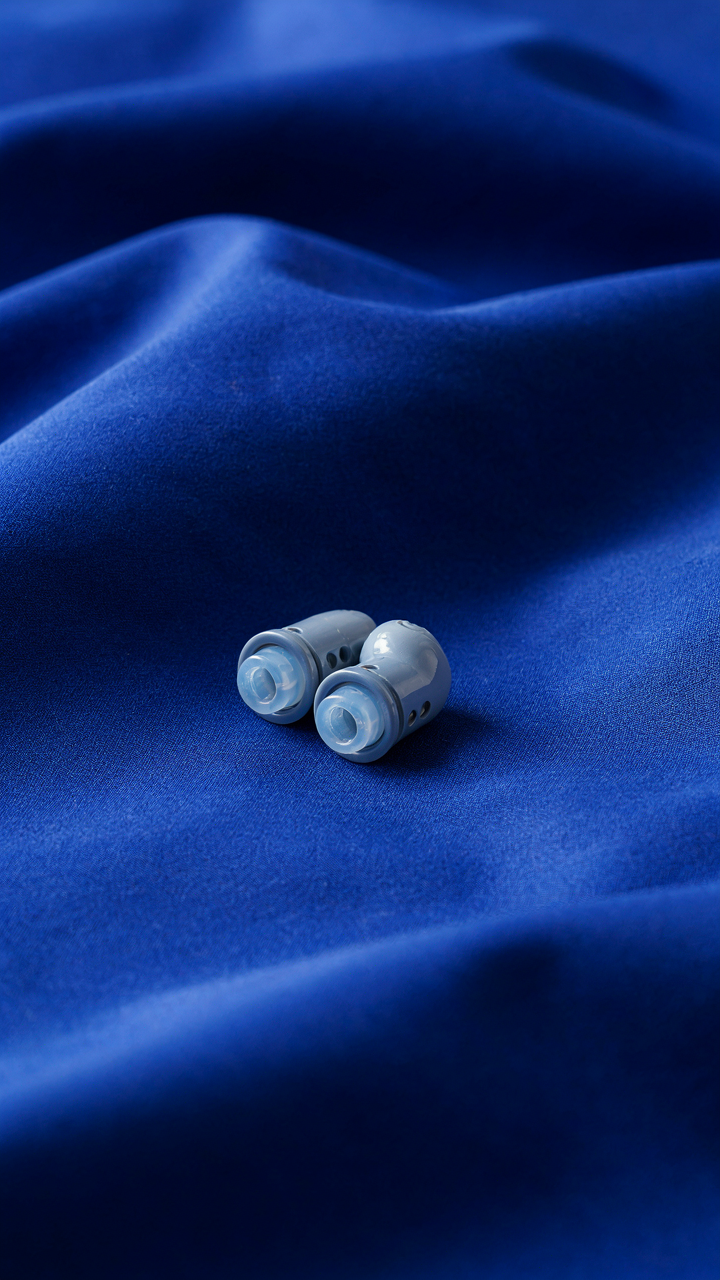
Engine drone lives in predictable frequencies that your earplug can target without creating that suffocating, pressure-cooker feeling. Loop Earplugs and similar design-forward options use shaped acoustic channels to reduce low-frequency energy while preserving mid and high frequencies. This isn’t tweaking comfort. It’s changing which information reaches your ear. The attenuation profile matters more than the decibel rating stamped on the box. You match the acoustic signature of cabin noise, not your neighbor’s conversation.
Your Ear Canal Geometry Determines Fit Quality
Customization doesn’t mean buying twenty different models. It means recognizing that earplug effectiveness depends entirely on insertion depth and seal quality inside your specific ear canal. Custom-molded earplugs from an audiologist create a perfect acoustic seal by casting your ear’s actual shape. The seal is what stops sound. Air gaps kill performance completely. Off-the-shelf soft silicone tips come in small, medium, and large, but most people grab the wrong size and wonder why they still hear the roar.
Insertion technique matters as much as the earplug itself. You must push the plug deep enough to fill the ear canal’s entire length and create pressure against the canal walls. Shallow insertion leaves an air gap that low frequencies pass straight through. Roll expandable foam earplugs between your fingers to compress them, insert while compressed, then let them expand inside your canal for a full seal. That step separates functional noise blocking from wasted money.
The Noise Isn’t The Problem; Your Unmanaged Response To It Is

You’re not flying 30,000 feet to suffer. You’re flying to arrive somewhere better. The right earplugs don’t eliminate noise, they eliminate the mental tax of fighting it. Your brain stops wasting energy on what it can’t change and starts preparing for what comes next. Buy a pair today. Test them on your next flight. Stop treating sleep deprivation like a badge of honor and start treating it like the competitive disadvantage it actually is.