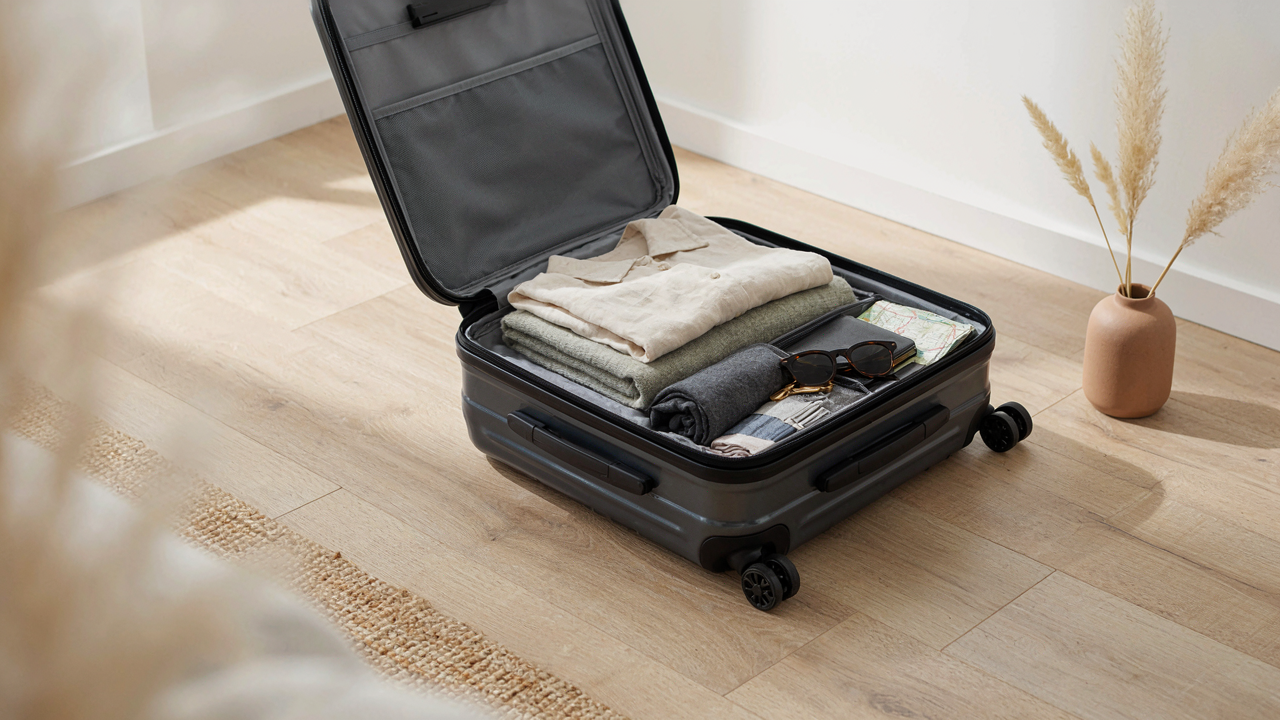
The Myth Of More: Why Your Packing List Fails

What Everyone Gets Wrong About Packing
You want proof you’re prepared, and a long list feels like evidence. Here’s the mechanism: most packing lists are inventory exercises, not strategy. They catalog items instead of solving the actual constraint you face on a weekend trip, which is friction. Every item you pack costs time to pack, time to find, mental energy to manage, and opportunity cost in your bag. Generic lists add items because they optimize for edge cases, not your trip. They miss the threshold where a second shirt stops being useful and starts being a liability.
The consensus approach treats packing as completeness. Take enough of everything so nothing can go wrong. This breaks immediately: you can’t pack for every scenario without carrying a suitcase. Smart packing inverts this. You pack for the 95 percent case and accept minor trade-offs. Most weekend trip carry-on lists add unnecessary layers because they’re written for nobody in particular. A list that works for everyone works for no one.
The Real Cost Of Carrying Extra Weight
Economics calls this the concept of diminishing returns, and your bag is its proving ground. The first shirt covers your base case. The second shirt handles laundry delays and climate shifts. The third shirt handles anxiety. You pay the physical cost of every ounce while the benefit of item three approaches zero. Time compounds this: packing takes longer, finding things takes longer, and security lines move slower with bulk. Your mental load explodes when you open your bag and scan twelve options instead of five.
Overpacking creates a specific trap on weekend trips because the reduced duration makes excess gear feel justified. You think one extra pair of shoes covers uncertainty. One extra charging cable prevents worst-case scenarios. But a weekend is short enough that scenarios rarely materialize. You end up carrying insurance you never claim. The tax on your shoulders and your attention span outweighs the hypothetical protection. The system breaks when you optimize for edge cases instead of the base case you’ll actually live.
The “Essentials Only” Fallacy: True Utility Revealed
Beyond The Generic Basics
You want validation that you’re packing smart, not paranoid. The truth is simpler: most packing advice mistakes “essential” for “commonly mentioned.” You don’t need everything travel blogs repeat. You need what actually breaks your weekend if missing. Borrowing from systems design, your carry on is a constraint optimization problem. You’re not minimizing items. You’re maximizing the ratio of utility to weight. Strip the noise first.

Generic advice tells you to pack basics: clothes, toiletries, documents. That’s the skeleton every article repeats. What actually matters is identifying which basics you’ll actually use versus which ones you’re packing out of guilt or habit. A three-day trip doesn’t require the same toiletries you’d bring for a week. Your weekend destination matters more than the packing rule. City travel, mountain hiking, and beach trips have different friction points. The mechanism: map your specific friction points before opening your carry on.
Core Items For A Three Day Weekend
Start here. List your non-negotiable friction points: what stops your weekend cold if you forget it. Not what might be nice. Not what you could buy. What actually disrupts your plans. Your phone charger is non-negotiable. Your medications are non-negotiable. Clean underwear is non-negotiable. Everything else gets questioned.
- Phone charger and cable: Required for navigation, communication, and payment. Forgetting this creates immediate friction on day two when your battery dies in an unfamiliar place.
- Medications and supplements: If you take daily medication, you take it. No exceptions. Pack enough for four days to buffer against delays. Health disruption stops your trip faster than anything else.
- Identification and payment: Passport or ID plus one primary card. You cannot book a hotel or board transport without these. Keep them accessible, never in checked luggage.
- One backup outfit layer: A fleece or light jacket that works across weather shifts. This handles the 80 percent of unpredictable temperature swings without requiring a second outfit.
- Underwear and socks for trip length plus one: Three days means four sets minimum. Laundry access matters, but you pack for no laundry access and use it if available.
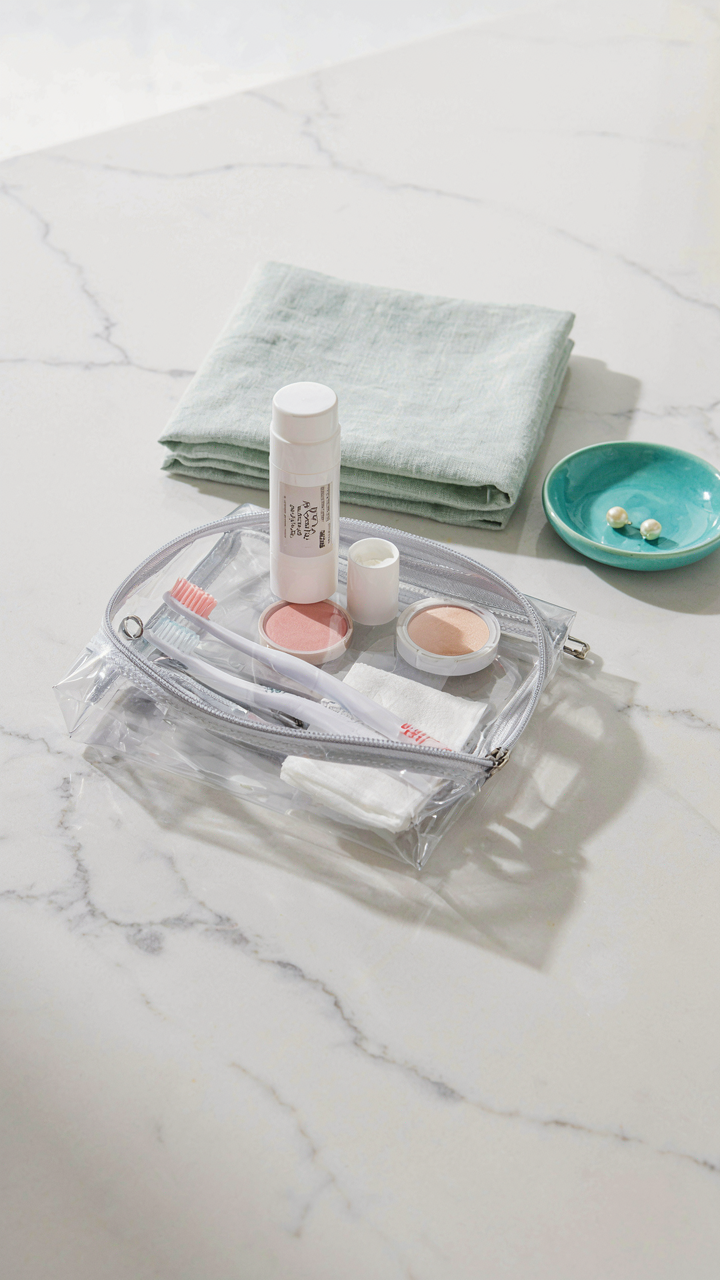
- Toiletries in travel size: Deodorant, toothbrush, toothpaste, one face product. Hotel shampoo exists. You don’t need your exact routine. You need functional hygiene.
The mistake people make: they pack backup items for backup scenarios. Pack for the base case. If your hotel confirms a hair dryer exists, don’t bring one. If your destination has drugstores, don’t pack every remedy. Call ahead or research once. Then pack only what doesn’t exist at your destination. This cuts carry on bloat by thirty percent immediately.
The Iterative Packing Protocol: Learn From Each “Weekend Trip Carry On”

The Pre Trip Mental Walkthrough
You want this section because you’re afraid of arriving unprepared and looking incompetent in front of people who matter. Here’s the mechanism: your brain is bad at spatial reasoning and probability when stressed. A mental walkthrough offloads the work before emotion hijacks your choices.

Run through your weekend hour by hour. Saturday morning: what do you wear, eat, do? Where are you? What’s the temperature? What could go wrong? Move through each activity and name one item per scenario. Write nothing down yet. This isn’t about being thorough. It’s about catching the gap between what you think you need and what you’ll actually face.
The walkthrough exposes the items you pack from anxiety, not logic. Those emotional picks are the real weight. You’ll notice patterns: the backup shoes you never wear, the “just in case” layers, the toiletries you assumed were essential. Your job is to identify them before they land in your bag. The simulation is where you kill decisions before they become dead weight.
Post Trip Pattern Recognition
Most packing advice skips this part because it requires honesty about failure. You came home with unused items. The question isn’t whether you overpacked. It’s which specific items revealed flawed assumptions about your own behavior.
On return, empty your bag before unpacking. Separate three piles: used daily, used once, never touched. The “never touched” pile is your data. Did you pack a second pair of jeans because you were bored or because you genuinely thought you’d change clothes twice? Did you bring medications you didn’t need? Did you overestimate how much you’d read? Document these without judgment. This is feedback, not failure.
Build a simple spreadsheet: trip destination, duration, items packed, items unused. After three to four weekend trips, patterns emerge. You’ll see that you always overpack outerwear or always bring too many electronics. That’s your personal packing signature. Your next weekend trip carry on list becomes a calibration of that signature, not a generic checklist someone else built.
Space Time Compression: Physics For Your Travel Duffel
Density Wins Over Volume
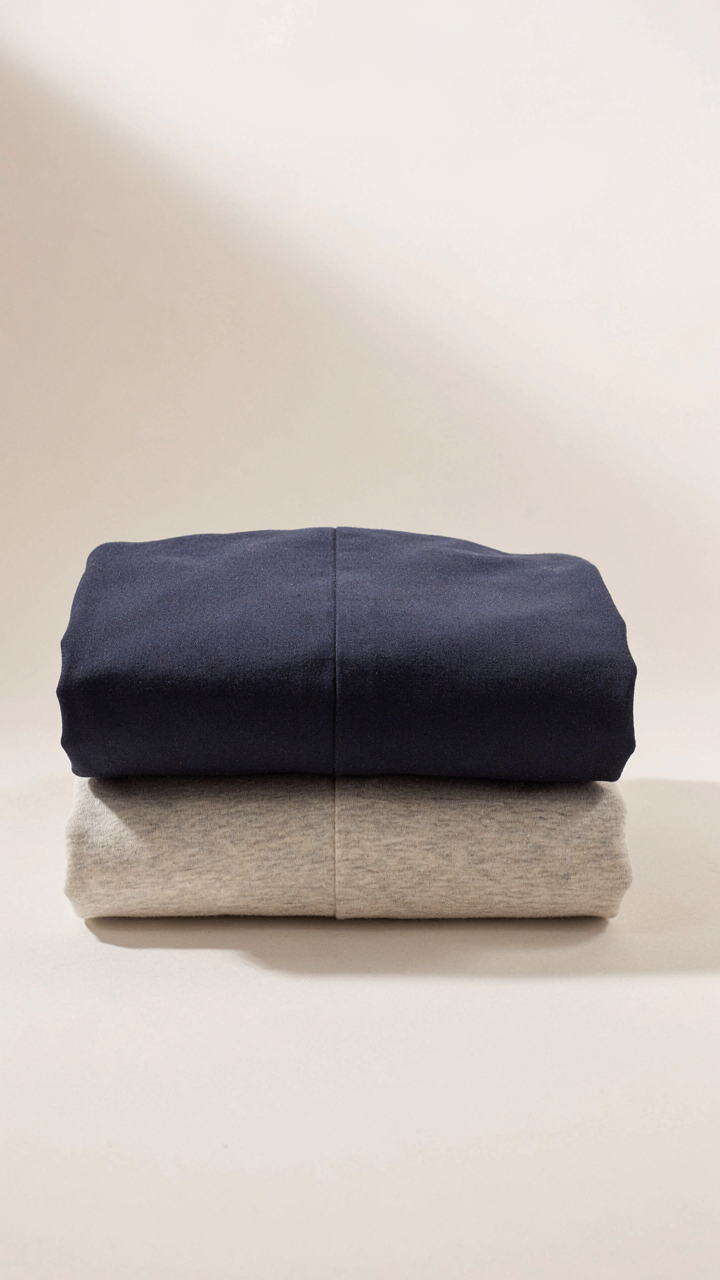
You care about this because you want to look like someone who travels light, not because you actually understand why your packing fails. The real mechanism is density, not volume. Physics doesn’t care about your duffel’s total cubic inches. It cares about mass per unit space. A rolling carry on holds roughly 2,200 cubic inches. Most people waste 40% of that on air pockets and low density items like puffy jackets and rolled up jeans.
Compress strategically. Use compression bags for soft goods like sweaters and underwear. Downgrade to merino wool base layers that dry fast and compress small. Choose items that weigh more per cubic inch. A pair of chinos takes the same space as sweatpants but works for more scenarios. Every item needs to earn its density footprint or it leaves the bag.
The Multi Use Item Doctrine
Borrow from systems design: one component serving multiple functions eliminates redundancy. A single lightweight scarf becomes a blanket, a pillow, a bag divider, and a casual layer in one object. This isn’t creativity. It’s mechanics.
Stop treating each scenario as needing separate gear. A dark colored, durable pair of jeans works for casual dinners and hiking. A linen shirt layers under sweaters and works standalone in warm weather. Toiletries that do double duty matter too. One moisturizer with SPF replaces a separate sunscreen. One bar of soap cleans clothes and body. The constraint forces clarity. When you eliminate options, you pack better.

The Wardrobe Matrix: Strategic Clothing Selection
The Five Piece Formula
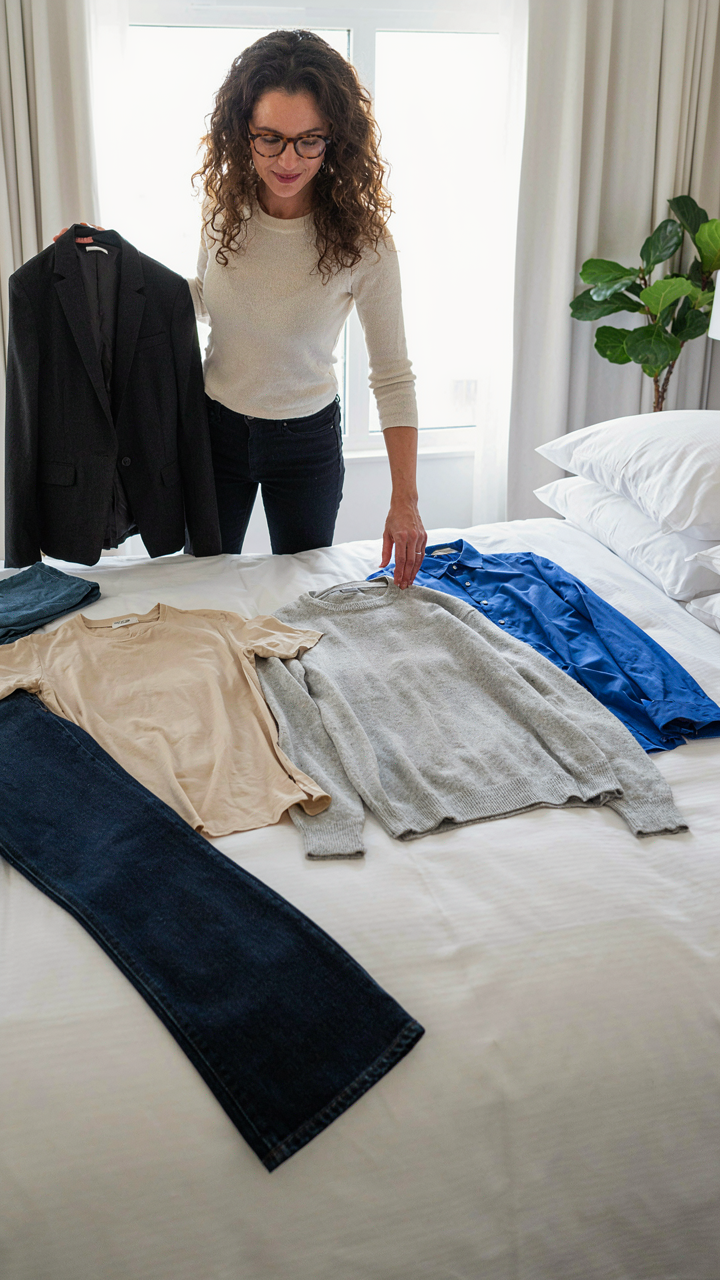
You want to look put together without thinking. That’s the real motive here. The mechanism is constraint. Borrow from combinatorics, the math of arrangements: you need pieces that multiply outfit options, not add them. Five core items create 10 outfit combinations minimum. Seven items create 21. Most people pack 12 random pieces and create chaos.
Start with a neutral base in one color family: dark jeans or chinos, a plain t-shirt, a casual button-up, a sweater or light layer, and one structured piece like a blazer or overshirt. Every single piece touches every other piece. You wear the jeans with four different tops. The sweater layers under the button-up. The blazer works over everything. This isn’t a wardrobe, it’s a system. You pick, you dress, you move.
Fibers That Don’t Betray You
Stop buying cotton for weekend trips. Cotton wrinkles, absorbs sweat visibly, and takes forever to dry. Merino wool, nylon blends, and polyester actually solve the problem everyone complains about. Merino regulates temperature, resists odor, and sheds wrinkles on its own. Nylon and polyester dry in hours, not days.
The common advice says “pack a steamer or iron.” That’s lazy. You don’t have room for either, and you shouldn’t need them. Choose fabrics that handle themselves. Check fiber content before you buy anything. If it’s 100 percent cotton, skip it for carry-on travel. Blended fabrics with 20 to 40 percent synthetic content handle real-world packing without drama.

Tech Minimalism For Your Weekend Packing List

What Tech Actually Enhances Your Trip
You want permission to leave your laptop behind and feel like you’re not missing anything important. That’s the real fear here. The mechanism is simple: most travel tech serves your old life, not your weekend. A phone handles 95% of what you need. Everything else is insurance against boredom or professional anxiety you won’t actually face in 48 hours.
The common advice says “bring what you use daily.” That’s backwards. Bring what solves a specific problem on this trip. Navigation, payment, photos, communication. That’s it. A book weighs less than a tablet and doesn’t require power management decisions. A paper map costs nothing and never dies. Your weekend doesn’t need your full digital stack because your weekend isn’t your work.
Charging Efficiency That Actually Works
Multi-port adapters are cargo cult thinking. You’re carrying extra weight and cables you won’t use to solve a problem that doesn’t exist on a two-day trip. Borrow the charging mechanism from systems thinking: prioritize your constraint, not your options. Your constraint is battery life. One cable solves one device. One device charges per night while you sleep.
Bring exactly what charges your phone. Nothing else. If you need a second device charged, use a wall outlet in sequence or bring a small power bank designed for your phone only, not a universal charging station. The hotels and Airbnbs on your route have outlets. You’ve already done the research. Charge your phone at night, use it during the day, stop designing for scenarios that won’t happen.

The “How To Pack For 3 Days In A Carry On” Blueprint
Roll Your Clothes, Not For Instagram
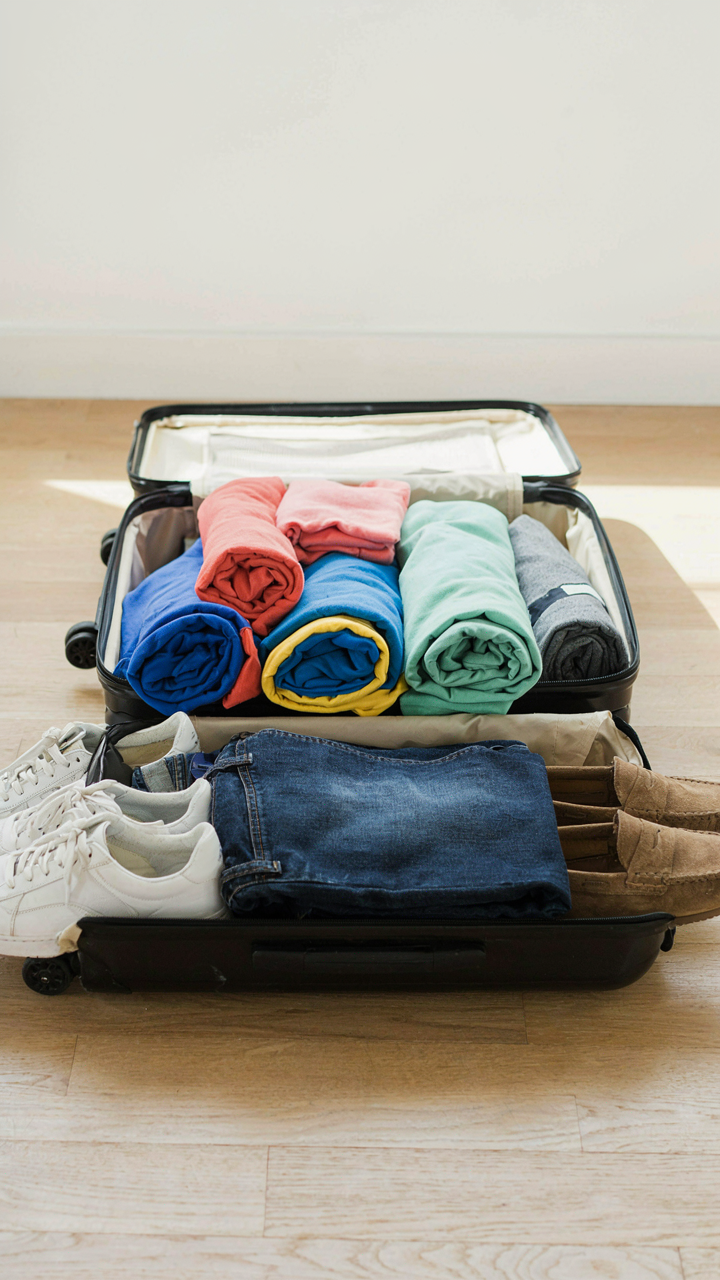
You want to believe there’s a hack that makes packing feel like control. Rolling doesn’t save space because of magic—it saves space through physics. Compression reduces air pockets between fabric layers. When you fold, you create dead zones. Rolled items nestle against each other. The difference isn’t marginal. Rolling cuts wasted volume by 20 to 30 percent in real practice.
Start with lightweight items: underwear, socks, t-shirts. Roll each piece tightly, then stack rolls vertically in your bag. This method lets you see every item at once and removes the temptation to overstuff. Heavier items like jeans go flat on the bag’s bottom. Shoes get packed last, edges to edges, filling corners where folded clothes wouldn’t fit.
Anchor Heavy Items First, Essentials Last
Bag architecture matters. Most people pack in reverse order: essentials on top, weight scattered. This creates an unstable load that shifts mid-flight. Put your heaviest items—shoes, toiletries bag, electronics—on the bottom and against the roller side. This keeps the bag’s center of gravity low and stable on the overhead bin or under your seat.
Your actual essentials go in the top front pocket or a TSA-clear pouch that sits on top. Phone, boarding pass, medications, passport, any documents you need immediate access to. Place your change of clothes for the first day in the middle layer, not buried. You land exhausted at 11 PM, pull your bag from the overhead, and grab that layer without dismantling everything else.

Security And Accessibility: Beyond Just Packing Tips For Travel

Where Your Valuables Actually Go
You’re worried someone will steal your stuff or you’ll lose it. That’s the real concern dressed up as a packing question. The mechanism is simple: valuables need three separate states during a weekend trip—secured when stationary, accessible when needed, hidden from casual theft. Most people keep everything in one place, which violates basic compartmentalization strategy borrowed from security systems.
Split your valuables into three zones. Your primary money and ID stay on your person in a front pocket or dedicated travel wallet, not a backpack. Secondary cash and a backup card live in a separate location—your hotel room safe or a different bag entirely. This isn’t paranoia; it’s redundancy. If you lose one zone, the others remain functional. Passport copies go in a third location, either photographed digitally or printed separately. The rule is ruthless: never let all critical items occupy the same physical space.
Emergency Kit Essentials For Unexpected Situations
A mini emergency kit isn’t about feeling prepared—it’s about solving problems before they compound into trip-ending failures. Most travelers skip this entirely, then scramble at 11 PM for aspirin or blister treatment. The kit occupies maybe 3 ounces and eliminates decision fatigue when something goes wrong.
- Blister treatment: Moleskin or blister pads prevent small foot problems from forcing you off your feet. Pain management delays become immobility if untreated.
- Pain relief: Ibuprofen or acetaminophen covers headaches, minor aches, and inflammation. Dosage varies by person, so pack what you know works.
- Antacid tablets: Unfamiliar food and irregular eating patterns trigger digestive issues. Tablets are compact and solve the problem fast.
- Antihistamine: Allergic reactions, bug bites, or unexpected reactions to food demand immediate relief. A single-dose packet takes minimal space.
- Adhesive bandages and antiseptic wipes: Small cuts and scrapes multiply during travel. Treating them immediately prevents infection complications.
- Blister prevention tape: Applied before friction starts, this stops blisters from forming during day trips or walking-heavy itineraries.
Pack this kit in a single ziplock bag, label it clearly, and store it where you can access it without unpacking your entire bag. Most problems on a weekend trip are manageable if you treat them in the first two hours. Delay treatment and a minor issue becomes an excuse to cut the trip short.

The Unburdened Traveler: Your New Packing Guide Mindset
Less Stuff Means More Control
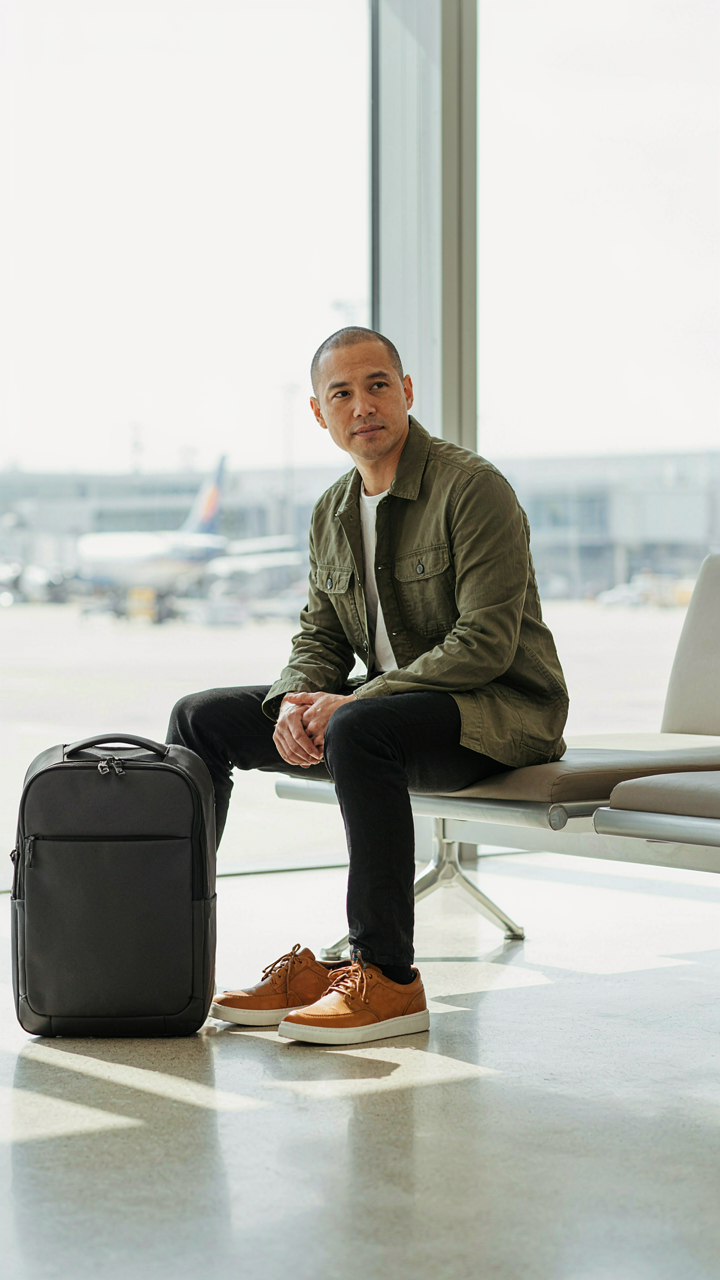
You want this because carrying less makes you look intentional instead of anxious. Here’s the mechanism: constraint forces decision-making upstream. Every item you own for a weekend trip must survive a filter—not “might I need this” but “will I actually use this.” Most packing advice skips this part entirely and jumps straight to rolling techniques or compression bags. That’s backwards. The real work happens before you touch anything.
When you remove items preemptively, you stop the mental tax of managing them. No extra socks means no decision about which ones to pack. No backup outfit means you commit to a plan and execute it. This isn’t about deprivation. It’s about eliminating the cognitive load that makes travel feel like work instead of relief.
Ready For Disruption With Minimal Inventory
Military logistics calls this “rapid redeployment”—the ability to shift resources fast when conditions change. A weekend trip carry on operates the same way: fewer items means faster adaptation when plans shift. The common advice tells you to “prepare for contingencies” by overpacking. That’s defensive thinking. It creates friction instead of flexibility.
Instead, you build a base layer of versatile pieces that work across different scenarios without redundancy. A neutral jacket that functions in three temperature ranges beats owning three jackets. One pair of shoes that handles casual and semiformal beats two pairs. When something goes wrong—a flight delay, a sudden rain, an unplanned dinner—you adjust with what you have rather than hunt through a bloated bag. The protocol: before packing anything, name the specific scenario it solves.
The Real Obstacle Isn’t The Bag; It’s Your Internal Resistance To Strategic Minimalism
You don’t need another packing guide. You need permission to leave things behind. Most people overpack because they mistake options for security. The weekend trip carry on forces you to choose what actually matters, and that friction reveals something: you’ve been dragging dead weight into every area of your life. Pull out your suitcase right now and pack for Friday. Don’t think. Just move. The moment you realize you don’t miss what you left behind is the moment everything else gets easier.