
The Minimalist’s Power Grid: Charging Only What Matters
Solar Panel Efficiency Vs Portability Trade Offs
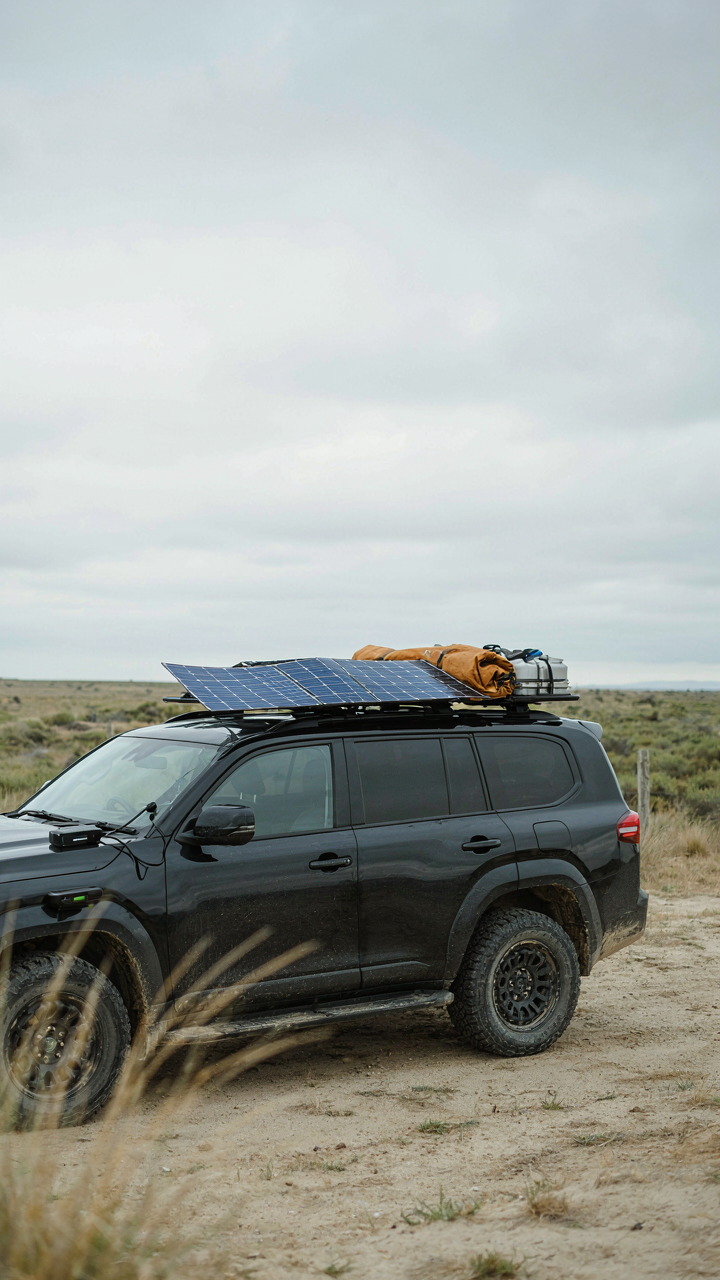
You want solar panels because you think they solve the “never run out of power” problem. They don’t. The mechanism is simple: solar efficiency and weight sit on opposite ends of a lever. Higher efficiency panels use monocrystalline silicon and cost more per watt. They also weigh less and take up less space. Lower efficiency polycrystalline panels weigh more for the same output. Camping solar isn’t about peak laboratory conditions. It’s about real-world output on cloudy days, at angles you’ll never get perfect, with dust and moisture degrading the surface constantly.
Most people choose panels based on wattage ratings alone. That’s wrong. A 200-watt panel that weighs eight pounds beats a 300-watt panel that weighs fifteen pounds for overlanding. You’ll actually carry it. The real variable isn’t the panel’s peak output. It’s how many usable watts you’ll capture during a typical overcast morning or evening when you actually need to charge. Rigid monocrystalline panels between 100 and 200 watts deliver better practical results for weight than anything larger, especially if you’re backpacking or fitting gear into a vehicle with hard space limits.
Battery Capacity Vs Weight Dilemma
Battery technology uses energy density as its core measure, stolen directly from chemistry and physics. Lithium ion batteries pack roughly three times the energy density of lead acid. This means 100 watt hours of lithium weighs roughly one third what lead acid weighs. But campers fixate on total capacity and ignore usable capacity. A 100-amp-hour lithium bank doesn’t give you 100 amp hours of actual power. Most lithium banks cut output at 80 percent depth of discharge to preserve longevity. That’s 80 usable amp hours, not 100.
Lead acid batteries die faster and degrade quicker, but they’re cheaper upfront and forgiving if you drain them fully. Lithium costs more but lasts longer and handles partial discharges without penalty. The real question isn’t which is better. It’s how many amp hours you’ll actually use per day and whether you can recharge before depleting fifty percent. If you use ten amp hours daily and have eight hours of usable sunlight, a 100-amp-hour lithium bank works. If you use thirty amp hours daily, you need either more capacity or a secondary charging method like a generator or vehicle alternator. Measure your real consumption for three days before buying anything.
Navigation Beyond The Screen: Why A Map Still Trumps GPS
Redundant Systems: Physical Map And Compass
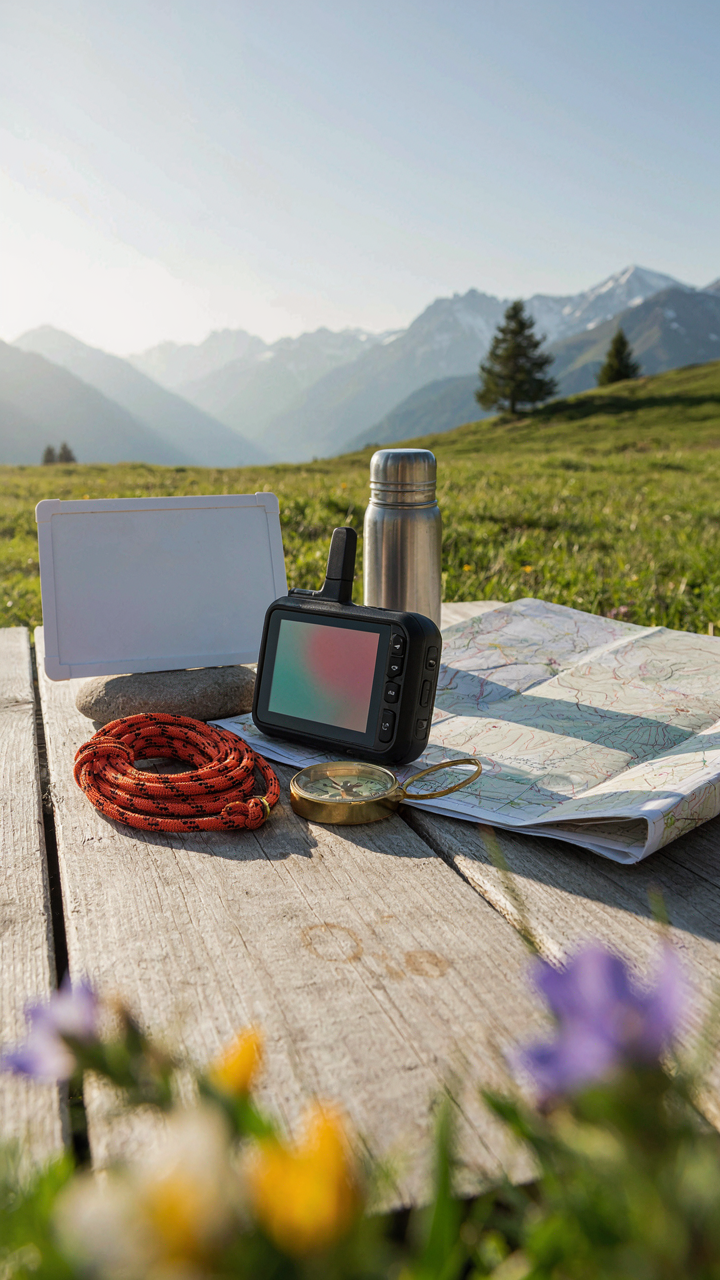
You want this section to validate your tech purchases, not undermine them. Here’s the mechanism: GPS fails not because it’s bad technology but because it centralizes your survival into a single point of failure. Batteries die. Satellites get blocked. Signals drop in canyons. A paper map and compass work when everything else stops working, which is precisely when you need navigation.

Military strategy calls this redundancy, and it applies directly to wilderness navigation. Your GPS is the primary system. Your map and compass are the backup system that keeps you from becoming lost. Carry a topographic map of your actual route and a quality compass with a baseplate. Practice using them before you camp. The camper who memorizes map reading survives the one who only taps a screen.
Offline Map Apps: Actual Reliability In Wilderness
Everyone says download maps before you go. That’s incomplete advice. The real move is understanding that offline map apps work because they cache satellite imagery and routing data onto your device storage, removing dependency on cell towers or data plans. But they still need a functioning phone, battery power, and a way to pinpoint your location.
The most reliable offline map apps for camping store entire regions, let you mark waypoints and trails, and show elevation data without internet. Gaia GPS, AllTrails+, and Avenza Maps handle this. Download maps for your specific area at high zoom level before departing, not during your trip. Pair this with a portable battery bank rated for your phone type. Test the app in your actual camping location before relying on it. Your phone becomes a map backup only when you’ve verified it works offline in that specific terrain.
Illumination Intelligence: Not Just Brighter, But Smarter

Headlamps Versus Lanterns: When Each Actually Works
You want to look capable at camp, so you’re thinking about what looks right. Stop. The real question is whether you’re solving for hands-free work or ambient space. Headlamps concentrate light where your eyes point, leaving peripheral areas dark. Lanterns push light in all directions, creating a perimeter. Most people buy both and use neither correctly, treating them as interchangeable.

Headlamps win for cooking, map reading, or technical tasks where you need precision. A headlamp’s beam follows your attention. Lanterns work for establishing camp mood, cooking area visibility, or letting others navigate without squinting into your forehead. The error most campers make is buying a powerful headlamp and expecting it to light a campsite. It won’t. That’s not what it’s engineered to do. Mount a lantern at table height or hang it from a pole. Use the headlamp for work.
Rechargeable Against Disposable: The Math Nobody Does
Economics frames this as a tradeoff between upfront cost and runtime efficiency. Rechargeables win on total cost of ownership past a certain threshold. A midrange headlamp with integrated USB charging costs thirty to sixty dollars. Disposable AA batteries cost three to five dollars per pair and last eight to twenty hours depending on output. If you camp twelve weekends per year and run lights four hours nightly, you’re burning through two to three sets monthly. That’s thirty-six to forty-five dollars annually on batteries alone for a single light.
The catch nobody mentions: rechargeable lights lose capacity over two to three years, while disposables don’t degrade in storage. On week-long trips, a rechargeable at eighty percent capacity still works fine. On month-long expeditions, that degradation adds friction. The practical move is carrying one rechargeable headlamp as primary and one disposable backup headlamp for insurance. Rechargeables fund themselves through time savings at camp. Disposables fund themselves through reliability on extended trips where you can’t swap batteries mid-journey.
Communication In The Void: When Your Phone Is A Brick

Satellite Communicators: Emergency Vs. Casual Use
You want the security blanket of knowing someone can reach you, but you’re not actually planning to use it. Here’s the mechanism: satellite communicators work anywhere on Earth because they transmit directly to orbiting satellites, not ground towers. This means coverage is absolute, but cost and functionality split hard between emergency devices and daily communicators.

Garmin inReach and Zoleo handle two-way messaging and check-ins for casual overlanders. They piggyback on existing satellite networks and charge subscription fees per month, making them viable for regular contact. PLBs like SPOT Beacon work one direction only: you press a button, rescuers know your coordinates, and that’s it. Emergency-only devices cost less upfront but offer zero flexibility once activated. Pick based on actual use: if you’re checking in with family weekly, go messaging. If you’re hedging against worst case, emergency-only saves money you won’t regret spending.
Line Of Sight: The Physics That Kills Range
Radio systems operate on line-of-sight principle: the signal travels in a straight line and stops at obstacles. Two-way radios like Motorola walkie-talkies and Midland GMRS units advertise ranges of twenty to thirty-five miles on paper, but terrain determines reality. A valley cuts that to a quarter mile. Open desert extends it further. Most camping advice ignores this and sells the rated distance as guarantee.
FRS radios (Family Radio Service) need no license and operate at lower power, so expect one to five miles in moderate terrain. GMRS requires licensing but transmits stronger, pushing real-world range to ten to fifteen miles across open ground. Neither works through mountains or dense forest. Test your specific units in your specific terrain before relying on them. If someone’s camping two miles away but separated by ridge line, you’ll get static. Establish protocol: both parties transmit at fixed intervals so you know when to listen, not whether the radio works.
The Overlander’s Tool Kit: Tech For Real Repair, Not Just Convenience
Portable Air Pump: Tire Inflation Critical Thinking
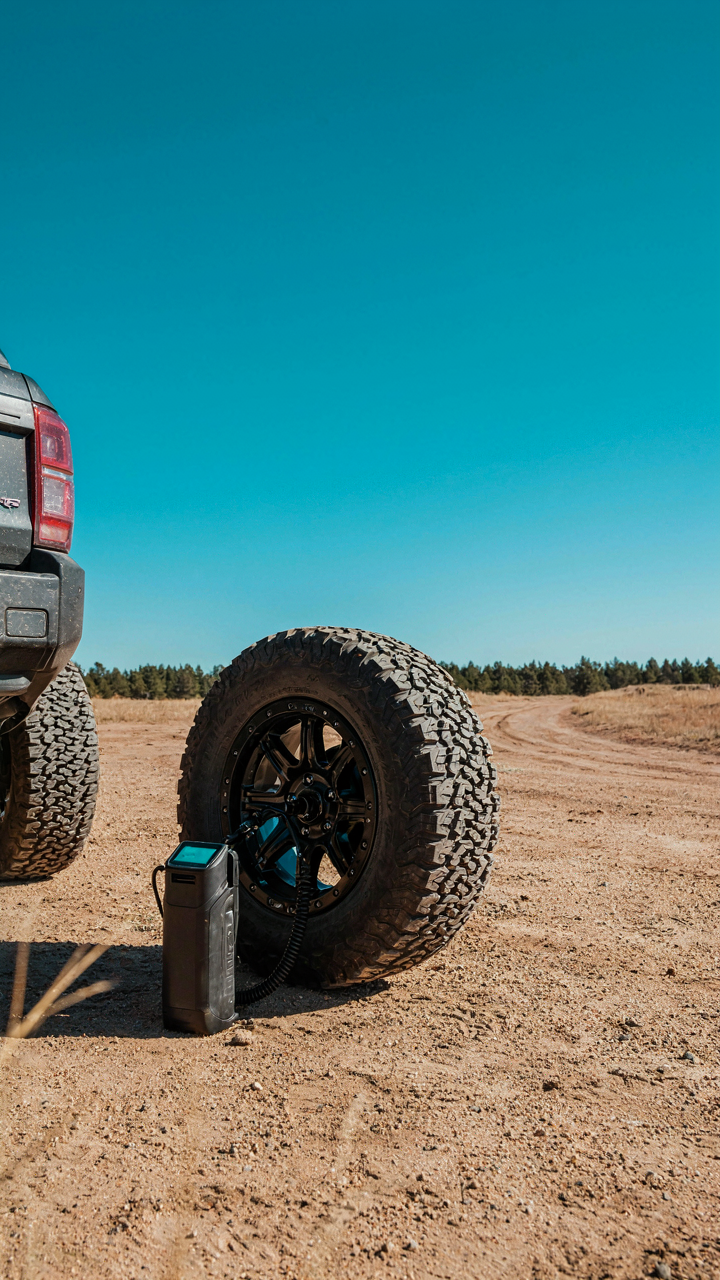
You want this because getting stranded matters less than looking prepared. Here’s what actually happens: tire pressure drops in cold, altitude, and rough terrain. A portable pump lets you diagnose and fix the problem instead of calling for help. Most campers buy pumps that can’t deliver sustained PSI or fail in cold. The mechanism is simple: pressure loss is inevitable on extended trips, and the ability to restore it yourself is the difference between moving forward and waiting.

A quality portable pump needs two specs: it must reach 100+ PSI consistently and operate below freezing. Digital readouts matter because guessing tire pressure leads to blowouts or underinflation that kills fuel economy. Lithium battery models outperform AC-only units because you’re not always near power. The pump should weigh under three pounds and store in your vehicle’s door pocket. Keep it accessible, not buried in a storage bin you’ll never remember to check.
Diagnostic Tools: Understanding Vehicle Self Sufficiency
This borrows from systems thinking in engineering, where redundancy isn’t backup but strategy. A vehicle diagnostic scanner is your redundancy—it reads fault codes before they become failures. Most overlanders ignore this, relying on “feeling” when something’s wrong. By then, the damage compounds. A scanner costs 50 to 200 dollars and takes five minutes to use. It turns you from someone who guesses into someone who knows what your engine is reporting.
Basic Bluetooth OBD2 scanners connect to your phone and display real-time data: engine temperature, fuel trim, oxygen sensor status. This prevents you from driving 200 miles on a sensor that’s already failed. Advanced units show live graphing, which catches intermittent issues before they strand you. Store it in your glove box and sync it to your phone before you leave. Check your vehicle’s fault codes every two weeks during extended trips to catch developing problems early.
Eco Friendly Camping Gear Ideas: Beyond The “Green” Marketing Hype

Durable Repairable Tech: Resisting Planned Obsolescence
You want to feel like you’re making the right choice. The mechanism is simpler: most camping tech fails not because materials wear out, but because manufacturers design components to become unreplaceable. Repairability is an economics problem. Companies profit when you buy the same device twice. A solar charger with a proprietary connector costs more to replace than a modular one with standard USB ports, so makers choose proprietary every time.

Real durability means replaceable batteries, standardized charging inputs, and parts you can source without the manufacturer. A headlamp with a user-replaceable battery module outlasts one soldered shut. A power bank with a standard USB-C port beats a custom connector that disappears from supply chains in three years. Check repairability before purchase: Can you open it? Are replacement batteries available separately? Do spare parts have SKUs on retailer sites?
Leave No Trace Versus Compression: Which Actually Works
The environmental consensus tells you to pack everything out and minimize waste. That’s incomplete. Industrial waste management uses compaction as a primary mechanism to reduce landfill volume and transport costs. Campers face the same physics. A portable waste compactor doesn’t eliminate trash, it reduces the volume you carry and the trips you make to dispose of it, lowering your fuel consumption footprint per trip.
The tradeoff is real: compactors add weight and complexity. They make sense for overlanders on extended trips who generate consistent waste volumes. For weekend campers, a compression bag system works better than a compactor because it serves double duty as storage. The decision hinges on trip length and waste generation rate, not environmental ideology. Measure your actual trash output over three trips before buying either solution.
The Stoic Camper’s System: Applying Military Strategy To Gear Selection
Backup Systems For Critical Functions
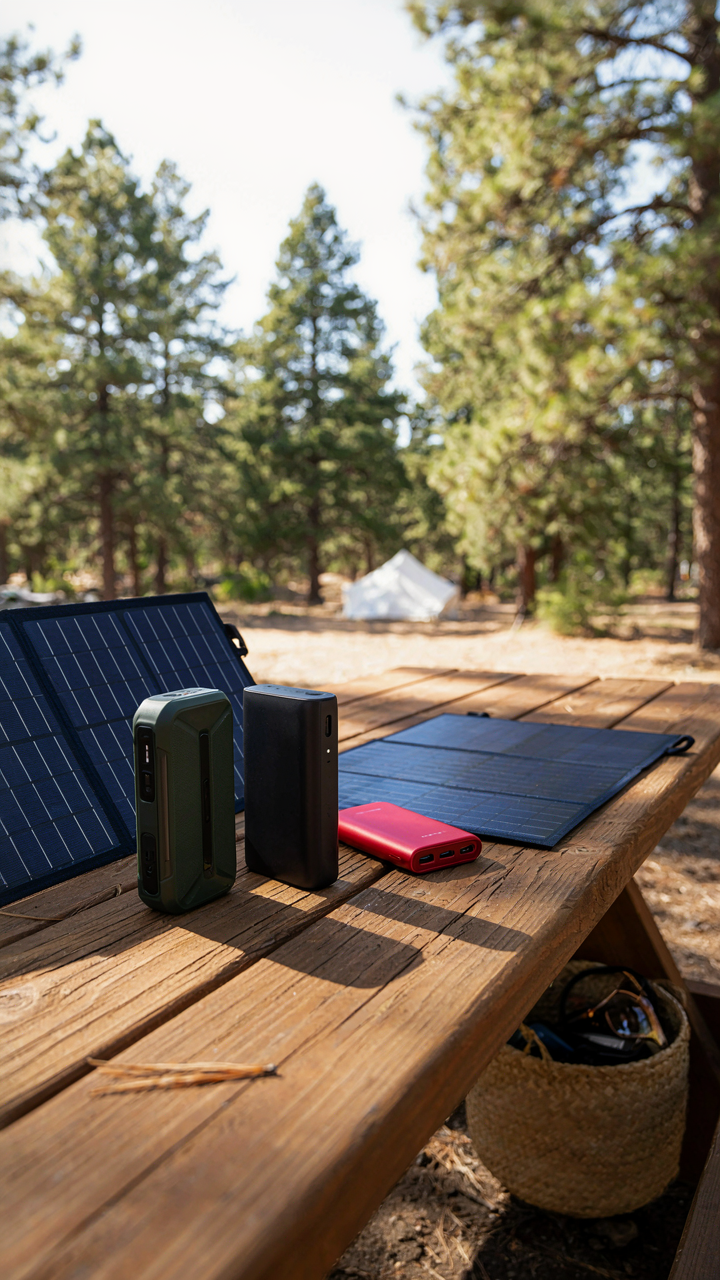
You want this section to justify spending more money on redundant gear without admitting that’s what you’re doing. The mechanism is simple: the moment your primary tool fails, you stop functioning. Military logistics calls this “operational redundancy,” and it applies directly to camping tech. Your navigation fails when your primary GPS dies. Your communication stops when your phone battery drains. Your water purification halts when your filter clogs. Redundancy isn’t insurance. It’s the difference between a problem and a disaster.

The rule is absolute for three categories: navigation, communication, and power. A backup GPS unit (or paper map with compass) replaces dependency on a single electronic system. A secondary communication device (satellite messenger, personal locator beacon, or two-way radio) works when cellular fails. A portable solar panel or power bank backs up your rechargeable batteries. Don’t treat these as nice additions. Treat them as mandatory infrastructure. When your primary system fails at mile 40 of a backcountry trip, your backup isn’t an option—it’s your only option.
Distributed Power And Signal Architecture
The common advice here is garbage: “Just bring extra batteries.” That’s not strategy. That’s hoping. Real decentralization in military operations means spreading critical functions across separate supply lines so one failure doesn’t cascade. Your tech needs the same logic. Instead of one power source feeding all devices, you create isolated power zones. Your headlamp runs on AA batteries. Your phone charges via solar. Your GPS uses its own rechargeable pack. Your satellite communicator has internal batteries.
This structure forces discipline into your gear decisions. Each device becomes independent. Each failure stays contained. A depleted phone battery doesn’t kill your navigation. A broken solar panel doesn’t kill your headlamp. Distributed architecture also spreads the weight and volume of backup power across multiple small units instead of concentrating it in one large battery bank. When selecting tech gifts for overlanders, this principle filters out monolithic gadgets that demand central charging hubs. You want tools that operate on different power substrates. That’s how you stop one failure from ending your trip.
Hygiene In The Wild: Tech For Actual Health, Not Just Comfort

Water Filtration Systems That Work Across Every Source
You want filtration because you’re afraid of giardia and dysentery, but the real mechanism at play is particle size. Filtration works through exclusion: water passes through a barrier with pores smaller than the pathogens you’re removing. This isn’t metaphor. Bacteria measure 0.5 to 5 microns. Most viruses run 0.02 to 0.3 microns. A 0.1 micron filter stops bacteria. You need activated carbon or chemical treatment for viruses. Know what you’re actually filtering before you buy.
- Sawyer Squeeze Pro: 0.02 micron hollow-fiber membrane removes bacteria, protozoa, and most viruses. Handles 100,000 gallons before replacement. Works with standard water bottles and collapsible bags for field flexibility.
- Grayl Geopress: Combines mechanical filtration with activated carbon and ion exchange in one bottle. No assembly required. Slower than squeeze filters but reliable for chemically contaminated water in developing regions.
- LifeStraw Mission: Gravity-fed system for base camp use. Stores water in clean and dirty chambers. Best for groups or extended stationary camps where speed matters less than processing volume daily.
- Katadyn Combi: Ceramic element plus carbon removes bacteria, protozoa, chlorine, and odors. Durable ceramic lasts 50,000 liters. Heavier than squeeze filters but handles silt-heavy water without clogging quickly.
- AquaMira Drops: Chemical treatment using chlorine dioxide. No moving parts. Lightest option at under 1 ounce. Takes 30 minutes for protozoa, 4 hours for viruses. Backup system when filters clog in mud.

The mistake everyone makes is buying one filter for all conditions. Alpine streams and cattle-country ponds demand different specs. Squeeze filters clog in turbid water. Gravity systems fail in extreme cold. Carry both mechanical backup and chemical treatment. Test your system before you leave. One waterborne illness ends the trip and costs money in recovery.
Portable Showers And The Lie About Hygiene
Most portable shower talk skips the actual tradeoff: water weight. A two-gallon shower bag adds four pounds before you fill it. Camp hygiene matters for skin integrity and morale, not status. The real question is whether you’re staying put for days or moving daily. You don’t need a shower system for a three-day trip. You need one for a week-long base camp.
Solar shower bags work through radiation absorption. Dark material heats water in sunlight, usually to 35 to 40 degrees Celsius in four to six hours depending on ambient temperature and sun intensity. They’re reliable in direct sun but useless in cloud or shade. Alternatives exist: boil water and pour into a collapsible container with a valve, or use dry shampoo and washcloth baths instead. The conservation question isn’t about gallons wasted. It’s about whether you’re carrying fresh water from camp or collecting it locally. If you’re collecting locally, a shower bag sitting in sun while you do other tasks makes sense. If you’re hauling everything in, strip down to dry shampoo and targeted washing.
Entertainment: The Art Of Disconnecting To Reconnect

How To Actually Stop Scrolling
You want to feel like you’re disconnecting, but you’re really just managing your guilt about screen time. The mechanism is simple: you need friction between intention and behavior. Without it, your phone wins every time you’re bored for 30 seconds.

A Faraday pouch that blocks all signals solves this. You don’t delete apps or rely on willpower. You physically prevent access. Store your phone in the pouch during daylight hours, then retrieve it at a set time. The act of unzipping creates a decision point where you actually notice what you’re doing. This works better than apps that promise to limit your usage because external constraints beat internal promises.
Offline Content That Actually Works
Everyone says “download maps and music before you go,” which misses what actually limits offline content: storage space and the time cost of managing it. Your phone or tablet has a hard ceiling on how much you can store without sacrificing performance.
Prioritize downloaded content by frequency of use, not comprehensiveness. Download one podcast series, not 30. Download topographic maps for your specific route, not an entire region. Download one audiobook, not your entire library. An e-reader like a Kindle loads 200 books in under a gigabyte. It demands nothing from your attention and works for weeks on a single charge. This is the actual trade-off: depth of engagement with less total content beats breadth with constant battery drain.
RV Gift Basket Ideas: The Unsung Essentials
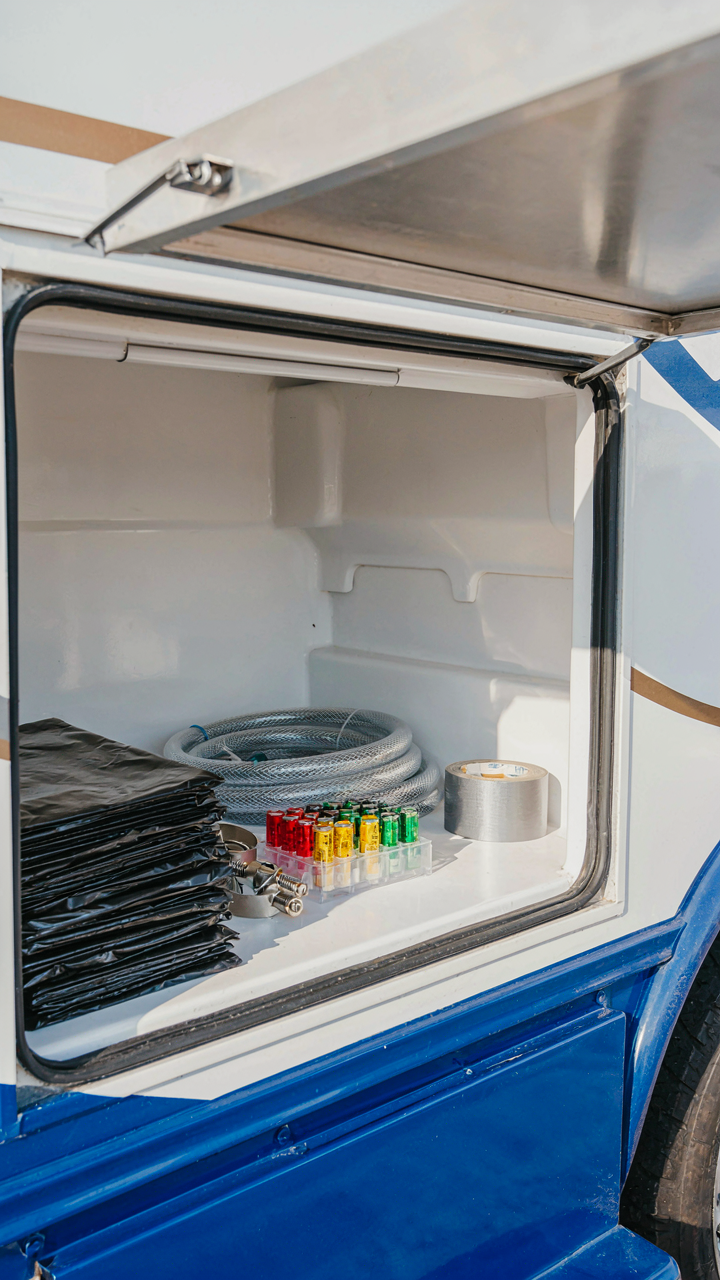
Repair Kits Over Gadgets
You want to look thoughtful without spending real money on something useful. Here’s the mechanism: a repair kit removes friction at the exact moment it matters most—when something breaks three hours from the nearest town. Economics calls this “supply shock absorption.” A broken water line or torn awning fabric stops a trip. A gadget entertains for twenty minutes then sits in a drawer.
The consensus pushes novelty because it photographs well and requires no thought. That’s backwards. Campers need duct tape wrapped around a card, replacement fuses specific to their RV model, hose clamps in three sizes, and a basic electrical repair kit with solder and a butane iron. These items cost thirty to fifty dollars total. They prevent two-thousand-dollar towing bills.
High Value Consumables That Don’t Clutter
Consumables solve the gift-giver’s core problem: they disappear, so you never see the recipient fail to use them. Fill a basket with propane cartridges for camp stoves, heavy-duty trash liners designed for RV tanks, replacement water filter cartridges matched to their system, and premium biodegradable soap meant for campsite washing. These items get consumed or depleted, not abandoned.
Match the consumables to their specific setup. If you don’t know their RV model or camping style, ask directly or stick to universal items like fire starter bundles or lantern fuel. The rule is simple: if it runs out, it was worth including. If it accumulates, you picked wrong.
The Real Obstacle Isn’t A Lack Of Gear, But A Surplus Of Manufactured Dependency

Most campers buy tech to feel prepared. They don’t buy it to actually camp better. The distinction matters. Every gadget you pack either solves a real problem or feeds anxiety. Today, audit your current setup. Pick one piece of gear you brought last trip and ask yourself honestly: did I use this or did I just own it? That answer reveals everything about your next purchase. The best tech gift for a camper isn’t the one with the most features. It’s the one they’ll actually reach for when everything else fails.