
The Grid Paradox: Why Your Camping Power Addiction Kills The Experience

More Batteries Mean Less Ground Covered
You want the security blanket of infinite power because you’re afraid of being unreachable. Here’s the mechanism: every power system you add multiplies total pack weight and setup complexity. A phone charger weighs nothing. A portable solar panel, battery bank, cables, and backup power supply becomes a separate load. This inverse relationship between power redundancy and mobility is borrowed from logistics: payload always trades against range. The more you optimize for charging capacity, the fewer miles you move and the less terrain you explore.
Most campers pack “just in case” systems that stay unused for 90 percent of the trip. You’re carrying dead weight to fund one hypothetical scenario. The actual cost is the ridge you don’t climb, the creek you don’t follow, the night you don’t spend three miles deeper. Cut the power stack to essentials: one charger per person, one shared backup battery, one charging method. This forces intentional device use instead of passive consumption.
The Preparedness Trap Disguises Passivity
False security systems feel like control, but they’re actually permission to stop adapting. You bring a camping charging station as backup power so you can scroll without rationing battery life. The real preparedness is learning to navigate without GPS, to read weather without an app, to measure time without constant notifications. This is not romantic advice. It’s tactical: devices die or lose signal in actual wilderness. When you’ve planned for infinite power, you’ve planned to fail.
The moment you assume your devices will run for the entire trip is the moment you stop learning the terrain’s natural systems. You miss water sources because you didn’t scout them. You miss fire-building skills because your headlamp never dies. You miss navigation instinct because your phone map loads instantly. Set a hard rule: devices charge only once per day, at a fixed time, for 90 minutes maximum. Everything else runs on intentional use, not convenience.
Portable Power: The Minimalist’s Manifesto

What Actually Needs Juice
You want to feel prepared, which is why you’re imagining yourself powering everything at camp. The mechanism is simple: every device you bring demands a charging cycle, which demands capacity, which demands weight you carry. Most camping charging stations fail because people solve for comfort instead of survival.

Your phone needs power because it’s your emergency contact and navigation tool. Your headlamp needs power because darkness is a real problem. Everything else is negotiable. The math works against you fast: a portable power station heavy enough to charge a laptop six times costs what three quality headlamps cost. Pick the two things that actually fail if dead.
- Phone: Single point of failure for emergency contact, GPS, and communication. Prioritize this above all other devices at camp.
- Headlamp or flashlight: Darkness creates safety risks and kills productivity. A dead light forces you into the tent or campfire.
- Portable battery pack: The minimum viable charging station. Handles phone and headlamp top-ups across multiple days without excess bulk.
- Solar panel or hand crank: Extends your capacity beyond what you can carry. Useful only if you commit to the daily charging ritual.
- Everything else: Defer. Tablets, portable speakers, and cameras drain your power margin for devices that matter when things go wrong.
The margin between “charged and capable” and “stranded” is smaller than you think. Your camping charging station should be built for the failure state, not the comfort state. That means one proven method of power input and one backup. No experimental gear. No “nice to have” devices eating your capacity.
Stacking Functions, Cutting Redundancy
The physics term is efficiency—the ratio of useful output to total input. In a camping charging station, efficiency means each piece of gear serves multiple roles. One device that does two things beats two devices that each do one.
A solar panel that charges a battery bank is better than solar panels alone because it lets you charge at night. A headlamp with a USB output port charges your phone while sitting on your head. A power bank that doubles as a flashlight eliminates carrying both. The redundancy you think is safety is actually waste disguised as preparation. When you stack functions, you reduce weight and cost simultaneously.
The practical step is brutally simple: refuse any device that does one job. Before you buy a camping charging station component, name the second job it performs. If you can’t name it, you don’t need it. This discipline cuts your pack weight by 30 to 40 percent while improving actual reliability.

Solar Generator Scams: What Most “Experts” Won’t Tell You
What The Specs Actually Mean
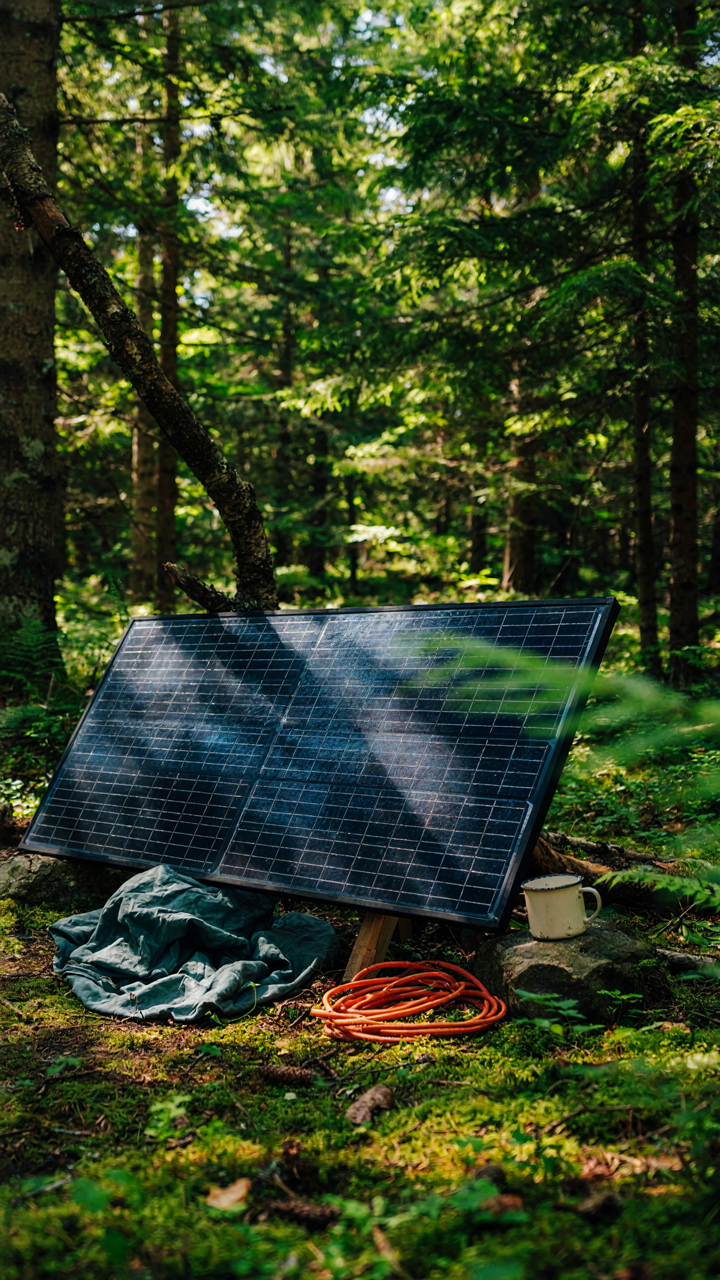
You want to believe a solar generator solves your camping power problem so you don’t have to think about it. The real issue is that manufacturers quote peak wattage under laboratory conditions that never occur at a campsite. A 3000-watt solar generator doesn’t deliver 3000 watts continuously. It delivers that output for seconds under perfect sun angle, zero cloud cover, and optimal temperature. Most camping trips happen in variable light. Your phone charger runs on 5-15 watts average. That same generator’s actual sustained output might be 800-1200 watts on a clear day. The gap between spec sheet and reality costs money and creates dead batteries at night. Read the watt-hours capacity instead. A 2000-watt-hour battery stores enough energy to run most camping gear through evening. Watt-hours tell you how much work the generator actually does, not how it looks on marketing material.
The second trap is underestimating how fast discharge happens. A solar generator rated at 100-watt peak solar input charges slowly on cloudy days or early morning. Most camping trips compress charging into 6-8 hours of available daylight. If you’re using power while charging, the battery depletes faster than it replenishes. Calculate your actual daily energy need. A phone uses 10-15 watt-hours per full charge. LED lights use 3-10 watt-hours for six hours of operation. If your generator stores 2000 watt-hours and you consume 100 watt-hours daily, you have margin. Most people skip this math and buy undersized units that fail on day two.
The Sun Isn’t Where You Think It Is
Panel placement uses the physics principle of angle of incidence, which means the steeper your panel sits relative to the sun’s actual position, the more usable energy hits it. Most campers prop panels flat or nearly flat. This is directionally wrong. The sun’s angle changes throughout the day and throughout the season. In summer at 40 degrees north latitude, the sun reaches 70 degrees above the horizon at noon. A flat panel captures maybe 60-70 percent of available energy. Tilting it 45-50 degrees toward the sun captures 90 percent or more. You gain real charging speed by adjusting panel angle every 2-3 hours, not by buying a larger unit.
Shade is your silent energy killer. A solar panel loses 30-50 percent output when half its surface sits in shadow. Most campsites have trees. Shadows move. Your panel sits in full sun at 9 AM and half-shade by 11 AM. The solution requires a specific action: scout your campsite’s light path before unpacking. Identify where the sun will be at 9 AM, noon, and 3 PM. Place your charging station in the open area that stays lit longest. Move the panel once if necessary. This single protocol prevents you from wondering why charging stalls mid-afternoon.

Off Grid Living: Reclaim Your Energy Autonomy

Decide What Actually Matters First
You want off-grid status without admitting you’re running from dependency. Here’s what nobody says plainly: off-grid charging isn’t about independence—it’s about friction. Economics calls this your constraint. Your camping charging station works within energy scarcity, and scarcity forces prioritization. Most people bring too much gear, drain everything in two days, then claim the system failed. The system didn’t fail. Your consumption did.
Real off-grid thinking starts by killing devices entirely, not by buying better solar panels. Before you touch a charging station, audit what actually needs power. Your phone probably does. Your portable speaker doesn’t. Your camping lights might, unless you bring a headlamp and matches instead. The mental shift from “how do I charge everything” to “what deserves power” changes your entire setup and runtime.
Calculate Your Budget, Then Subtract
Energy budgeting isn’t about environmentalism—it’s about math that prevents you from sitting in darkness at mile four of a five-day trip. You have a fixed energy pool. Your charging station is the container. Your devices are the drain. If you can’t state your total watt-hours, your total consumption per device, and your actual daily usage in numbers, you will fail.
Start here: list every device. Write its wattage or milliamp-hour capacity. Calculate daily draw. Compare that number to your charging station’s output and storage. If your total consumption exceeds 60 percent of your station’s capacity per day, you’ve already lost. You’re not off-grid anymore—you’re stranded with gadgets. The margin between capacity and actual use is your safety. Protect it by doing the math before the trip, not during it.

The Off Grid Energy Triad: Systemizing Your Camping Power

Sun, Battery, Manual: Pick Your Redundancy
You want to feel prepared without actually planning. The mechanism is simple: single power sources fail. Wind dies. Clouds come in. Batteries drain. The answer isn’t buying more gear—it’s treating power generation like an electrical grid treats load balancing. Diversification isn’t backup. It’s the only way to guarantee your phone doesn’t become a brick at mile five.
Solar panels generate power when light hits them, period. Batteries store energy from any source and release it on demand. Manual chargers (hand cranks, friction generators) produce power through human effort regardless of conditions. Running all three means one always works. Most campers skip the manual piece entirely, which is why they panic when clouds roll in for two days.
Match Your Watts To What Actually Drains
Everyone oversizes their system because they confuse “nice to have” with “necessary.” A smartphone charges on 5 watts. A camping lantern needs 2 to 8 watts continuous. A portable speaker pulls 3 to 6 watts. You don’t need a 100-watt solar panel to run these. You need to count what you’re actually charging, add 20 percent for inefficiency, and stop there.
Most camping charging stations waste money on excess capacity that sits idle ninety percent of the trip. Calculate your daily draw by listing every device and its wattage, multiply by hours of use, then divide by your charging window. This number tells you exactly what generator size you need. Size down, not up. Smaller systems weigh less, cost less, and still solve the actual problem.

Generator House Rules: Power As A Privilege, Not A Right

Designated Charge Times: Energy Discipline
You want a system that makes you look organized while hiding the fact that power runs out fast. The mechanism here is rationing, borrowed from resource economics: you control supply by controlling access windows, not by hoping people self-regulate. A camping charging station without designated charge times becomes a free-for-all where one person drains the battery bank by noon.
Set specific windows: morning top-ups from 7 to 9 AM, evening cycles from 5 to 7 PM. Post these times visibly at the generator or power station. Tell people their devices charge during these windows only, then power shuts down outside them. This isn’t punishment. This is the only mechanism that makes finite power stretch across a group without constant negotiation or resentment building.
Shared Resources: Communal Charging Etiquette
Most camps fail here because they treat the charging station like a courtesy instead of infrastructure with rules. Courtesy dies on day two. You need protocols that everyone knows before they arrive, not suggestions they ignore. Think of this through game theory: without clear rules, the person who charges aggressively wins, and everyone else loses.
Create a simple sign-up sheet or whiteboard rotation. Each person gets one device per charging window. Phones take priority over portable speakers or tablets. Devices stay plugged in for the full window, then leave immediately when time ends so the next person can use the cable. Post this at the station itself. No exceptions, no negotiations. Enforcement happens through peer accountability, not authority.

Solar Panels: Beyond The Brochure Hype
Position Your Panels For Real Output
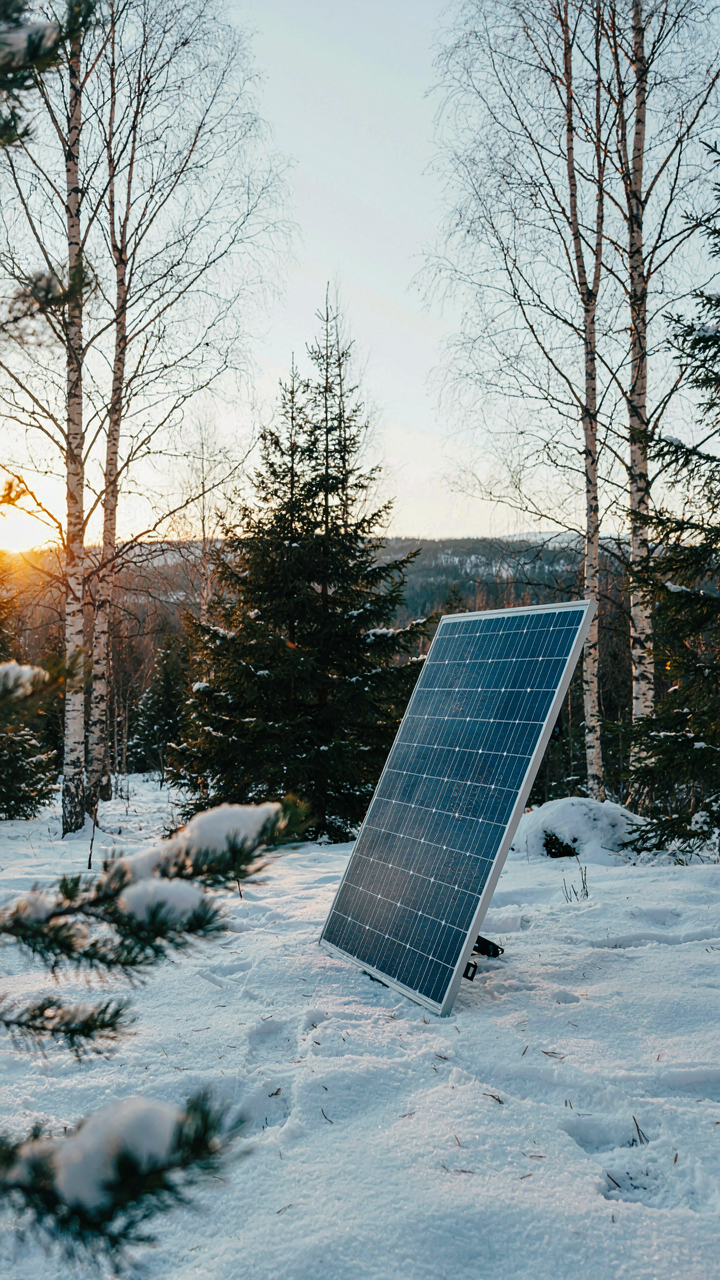
You want solar panels at your campsite because you’re tired of dead batteries and dead time, not because you love renewable energy. The mechanism here comes from basic physics: solar irradiance, the amount of energy the sun delivers per square meter, changes with panel angle and sun position. A panel flat on the ground captures less than half the energy of a panel angled toward the sun. The sun’s path shifts by latitude and season, so static positioning costs you real charging power.
- Summer positioning: Angle panels lower, closer to 30-40 degrees, since the sun climbs higher in the sky. This tracks solar noon intensity when you need it most.
- Winter positioning: Tilt panels steeper, 50-60 degrees, to capture lower-angled sunlight. The sun stays lower throughout the day in colder months.
- Latitude rule: Your panel angle should roughly match your latitude for year-round balance. Adjust seasonally if you camp the same location repeatedly.
- Morning and afternoon: East-facing panels catch morning sun first. West-facing panels extend charging into late afternoon. Choose based on your actual camp schedule.
- Shadow mapping: Identify shadows from trees and terrain at different times. A panel in shade for three hours loses that power window permanently.
Most campers ignore time of day entirely and wonder why their phone dies at dinner. Panel output tracks the sun’s arc—peak wattage happens at solar noon, not morning or evening. Position your panel to face south at solar noon, then leave it alone unless you’re moving camp. The difference between sloppy positioning and precise angling is often 40 to 60 percent of available power.
Monocrystalline Versus Polycrystalline: The Real Trade
The efficiency gap between panel types matters far less than people pretend. Monocrystalline panels convert 18 to 22 percent of sunlight into electricity. Polycrystalline panels convert 15 to 18 percent. The difference sounds meaningful until you realize that cost, weight, and durability matter more for camping than percentage points. A cheap polycrystalline panel costs half as much, weighs less, and survives rough transport better than premium monocrystalline.
Efficiency is a lab number, not a field number. Cheap monocrystalline panels degrade faster in temperature swings. Polycrystalline panels tolerate heat and cold better, which matters in real camping. The actual mechanism driving your charging speed is total wattage capacity multiplied by real-world sun hours, not efficiency rating. Buy 100 watts of durable polycrystalline before you buy 80 watts of efficient monocrystalline. Portable panels degrade fast regardless of type, so buy replaceable, not aspirational.

Computer Power Supplies: The Overlooked Off Grid Hack
Why Voltage Matters More Than Wattage
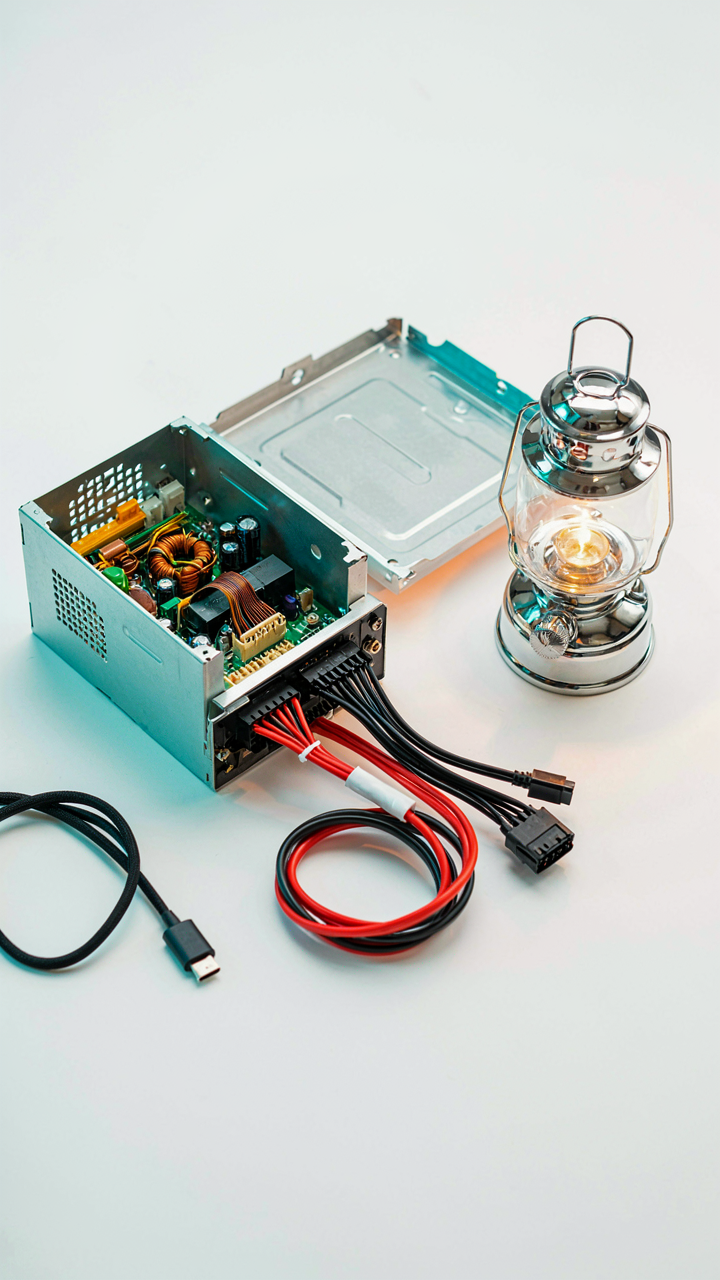
You want to look smart by solving a camping problem nobody else noticed. Here’s what actually matters: computer power supplies use voltage regulation circuits that protect your devices from electrical damage, and this is pure electrical engineering translated into practical camping gear. A standard ATX power supply outputs multiple voltage rails—12V, 5V, 3.3V—each with a dedicated regulator that holds voltage steady regardless of load fluctuation.
Your phone charger and LED camp light don’t care about raw power. They care about stable voltage. A computer PSU’s regulator circuit compensates for input fluctuations and load changes, delivering consistent voltage to whatever you connect. This is why a quality computer power supply won’t fry your devices the way an unstable generator or cheap inverter will. The regulation happens automatically through feedback loops inside the PSU. Plug in, and voltage stays controlled.
Amperage Tells You What Actually Works
Stop believing wattage ratings tell you anything useful about camping power. Amperage is what limits your actual device payload. If a computer power supply delivers 30 amps on the 5V rail, that’s 150 watts of usable power for phones and small lights combined. Amperage draw determines whether your setup survives a full camping trip or dies halfway through.
Calculate your real demand this way: take each device’s rated amperage requirement and add them together. A typical phone charger draws 2 to 3 amps at 5V. LED camp lights draw 1 to 2 amps. A computer PSU rated for 30 amps on the 5V rail can run multiple devices simultaneously without voltage sag. The PSU’s amperage specification is your actual capacity ceiling. Everything else is marketing noise. Match total device amperage to the PSU’s available amperage on your target voltage rail, and your system works.
The Disconnect Doctrine: Mastering True Recharge

Why You Actually Need Silence
You want the gear because you’re afraid of missing something. That’s the real driver. But here’s the mechanism: a camping charging station becomes toxic the moment it enables constant connectivity. The paradox is brutal. You haul a power system into nature specifically to stay plugged in, which defeats the only reason wilderness matters. Your nervous system doesn’t recharge when the device keeps buzzing. Mental clarity requires actual absence, not just physical location.
Neurobiology confirms this plainly. Your prefrontal cortex—the decision-making brain—needs sustained downtime to consolidate memories and reset dopamine baselines. A charging station that powers a phone kills that process. You’re trading restoration for convenience. The camping experience becomes another productivity theater: you’re there, but you’re not actually recovering. The solution isn’t abandoning power systems. It’s being deliberate about what they power.
True Off Grid Power Design
Off-grid power in camping follows load management principles from electrical engineering: you size your system to handle priority devices only, not everything. Apply this ruthlessly. Designate your camping charging station for essentials—safety lights, emergency communication—never comfort scrolling. This isn’t deprivation. It’s strategic scarcity. A solar panel that charges one headlamp and a radio forces actual decisions about what deserves power.
Silence becomes the default when your charging system has hard limits. No infinite juice means no temptation to keep screens alive past sunset. You build a charging station that powers down naturally. This shift from abundance to constraint reshapes behavior faster than willpower ever does. Set your system capacity at 30 percent below what you think you’ll need, then stick to it. That friction is the entire point.
The Real Battery Drain Isn’t Your Phone; It’s Your Inability To Disconnect

You bought a camping charging station to stay connected. Smart move. But here’s what actually happens: you’ll sit by the fire refreshing emails instead of noticing the stars. The mechanism that kills your trips isn’t dead batteries. It’s you choosing the digital world over the one in front of you. Set your phone to airplane mode before you leave. Not after. The best camping trips happen when your charger stays packed.