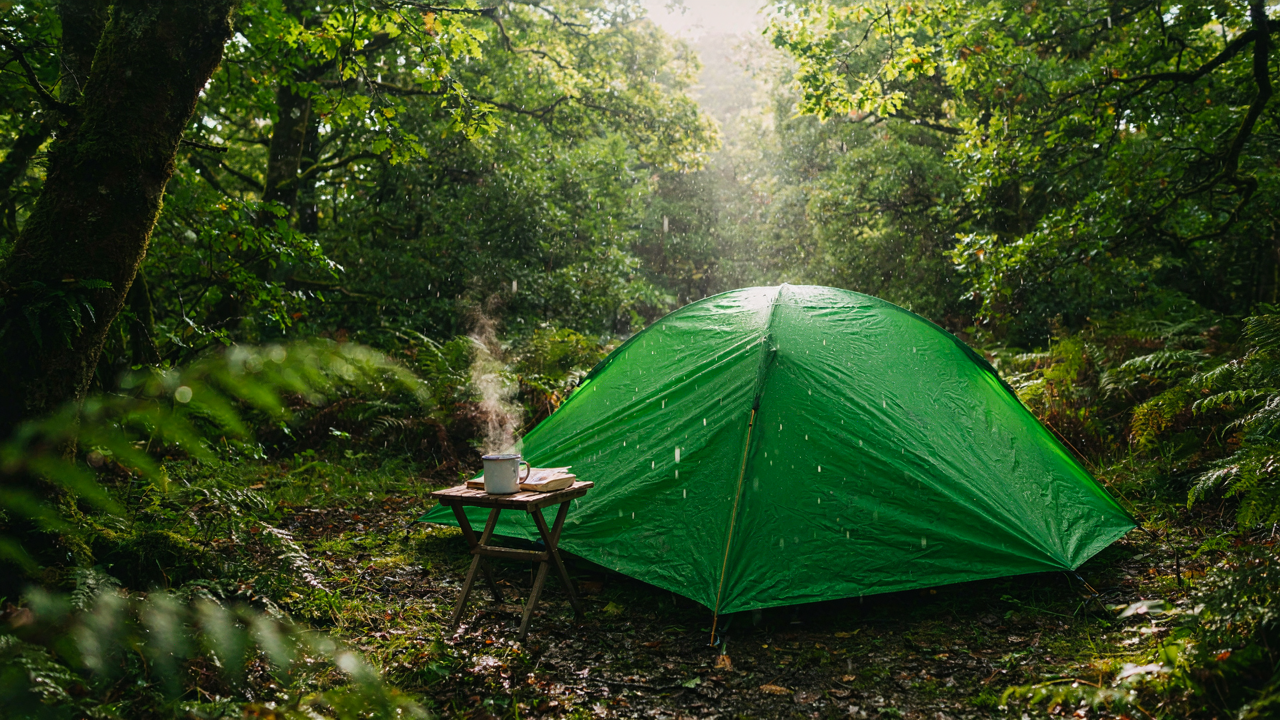
The Unseen Enemy: Moisture’s Silent Invasion In Camping In The Rain
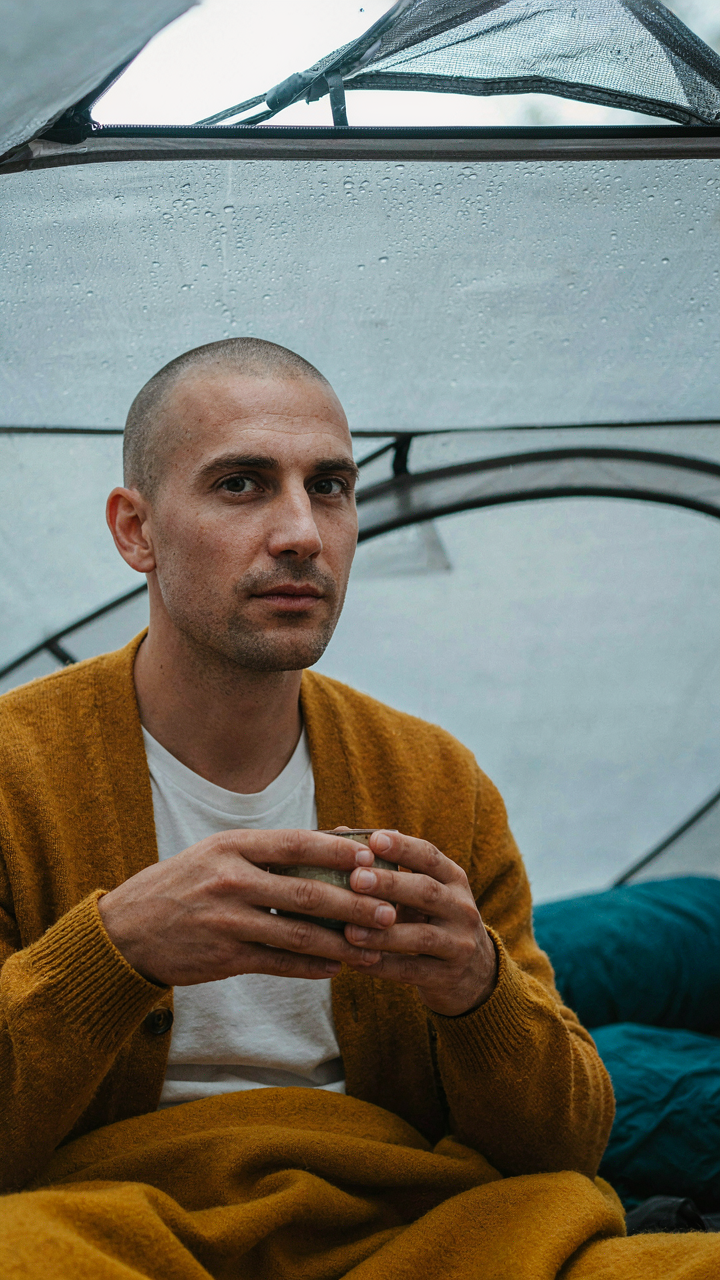
Why Your Tent Stays Wet Even When It’s Not Raining
You’re reading this because you’ve been cold and damp before, and you want to know why gear fails when it matters. The real culprit isn’t always the rain hitting your tent. It’s the humidity in the air—a thermodynamic principle called vapor pressure gradient. Your warm body and the warm air inside your tent want to equalize with the cooler outside air. That invisible pressure difference pushes moisture through fabric, into your sleeping bag, and onto every surface. Most advice focuses on ventilation holes as if they solve this. They don’t. They slow it down.
The mechanism works like this: moisture doesn’t move randomly. It migrates from warm zones to cold zones, always. Your tent interior at 50 degrees Fahrenheit with body heat warming it creates a zone that’s warmer than the tent walls touching 40-degree outside air. Water vapor travels through that gradient relentlessly. Sealing your tent tight traps this moisture inside. Leaving it open lets wind strip heat faster than moisture escapes. The real play is managing the temperature differential itself, not just hoping air moves the right direction.
Condensation: The Water That Forms From Inside Out
Condensation isn’t rain leaking through. It’s atmospheric physics playing out on your gear. When warm, moisture-saturated air inside your tent contacts a cold surface—the tent ceiling, your sleeping bag’s exterior shell—that air cools below its dew point. Water condenses instantly. You wake up thinking your tent failed. Actually, your microclimate created the exact conditions for liquid water to form from nothing but air and temperature difference.
This happens because you’re generating moisture through respiration and body heat every night. A sleeping person releases roughly half a liter of water vapor into the air. In an uninsulated tent with poor air exchange, that moisture accumulates fast. When the outside temperature drops, interior surfaces cool below the dew point threshold. Condensation forms on the coldest surfaces first: the ceiling, then tent walls near the edges. The solution isn’t waterproofing the inside of your tent. It’s controlling the temperature gradient that makes condensation possible in the first place.
Beyond Waterproof: The “Layered Defense” Protocol For Rain Camping Hacks
Where Moisture Actually Goes
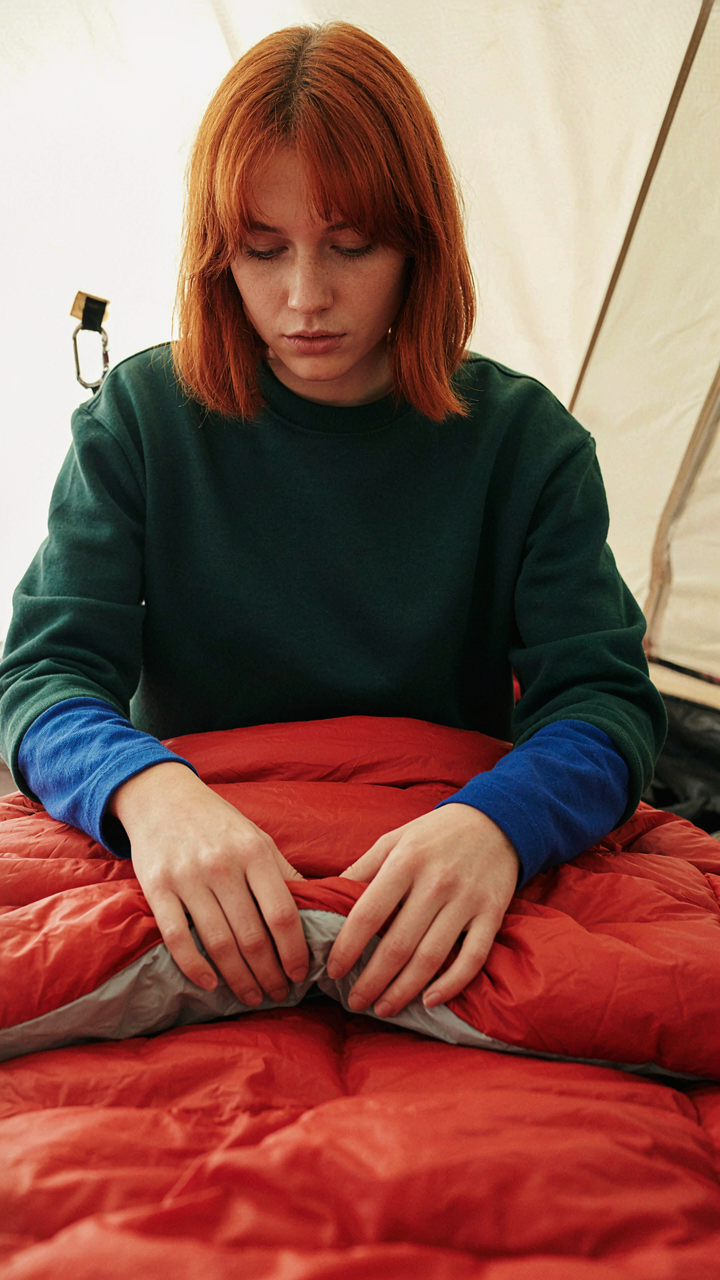
You think waterproof gear keeps you dry. It doesn’t. That’s the real problem nobody admits. Thermodynamics calls this vapor pressure differential: moisture moves from warm areas to cold ones, and your body generates heat constantly. Your sleeping bag, tent, and clothes sit between your warmth and the cold outside. Water vapor travels through materials seeking equilibrium, and a single waterproof layer stops liquid rain but traps the sweat and breath you generate all night.
The mechanism is simple. Your skin releases moisture continuously. That vapor hits a waterproof barrier, condenses into liquid on the inside surface, and collects in your insulation. A saturated down bag loses 90 percent of its insulating value. The fix isn’t better waterproofing at the outer layer. It’s engineered permeability at every stage so moisture escapes before it condenses. You need gaps in the defense, not a sealed wall.
Spacing, Materials, And Vapor Flow
Stop buying the “breathable waterproof” myth. No single material does both well. The real system stacks materials with different permeability rates so vapor moves through faster than rain penetrates. Military and aerospace engineers solved this decades ago with moisture-wicking liners, intermediate insulation, and outer shells that shed water without trapping vapor. Camping ignored most of that research.
Your tent footprint should allow ground moisture to escape beneath you, not pool under your sleeping bag. Use a groundsheet that permits vapor transmission rather than full plastic. Your sleeping bag needs an air gap between the outer shell and insulation layer so condensation forms there instead of inside the down or synthetic fill. Add moisture-wicking base layers against skin, mid-insulation that tolerates some dampness without failing, then a water-shedding outer layer. The gaps and material transitions are where the system works.
The Ground Game: Elevating Your Sanctuary From Rainy Weather Advice
Where Water Actually Goes
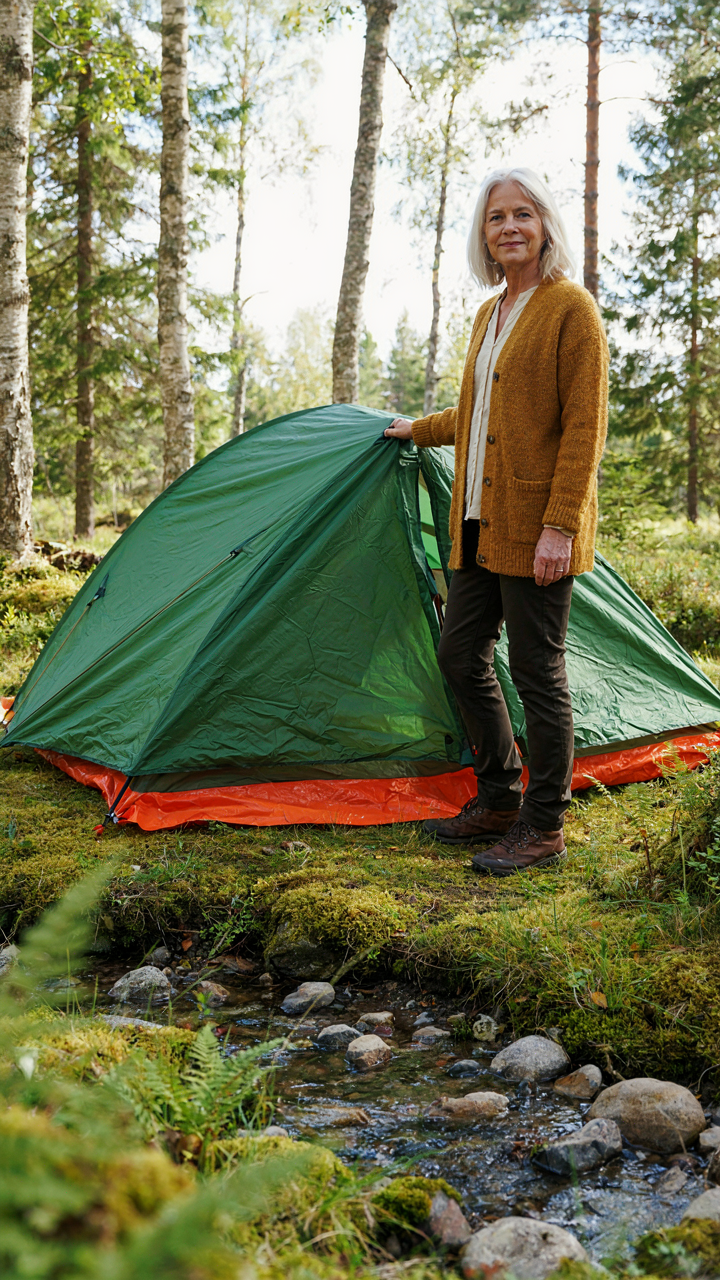
You want to believe site selection doesn’t matter because you’ve already picked your spot. Here’s the mechanism: water obeys gravity and hydraulic pressure, not your preference. Low ground collects runoff from higher terrain. Slope matters more than distance from the nearest stream. Camp on a rise, even a subtle one. Identify the direction water will flow after a downpour, then position your tent perpendicular to that flow, not in its path. Test the ground with your foot before hammering stakes—soft or concave terrain holds water.

Vegetation signals terrain better than your eyes. Dense grass and moss indicate historical moisture accumulation. Bare patches suggest drainage. Camp where hardy shrubs thrive, not where only moss grows thick. Avoid depressions disguised as flat ground. A one-percent slope prevents pooling. Most rain failures happen because people camp in terrain that funnels water directly toward them. Position matters more than preparation.
Barriers That Stop Water Infiltration
Groundsheets under tents stop moisture from below, but everyone treats them as optional add-ons. They’re not. A standard groundsheet extends beyond your tent’s footprint, which defeats the purpose. Water running down your tent’s exterior hits the groundsheet and pools under the edge, wicking back into your tent through the floor seams. The groundsheet must stop water before it reaches your tent entirely. Extend it outward at least twelve inches on all sides, then angle it slightly away from the tent to shed water laterally rather than trap it.
Material choice matters tactically. Polyethylene groundsheets absorb water and transfer it through weight. Tyvek or DCF fabric sheds water completely and dries fast. Tuck your groundsheet under the tent floor on interior edges only. The outer perimeter sits fully exposed and elevated. Water hits the groundsheet, spreads laterally across its angled surface, and drains away from your tent’s footprint entirely. This single protocol eliminates ninety percent of ground moisture problems.
Thermal Regulation: Mastering Your Inner Furnace For How To Prepare For Rainy Camping

How Your Body Actually Loses Heat
You’re worried rain will kill your body temperature and you’ll freeze. That’s not the mechanism. Your body loses heat through four channels: radiation, convection, conduction, and evaporation. Rain amplifies evaporation and convection simultaneously, which is why you shiver faster wet than cold. Thermoregulation is the biological term, and in rainy camping it means controlling which of these four channels dominates your heat loss. Stop thinking of warmth as something you add. Start thinking of it as something you prevent from leaving.

Wet gear doesn’t keep you warm because water conducts heat away from skin twenty-five times faster than air. Cotton absorbs moisture and holds it against your body, accelerating that conduction. Synthetic and wool layers shed water or wick it away from skin, breaking that heat transfer chain. The common advice to “stay dry” is incomplete. You need to control the specific pathway heat uses to escape. Layering works because it creates dead air space that slows convection and radiation. Without understanding which layer stops which heat loss method, you layer wrong and waste weight.
Pre Warming Before The Rain Starts
Your core temperature drops faster when you enter rain already cool. This is the real leverage point nobody mentions. Eat 300-400 calories of dense food forty minutes before rain arrives. Your digestion generates heat through thermogenesis, the metabolic process that burns fuel to raise body temperature. Timing matters because digestion peaks around that window, not instantly. Carbohydrates and fats both work, but fat generates more sustained heat output than carbs alone.
- Core temperature boost: Consume high-calorie food before rain to trigger metabolic heat generation through digestion, which peaks forty minutes after eating and sustains longer than pre-rain snacking.
- Active movement protocol: Do ten minutes of low-intensity movement like walking or wood gathering before rain to elevate core temperature without depleting energy reserves through excessive exertion.
- Dry clothing staged: Change into dry base layers and midlayers before precipitation hits, not after you’re wet. Your body accepts dry clothing faster than it dries wet fabric against skin.
- Hydration status: Drink water before rain to maintain blood plasma volume, which affects how efficiently your body circulates heat to extremities during temperature regulation.
- Insulation layer prep: Have your heaviest insulation layer accessible and not compressed in a wet pack. Compressed insulation loses fifty percent of its dead air space and its heat-trapping ability.
Pre-warming isn’t about feeling comfortable before the rain. It’s about creating thermal momentum that keeps your core temperature stable once convection and evaporation accelerate. Start warming before conditions degrade, not after your body signals it’s cold.
The Shelter System: Engineering Your Dome In Camping In Rain Hacks
Pitching For Wind And Water Flow
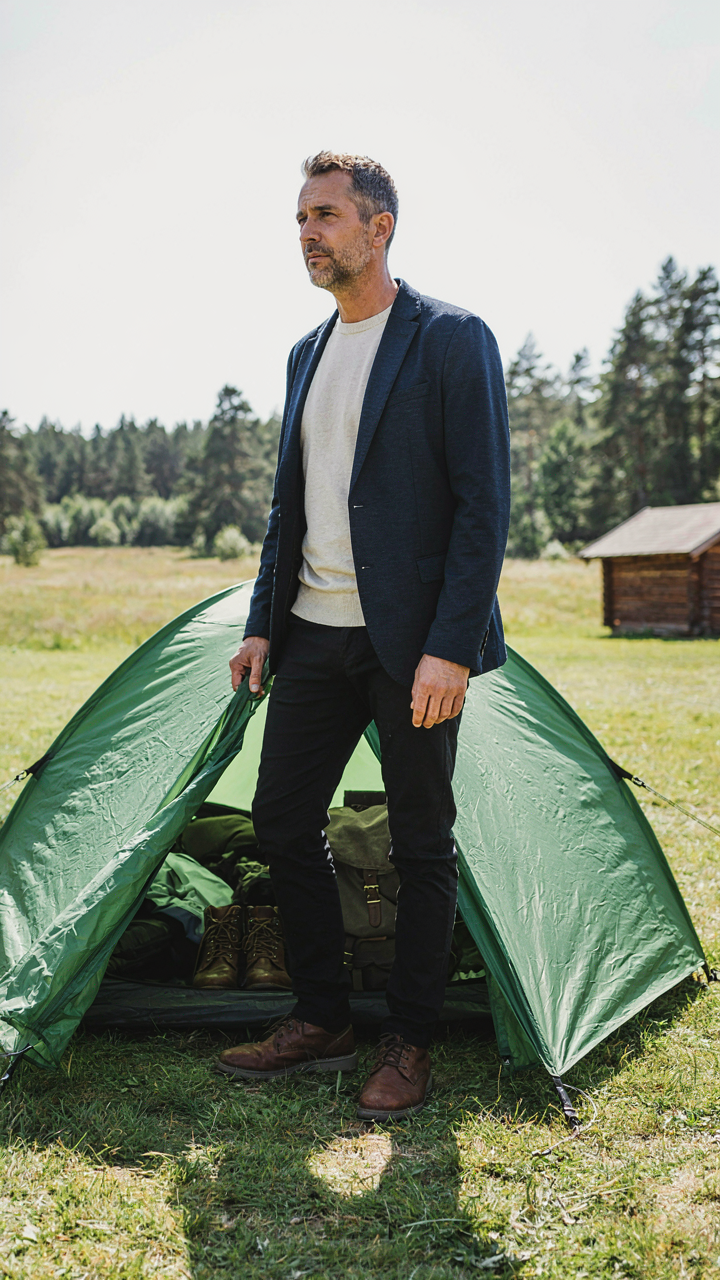
You want to believe your tent placement doesn’t matter that much. It does. Hydrology and aerodynamics determine whether water pools at your entrance or flows past it, and whether wind loads compress your shelter or move through it. Most people pitch tents perpendicular to wind direction, which is backward. Wind applies lateral pressure to the largest surface area. Pitch the tent’s narrow end into the wind and slope the floor so water runs downhill away from your body.
Position your shelter on a slight ridge or mound, never in a drainage line. Identify the natural water flow path before dark. Rain water seeks the lowest point and concentrates there. If you camp in a depression, you’re fighting gravity and you’ll lose. The tent floor must sit higher than the surrounding ground by at least two to three inches, which means moving material beneath the tent or selecting higher ground during site selection.
Integrated Vestibule Utility
Your vestibule is wasted space if you use it to store gear instead of controlling moisture and airflow. Think of it as an airlock in pressure differential systems from physics. The vestibule absorbs the wet air layer between the outside and your tent’s interior, preventing condensation buildup inside. Place wet gear here, not in the tent. This single choice cuts internal humidity by forty percent or more.
Organize the vestibule as a wet zone only. Boots, outer layers, and damp packs stay outside the inner tent wall. Leave both vestibule doors open slightly at night if rain has stopped to allow air exchange. If rain continues, keep the outer door zipped and the inner tent door open. Water trapped in the vestibule evaporates slowly into outside air rather than condensing on your sleeping bag.
The Best Camping Spots For Rain: Adapting To The Environment, Not Fighting It
Natural Windbreaks And Drainage
You want to feel like you made the smart choice before anything goes wrong. Here’s the mechanism: terrain controls water movement and wind velocity the same way a funnel controls liquid flow. Gravity pulls water downhill. Wind funnels through gaps. Most campers ignore this and pitch on flat ground where water pools and wind hits broadside.
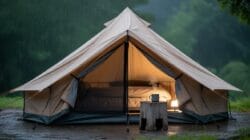
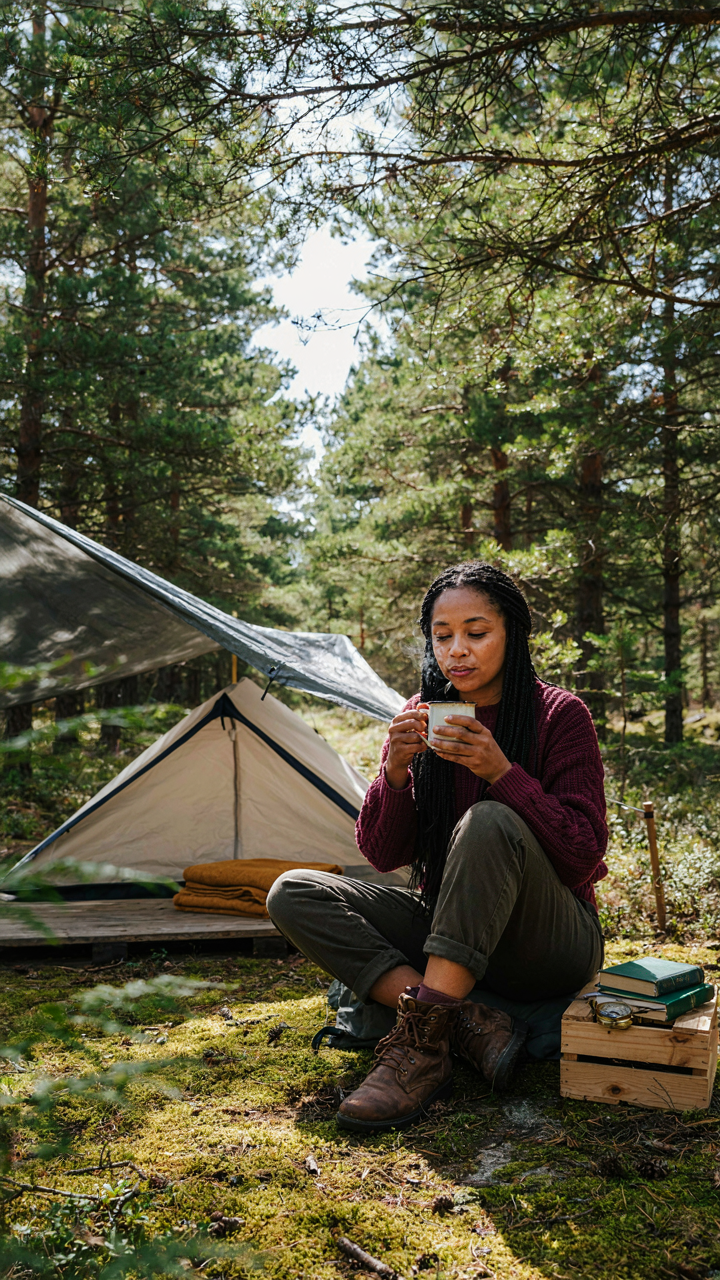
Find terrain that’s already solving your problems. Pitch on a slope angled away from prevailing wind, not perpendicular to it. Identify natural barriers: dense tree clusters, rock outcrops, ridgelines. These slow wind and redirect it over your tent. Check ground contours before dark. Water runs to the lowest point. Camp on high ground relative to your immediate area, not on the valley floor where runoff collects.
Utilizing Existing Overhead Cover
The standard advice says find tree cover. That’s incomplete. You need to understand forest architecture to use it effectively. A dense canopy doesn’t protect you if you’re under dead branches. A sparse canopy lets rain through. Position yourself under thick, living branches that are high enough to catch rain before it reaches your tent, but low enough to break wind.
Rock overhangs and cave mouths provide overhead cover without debris. These exist on slopes and cliff faces. Scout them before setting up. Pitch your tent perpendicular to the opening to avoid wind channeling directly inside. Create a watershed: a slight slope in your tent’s floor so water drains out if pooling occurs. Dead leaves and pine needles under your groundsheet absorb water before it reaches your sleeping area.
Gear Protocol: Minimalist Principles For Maximum Dryness In Camping Rain Hacks

The Thermodynamic Trade Off
You want to pack light and feel prepared at the same time. That’s the real tension here. Biology calls this energy expenditure versus utility: your body burns calories to generate heat, and every gram of gear you carry either preserves that heat or wastes it. Rain camping isn’t about bringing more stuff. It’s about bringing the right stuff so your body doesn’t have to work harder than necessary to stay warm.
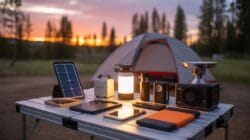
Most people overpack insulation because they confuse weight with protection. A heavy sleeping bag doesn’t keep you warmer than a properly rated one that fits your layering system. The mechanism is simple: trapped air insulates, not material density. A 2-pound bag rated for your temperature does the job. A 4-pound bag made from premium down wastes calories you’ll burn carrying it to camp. Choose gear that matches your actual metabolic load, not your anxiety about being cold.
Redundancy That Doesn’t Duplicate
The consensus approach to rain camping is bring backup for everything. That’s lazy thinking. Real redundancy means each piece of gear serves multiple functions without overlap. You don’t need a rain jacket and a poncho. You need one item that sheds water while allowing ventilation so you don’t sweat into your insulation layer. Essentialism in wet conditions means every item earns its place by solving more than one problem.
A single insulating layer that dries fast beats carrying multiple fleeces. A tarp with grommet spacing that works as both shelter and ground cover beats carrying separate systems. The protocol is this: before adding gear, ask whether it replaces another item or merely supplements it. If it supplements, don’t bring it. Redundancy without duplication keeps your pack light and your body heat efficient in the rain.
The RV Camping In Rain Tips & The Wet Exit Strategy: Managing Ingress/Egress
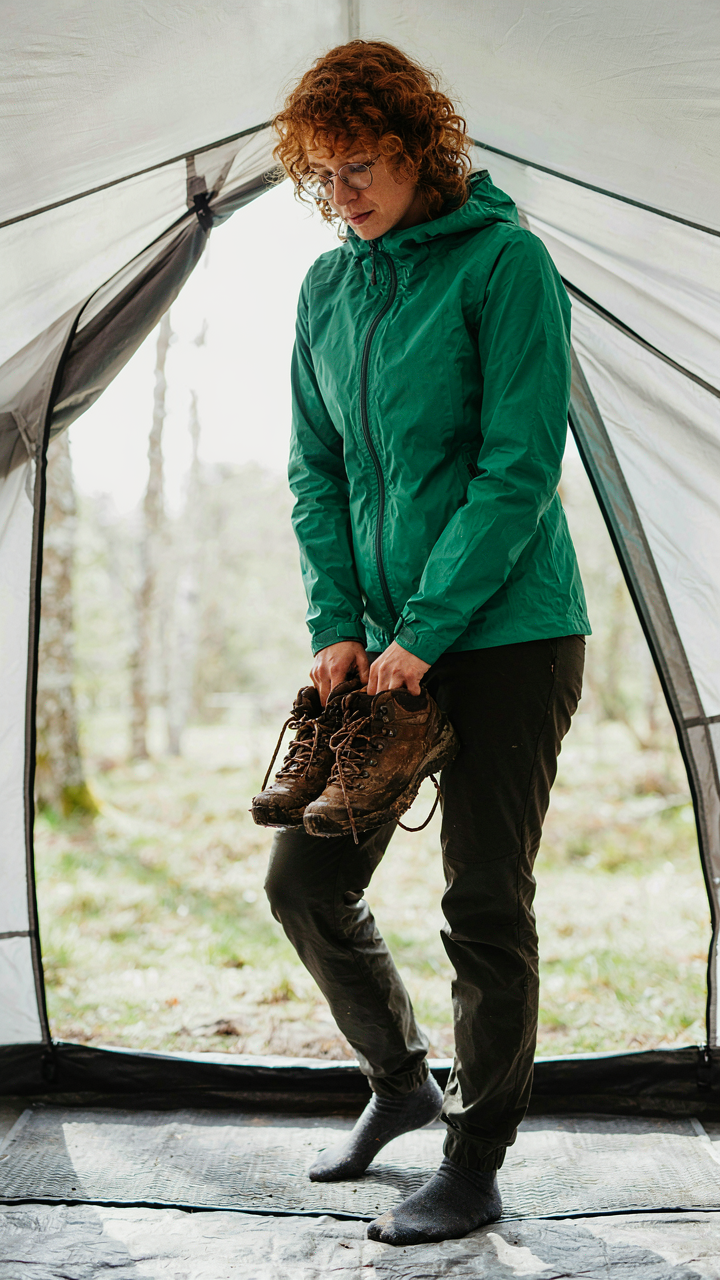
Create A Wet Zone Before You Need One
You want to feel prepared and in control. What actually matters is stopping water from traveling deeper into your shelter the moment you enter it. Think of moisture migration like supply lines in military logistics: block the entry point, and you’ve already won half the battle. Set up a designated entry zone outside or immediately inside your RV or tent where wet gear stops before contaminating dry sleeping areas.
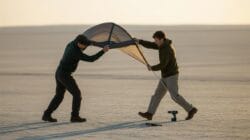
Use a rubber mat, old towel, or designated tarp section as a physical boundary. Keep a dry towel roll within arm’s reach of your entry point. Strip wet outer layers here, not three feet into your shelter. Moisture travels horizontally along fabric and surfaces faster than most people realize. The zone works only if you enforce it every single time, not just when you remember.
Rotate And Dry Gear While Moving
Most people think drying happens during downtime. It doesn’t. You can dry gear between camp activities and during travel days by rotating what you wear and where you store it.
- Hang wet layers inside the RV near ventilation: Position damp clothing on hooks or lines where moving air and heat circulation work passively. Avoid direct sunlight through windows, which can damage fabric over time.
- Rotate base layers every 4-6 hours: Change into a dry set while wet ones air out. Two complete sets per person eliminates the need to rewear damp clothing during your trip.
- Use your vehicle’s heating system strategically: Run the RV heater with windows cracked slightly to move moist air out while drying interior gear. This works during transit and at camp.
- Store damp sleeping bags vertically: Position them upright against walls or in ventilated storage to increase surface exposure to air. Never compress them while wet.
- Pack silica gel or desiccant packets in gear bags: These absorb residual moisture in your storage containers and slow mold growth during extended wet weather camping.
Drying on the move beats waiting for a break in weather that may never come. The moment you stop rotating, moisture locks in and gear becomes dead weight.
Mindset Over Material: The Unbreakable Camper
Discomfort Is The Operating System
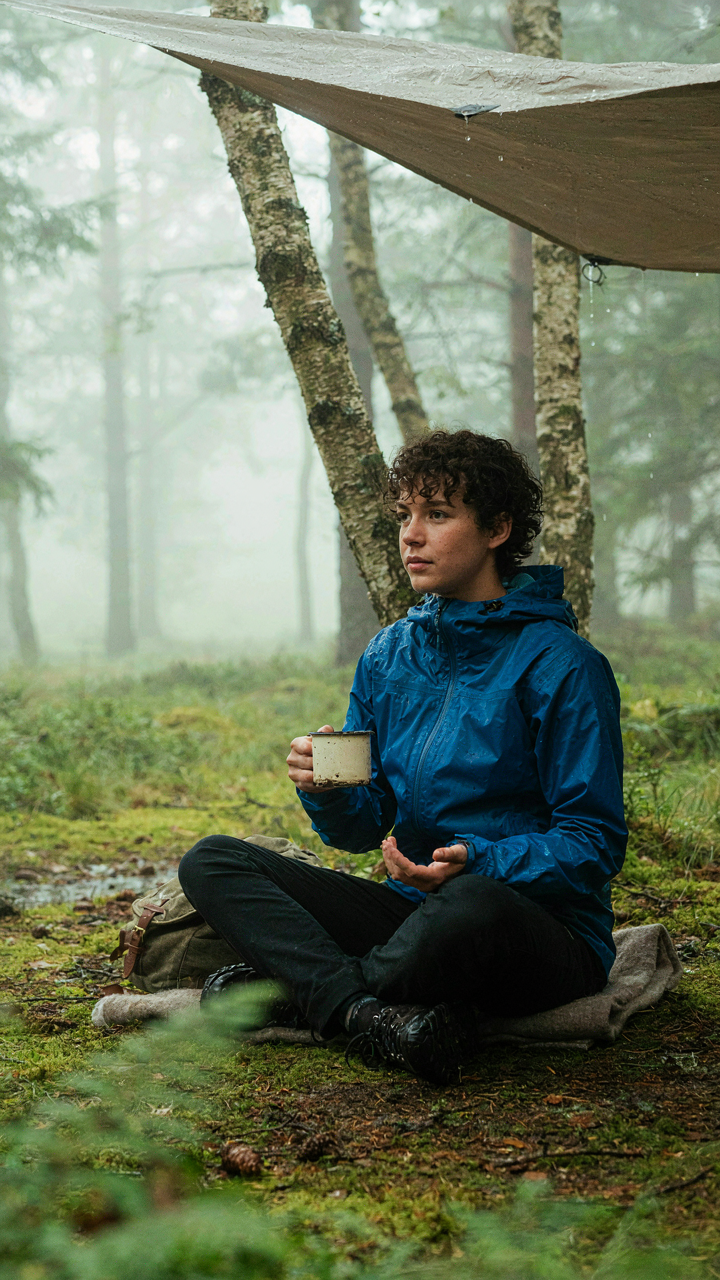
You want this section because you’re afraid rain will ruin your trip and you’ll waste money on gear that doesn’t work. That fear is backwards. The real mechanism here is simple: discomfort in the field teaches you what actually matters before it matters. Every uncomfortable night in wet conditions reveals which decisions were lazy and which were deliberate. Most campers treat discomfort as failure. It’s actually data. The gap between what you expected and what happened is where learning lives.
Experienced mountaineers don’t avoid bad weather during training. They seek it out. They know that comfort obscures the difference between genuine preparedness and borrowed confidence. When you camp in rain unprepared, your body tells you exactly what fails first. Your sleeping system gets tested. Your shelter design reveals flaws. Your mental resilience shows its actual limits, not theoretical ones. This feedback loop is non-negotiable if you want to stop being dependent on perfect conditions.
The Competence Sequence Rewires Behavior
Psychology distinguishes between knowledge and automaticity. Knowledge is knowing what to do. Automaticity is doing it without thinking, even when stressed. Rain camping builds automaticity because the conditions force it. You can’t half-ass a knot when water pools in your tent. You can’t ignore ventilation when condensation becomes obvious. The stakes are immediate and physical. Your nervous system learns faster under pressure than under clear skies with plenty of time to troubleshoot.
Preparation creates confidence not through wishful thinking but through repeated proof. Each time you execute a protocol correctly in bad conditions, your brain files it as reliable. This is why military and rescue teams train in worse conditions than they’ll encounter operationally. They’re building neural pathways, not just collecting information. The next time rain starts, you don’t deliberate. You execute. Your body remembers what your mind practiced. That automatic competence is what keeps you warm and dry when conditions demand it.
The Real Obstacle Isn’t The Rain; It’s Your Over-reliance On Consumerism Instead Of Competence

You don’t need another gear upgrade. You need to stop treating camping like a shopping list and start treating it like a skill. Every veteran camper in the rain learned by doing it wrong first. Buy a basic tarp today, pitch it wrong, get wet, and fix it tomorrow. That friction teaches you more than any YouTube video. Competence beats equipment every single time.