The Minimalist’s Manifesto For Long Haul Flights

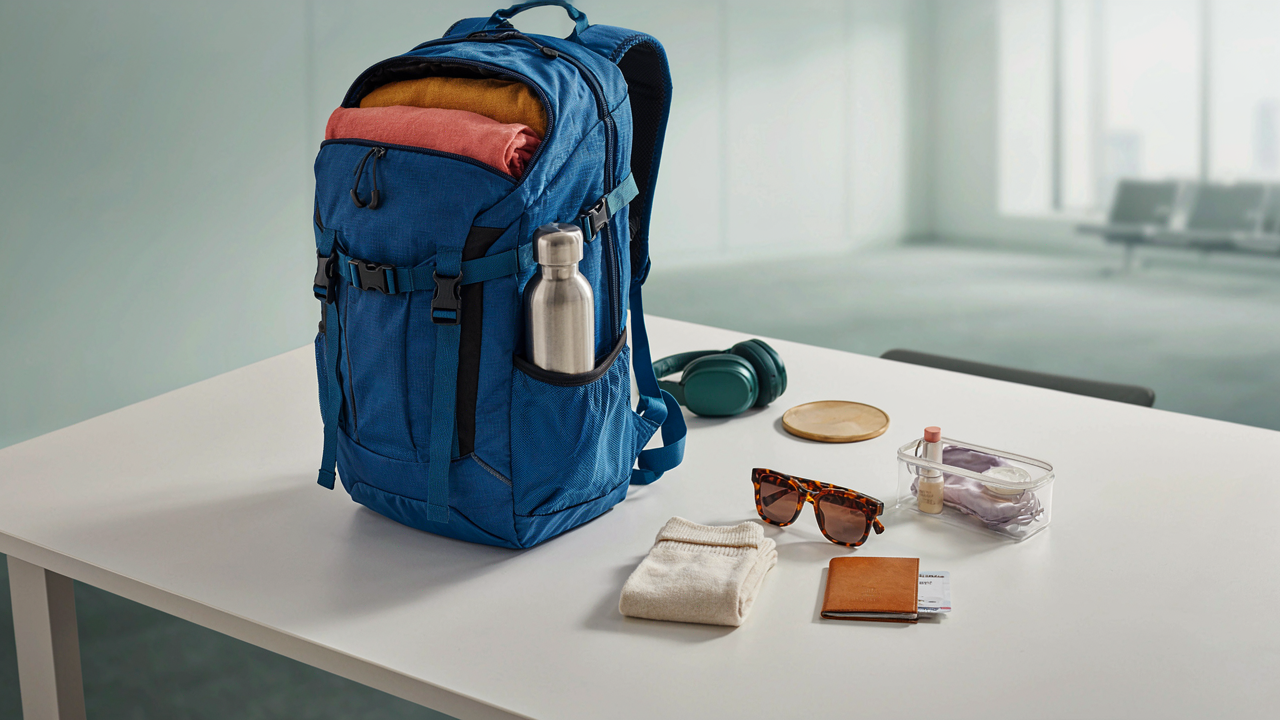
Packing Less Fixes The Real Problem
You want to feel prepared without admitting you’re afraid of being uncomfortable for twelve hours. Here’s what actually happens: more items create decision fatigue and physical clutter that compounds discomfort rather than solving it. The mechanism is simple. Your personal item has finite space. Every unnecessary object displaces something that directly impacts your physical state during flight. Airlines know this, which is why they’ve shrunk personal item dimensions over the past decade. You’re fighting against a spatial constraint, not indulging in minimalism.
The comfort kit works backwards from what most travelers pack. Instead of asking “what might I need,” ask “what breaks my sleep, digestion, or circulation on planes.” That distinction eliminates 60 percent of typical carry-on bloat. You’ll actually access five to seven items across a twelve-hour flight. Everything else sits untouched, taking up real estate your neck pillow or compression socks could occupy. The goal isn’t feeling virtuous about owning less. It’s maximizing the items that produce measurable relief.
The Myth Of The Essential Item
Most comfort advice treats all items as equally important, which is dead wrong. This is a triage problem borrowed from emergency medicine: some interventions are critical path, others are nice-to-have theater. Your sleep quality on a plane is critical path. Your entertainment options are not. Yet travelers pack six hours of entertainment and one pillow that doesn’t work. The framework reveals the real hierarchy. A functional pillow, compression socks, and hydration strategy move the needle on your physical state. Phone chargers and entertainment do not.
Call out the consensus here: the internet packages “flight comfort” as a lifestyle aesthetic. You’ll see photos of people with silk pillowcases, eye masks, noise-canceling headphones, and aromatherapy rollers. Half of these items create problems they claim to solve. An eye mask that doesn’t fit properly keeps you alert. Noise-canceling headphones that slip during sleep waste battery life. Strip to what actually changes your physiology: maintain core temperature, keep airways clear, manage circulation, control dehydration. Everything in your kit must address one of these four. Anything else stays home.
Your Personal Item: A Strategic Command Center, Not A Stuffed Sack
Multi Use Items Win Every Time
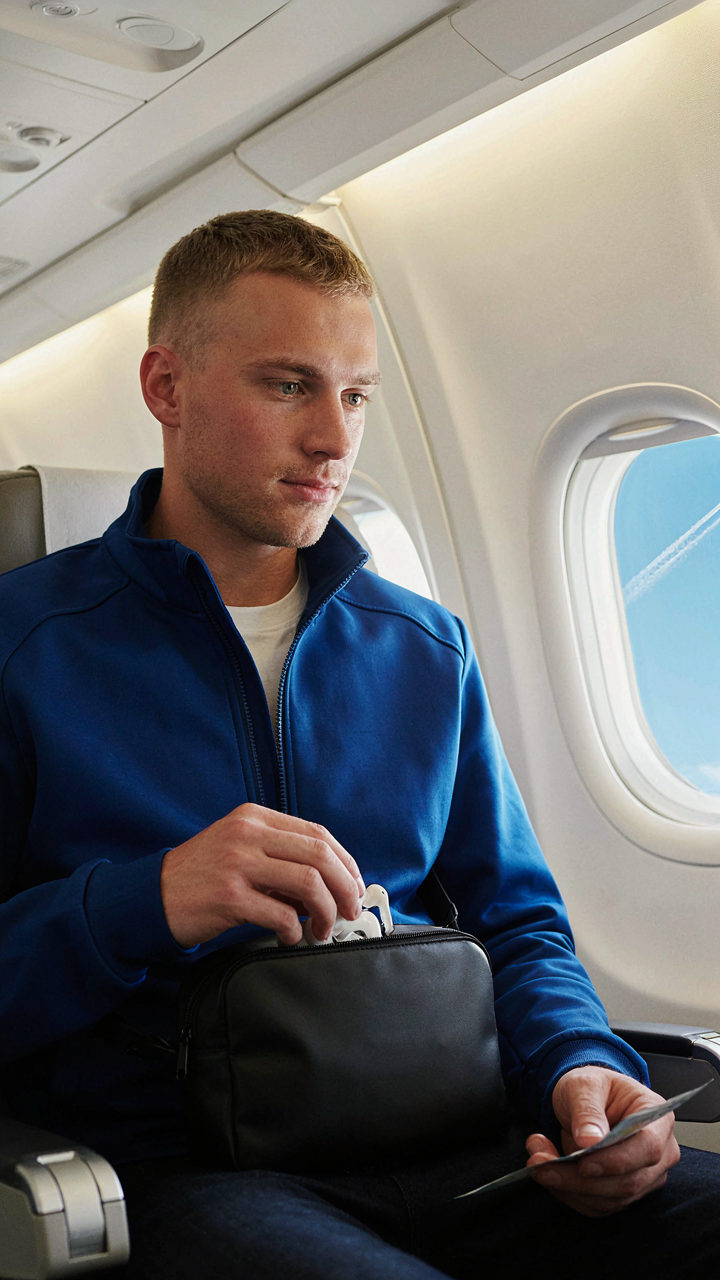
You want your personal item to feel lightweight and minimal because you’re afraid of looking like you don’t travel well. The real mechanism is thermodynamic control. Your long haul flight comfort kit lives or dies based on how many single-purpose items you pack. Every object in your personal item must solve at least two problems or it’s taking up real estate you need.

Compression socks double as flight socks and recovery tools post landing. A merino wool hoodie becomes a pillow, blanket layer, and temperature adjuster. A neck pillow with memory foam works as lumbar support if you rotate it. Lip balm with SPF protects against cabin air and UV exposure through the window. The goal is density of utility, not density of stuff.
The Access Hierarchy Changes Everything
Military logistics operate on a principle called forward positioning: critical items stay accessible, secondary items stay deeper back. Your personal item follows the same rule. What you need in hour two of a twelve hour flight sits on top. What you need in hour eleven sits at the bottom.
Front pocket or immediately accessible: noise canceling earbuds, phone, one water bottle, compression socks. Middle layer: neck pillow, hoodie, lip balm, eye mask. Bottom of bag: backup phone charger, medications, documents. You never dig for your ear plugs at 35,000 feet while your neighbor talks. Accessibility determines whether comfort tools actually work or stay unused.
The “Bio Rhythm Bypass” Protocol: Defying Jet Lag Naturally
Light Exposure Strategy For Circadian Recalibration
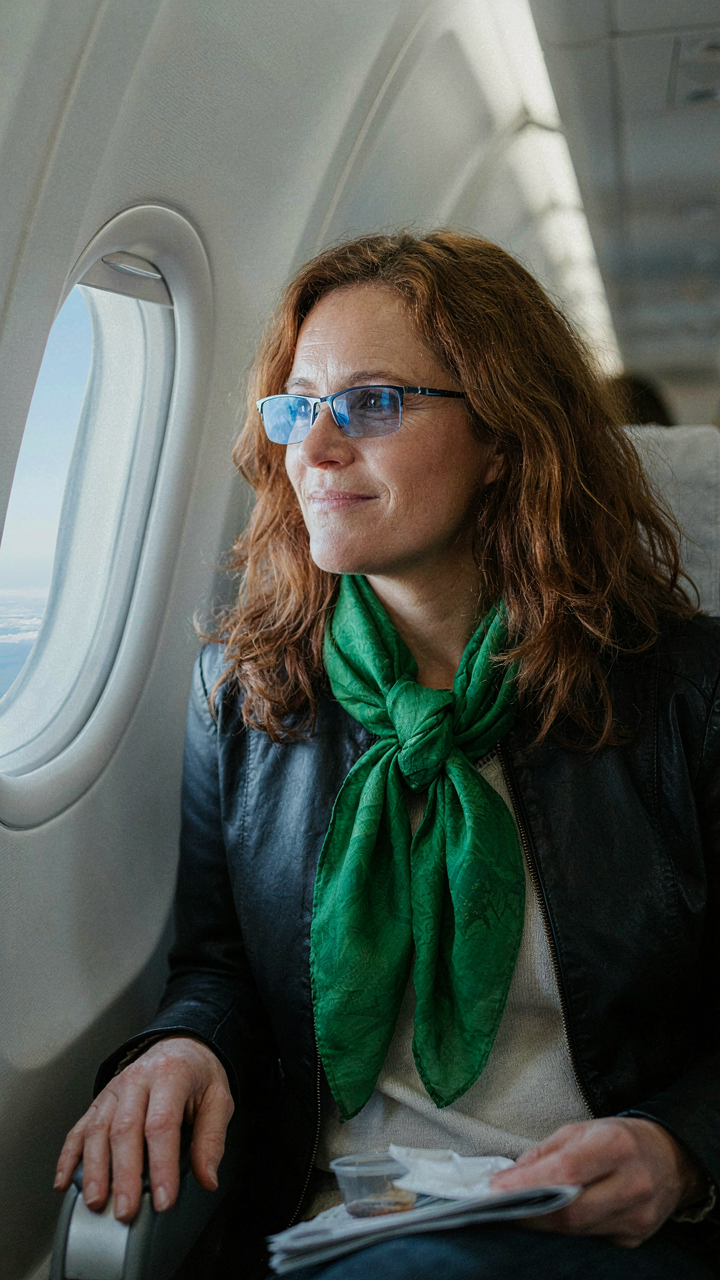
You want to arrive sharp, not zombified, because lost time on a trip is money and status you can’t recover. Here’s the mechanism: your circadian rhythm isn’t just a feeling. It’s a biological clock anchored to light exposure, controlled by your suprachiasmatic nucleus. Light is the single most powerful zeitgeber—the German neurobiology term for a time-giver—that resets your internal clock faster than any pill or supplement.
Pack a small sleep mask with adjustable eye coverage and blue light blocking glasses. The mask isn’t for darkness on the plane itself. It’s for blocking the cabin’s artificial lighting during scheduled sleep windows on your flight. Use the glasses during the evening leg of your journey to suppress melatonin production at the right moment. When you land, expose yourself to bright outdoor light for 20 to 30 minutes within the first two hours. This single action does more work than melatonin supplements because it recalibrates your clock through the pathway supplements mimic poorly.
Hydration And Nutrition As Your Internal Clock
The common advice says drink water and avoid alcohol. That’s lazy. Your digestive system is a secondary circadian regulator. When you eat signals your body about what time zone you’re in. Fasting and feeding windows matter more than total calorie intake for jet lag recovery.
Bring electrolyte packets and calorie-dense snacks into your personal item. On your flight, fast for 12 to 16 hours before your destination’s breakfast time, then eat a protein-heavy meal immediately upon arrival. This isn’t about nutrition optimization. It’s about sending your digestive system a hard signal that the time has changed. Hydrate consistently with water only during the fasting window. Your stomach’s feeding schedule resets your internal clock almost as effectively as light does. Eat strategically, not randomly.
Beyond The Noise Cancelling Hype: True Sonic Serenity
Active Versus Passive Noise Reduction
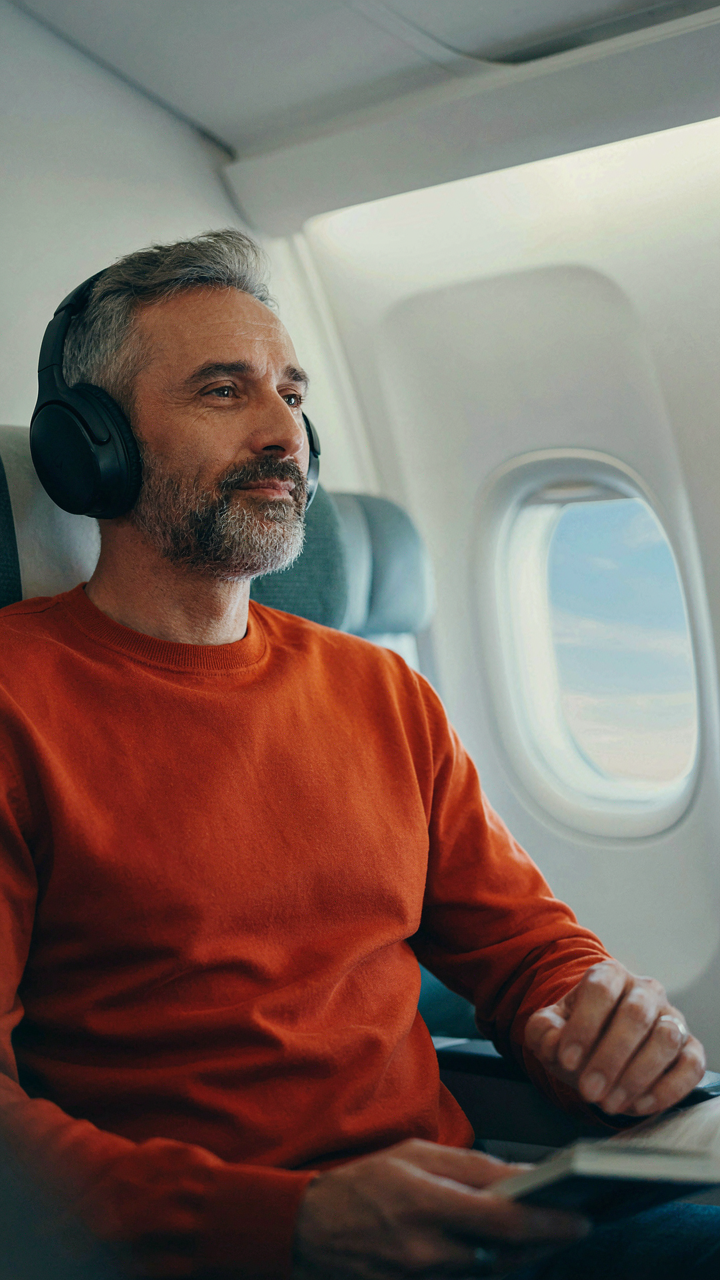
You want noise cancelling headphones because you think they’ll make you look less tired and more composed to the person next to you. That’s not the real mechanism. Active noise cancellation works through phase cancellation, a physics principle where inverse sound waves neutralize incoming noise. Passive isolation—foam earplugs or over-ear seals—simply blocks sound physically. On a flight, both matter, but they solve different problems. Active works best on constant low-frequency drone like engine rumble. Passive handles the random high-frequency spikes: conversations, seat adjustments, lavatory doors.
Most travelers buy expensive active headphones and ignore earplugs, which is backwards strategy. Your comfort stack needs both. Active headphones drain battery and can fail. Earplugs cost nothing, don’t require charging, and work every time. Use earplugs as your foundation. Layer active noise cancellation on top only if your budget allows and you’re willing to manage power. The real win isn’t choosing one. It’s understanding they address different frequencies on the sound spectrum.
White Noise And Binaural Beats For Focused Calm
Neuroscience has mapped how sustained repetitive stimuli shift brain state without inducing sleep, which is exactly what a 14 hour flight demands. White noise and binaural beats are not the same tool. White noise masks environmental sound by filling the acoustic space uniformly. Binaural beats use two slightly different frequencies in each ear to create a perceived third frequency your brain tracks, which can nudge you toward alpha or theta wave states associated with calm focus.
White noise keeps you aware but disengaged from chaos. Download it offline or use an app with airplane mode enabled. Binaural beats require headphones and work best when you’re already settled, not during boarding or meal service. Your personal item should include a dedicated offline audio file of 10 hours of white noise at a consistent level around 50 to 60 decibels. Layer white noise under whatever you’re listening to, whether that’s music, podcasts, or silence. This removes decision-making about what to do with your ears and turns acoustic management into a passive system you set once and forget.
The Adaptation Principle: Learning From Evolutionary Biology
Pre Adapt Your Body To Environmental Stress
You want comfort on a long haul flight because comfort means control, and control feels like power. But comfort isn’t a feeling you pack—it’s a physiological state you build before boarding. Evolutionary biology calls this “phenotypic plasticity”: your body’s ability to shift its operating parameters in response to environmental cues. A long haul flight comfort kit works because it delivers those cues early, training your nervous system to downshift before the stress hits.

Your body doesn’t distinguish between real threat and perceived threat. It responds to signals. Cabin pressure drops, temperature swings, light cycles break, and your system goes into mild survival mode. The mechanism is simple: expose yourself to controlled versions of these stressors 48 to 72 hours before departure, and your body arrives on the plane already adapted. This isn’t meditation or positive thinking. It’s literally recalibrating your baseline so the flight environment reads as normal instead of hostile.
Ancestral Survival Cues For Deeper Rest
The modern advice to “just sleep on the plane” ignores how your brain actually prioritizes rest. In survival terms, sleep only deepens when your nervous system detects safety signals—the same signals your ancestors relied on. Temperature consistency, absence of sudden noise, dim light, and pressure stability were markers of a secure shelter. Your comfort kit recreates these specific conditions because they’re neurologically linked to sleep permission, not because they feel nice.
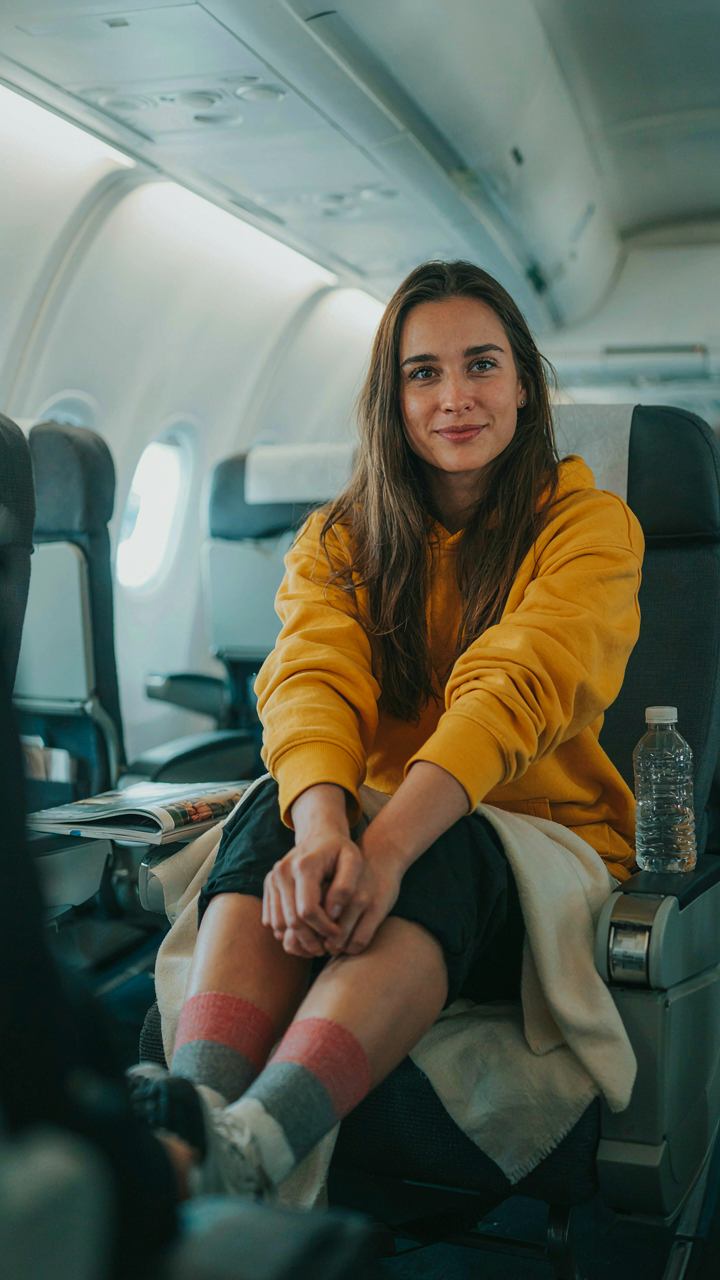
Thermal regulation matters most. Humans sleep deeper when core body temperature drops slightly, which is why blankets work but why random cabin temperature prevents real rest. A quality travel blanket maintains consistent warmth without the temperature swings of cabin air. Pressure socks mimic the compression your body experiences in safe, enclosed spaces. Noise blockers eliminate unpredictable auditory threats. Pack these three elements, and you’re not carrying comfort items—you’re carrying sleep permission signals your nervous system recognizes at a biological level.
Powering Up: The Unseen International Flight Essentials
Portable Chargers And The Math That Matters
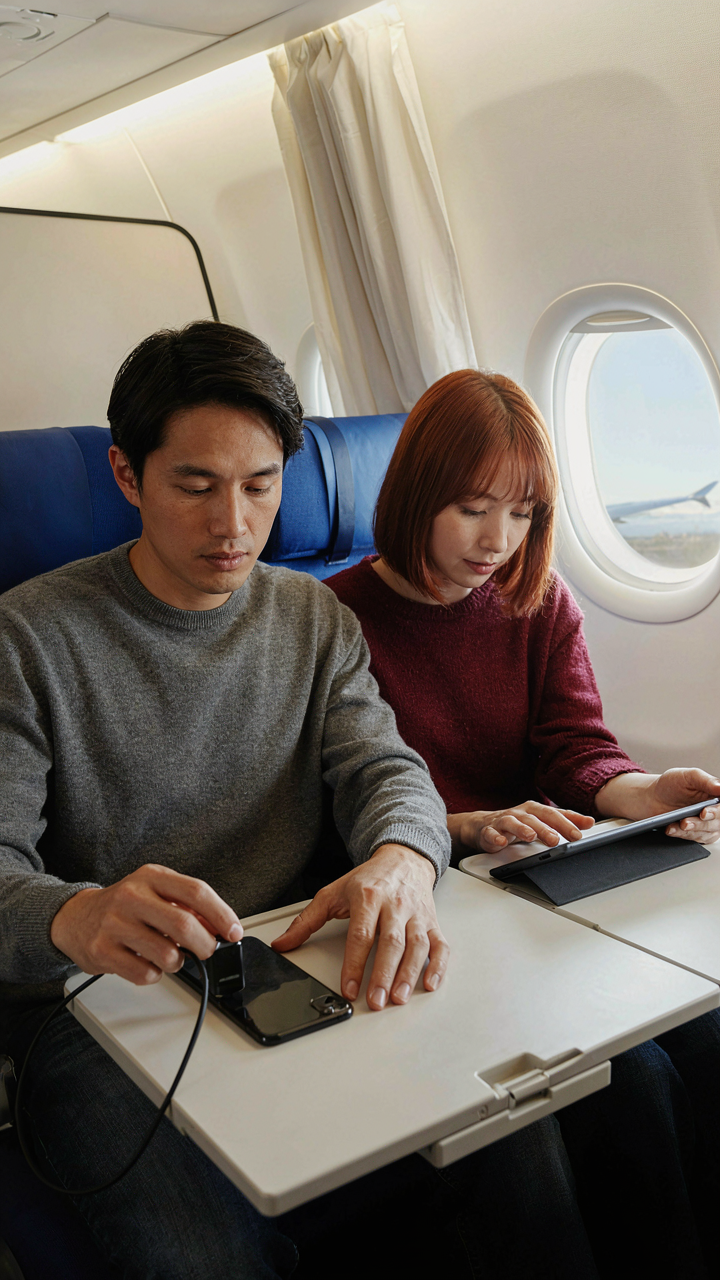
You want to look prepared and not stranded. The real mechanism here is simple: your devices drain faster at altitude because cabin pressure affects battery chemistry slightly, and you’re using screens continuously for 8 to 16 hours. Energy density matters more than brand name. Buy by watt-hours, not marketing language.
- 20,000mAh lithium polymer pack: Charges most phones three to four times. Stays within TSA carry-on limits. Weight runs 150 to 180 grams. Mid-range option for most travelers.
- 30,000mAh high-capacity unit: Covers phone plus tablet or laptop partial charge. Exceeds 100Wh limit on some airlines. Check carrier rules before packing.
- 10,000mAh slim form factor: Fits jacket pocket. Single phone charge only. Trade-off is weight savings and discretion, not capacity.
- 45W USB-C fast charge model: Powers laptops and tablets, not just phones. Heavier than basic packs. Valuable if you work mid-flight or need laptop power for 12+ hour flights.
- Solar hybrid charger: Gimmick for flights. Cabin windows don’t provide enough light to charge meaningfully. Skip it.
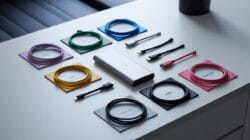
Weight-to-capacity ratio determines pack choice. A 20,000mAh charger at 170 grams outperforms a 30,000mAh brick at 400 grams for most people. You won’t use the extra capacity. Charge your devices before boarding and charge your portable pack in the airport. Most gates have outlets now.
Adapters And The One Universal Rule That Works
Consensus says buy a multi-adapter that handles every outlet on Earth. That’s wrong. You end up carrying dead weight for outlets you’ll never hit. The socket format varies by region, not by flight duration. Know your destination and pack only what you need.
Most airports have USB charging stations now, which eliminates half the adapter argument entirely. If your destination is Europe, buy a Type C adapter. If Asia, buy Type A and I plugs. If you’re island-hopping across five countries, then and only then justify a universal adapter. The real move is checking your airline’s in-flight power availability first. Many long haul flights have seat-back USB ports or overhead bins with 110V outlets. Dead adapter weight becomes obvious after you land and find USB everywhere.
The Discomfort Deception: Why Most Long Haul Kits Fail
Comfort Starts With Diagnosis, Not Shopping
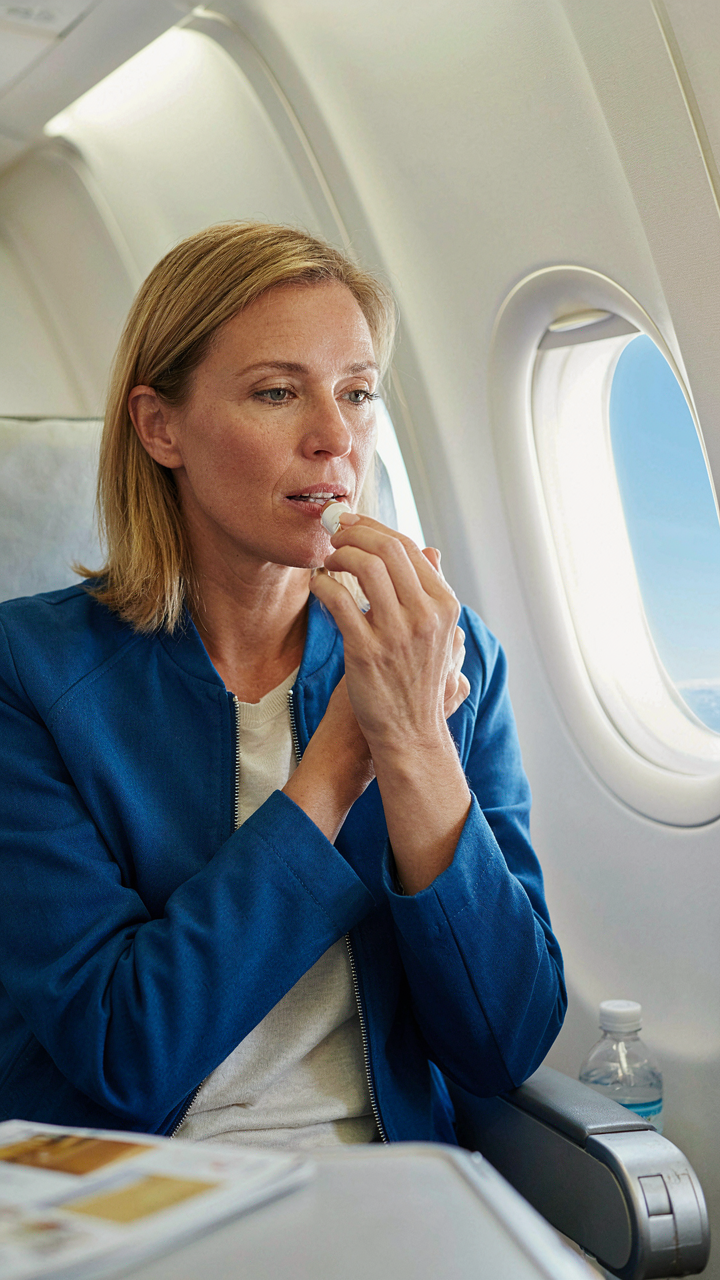
You want to pack the right stuff so you don’t look like someone who didn’t prepare, but the real problem is that most kits treat symptoms instead of their causes. Discomfort on long haul flights stems from three mechanical failures: cabin pressure and humidity destroying your mucous membranes, your body’s circadian rhythm getting obliterated, and immobility causing blood pooling in your legs. No neck pillow fixes those. You address the root or you waste your personal item space on theater.

The cabin environment is the primary antagonist. At cruise altitude, cabin pressure sits around 6,000 to 8,000 feet equivalent, which reduces oxygen saturation in your blood and dries mucous membranes faster than you realize. Humidity drops to 10 to 20 percent because pressurized cabins can’t hold moisture. Your throat, sinuses, and skin suffer first. Compression socks and hydration address circulation and membrane damage. Everything else you pack without understanding this mechanism is just comfort cosplay.
The Narrative You’re Running On Yourself
Psychological framing determines how much your body actually suffers, not the reverse. Military aviation research shows that pilots who understand the mechanism of fatigue experience measurable reductions in subjective discomfort compared to those who don’t. Your mind interprets sensations through the narrative you construct about them. If you believe long haul flights are just painful, your nervous system amplifies every minor sensation into a threat signal.
The kit works best when you mentally separate the flight into phases with distinct objectives: pre-flight hydration and sleep debt reduction, mid-flight circulation and cabin environment management, post-flight circadian reset. Assigning tactical purpose to each item removes the helplessness that makes discomfort compound. You’re not just surviving the flight, you’re executing a protocol. That shift in framing reduces anxiety-driven tension and changes how acutely you experience physical sensations during the flight itself.
Post Flight Recovery: Optimizing Your Arrival For Long Haul
Light Exposure Timing On Landing
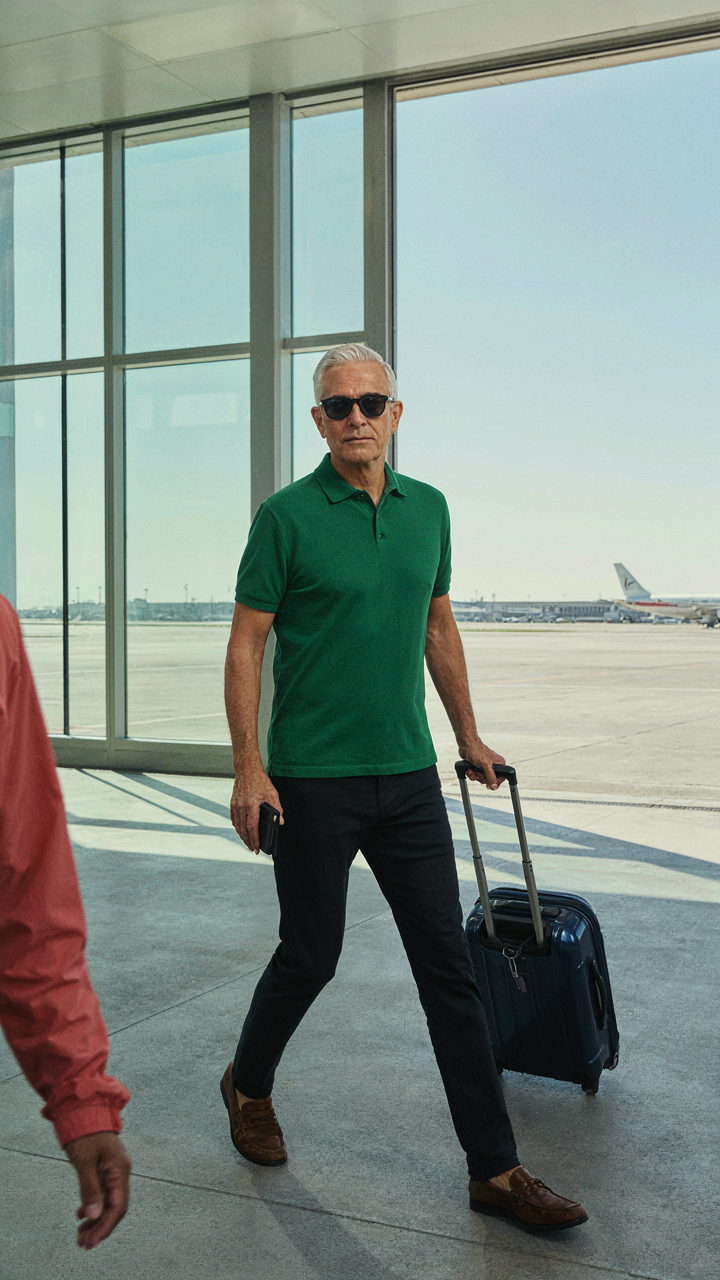
You want to feel human again by tomorrow, not waste three days in a fog. The real mechanism is circadian rhythm entrainment. Your body runs on a 24-hour clock, and light is the only input that resets it faster than anything else. Sunlight hits your retina, signals your suprachiasmatic nucleus, and flips your internal schedule. Get this timing right and your body shifts zones in 24 to 48 hours instead of a week.

When you land, your job is simple: seek light at the right moment, not just any light. Arriving in morning or early afternoon means get outside immediately, even if you’re exhausted. Arriving at night means stay indoors under dim lighting, then get outside first thing the next morning. The kit item here is a pair of sunglasses with high UV protection to avoid eye strain when your pupils are still dilated from cabin pressure and dehydration. This one tool prevents you from overdoing light exposure and triggering a rebound fatigue crash.
Sleep Anchor Before Common Mistakes
Most people destroy their recovery in the first 24 hours by fighting the one thing that actually works: strategic sleep. They nap randomly, stay up drinking coffee, then collapse. They resist sleep because they’ve heard the old advice about “staying awake to adjust faster.” That advice is incomplete. Controlled sleep with proper timing resets your clock better than exhaustion does.
Your first sleep window after arrival is the anchor point. If you land in the morning, do not nap. Eat light protein and fat, get sunlight, move around. If you land in evening, sleep for four to five hours immediately, then wake for the night, then sleep again the next night. Pack melatonin in your comfort kit, but only use it on your first night at destination if you landed when your body expects to be awake. This prevents the mistake of taking it reflexively and waking at 3 AM with nowhere to go.
The Strategic Traveler’s Mindset: Beyond Travel Prep
The Flight Is Not The Problem
You want to feel like you have control because long haul flights expose how little you actually do. The real mechanism is this: your comfort kit only works if you stop treating the flight as something to survive and start treating it as a contained environment where you direct your own state. Most travelers pack items but pack them with resentment. They’re preparing for punishment, not for performance.

The shift happens when you recognize that eight to fifteen hours in a metal tube is exactly the constraint you need to eliminate distractions and actually execute on what matters. Your noise canceling headphones aren’t just for blocking engine sound—they’re a boundary tool that lets you control what gets your attention. Your compression socks aren’t just for circulation—they’re a signal to your body that this is a working window, not a waiting period. The comfort kit becomes a protocol, not a collection of random items.
Presence Without The Performance
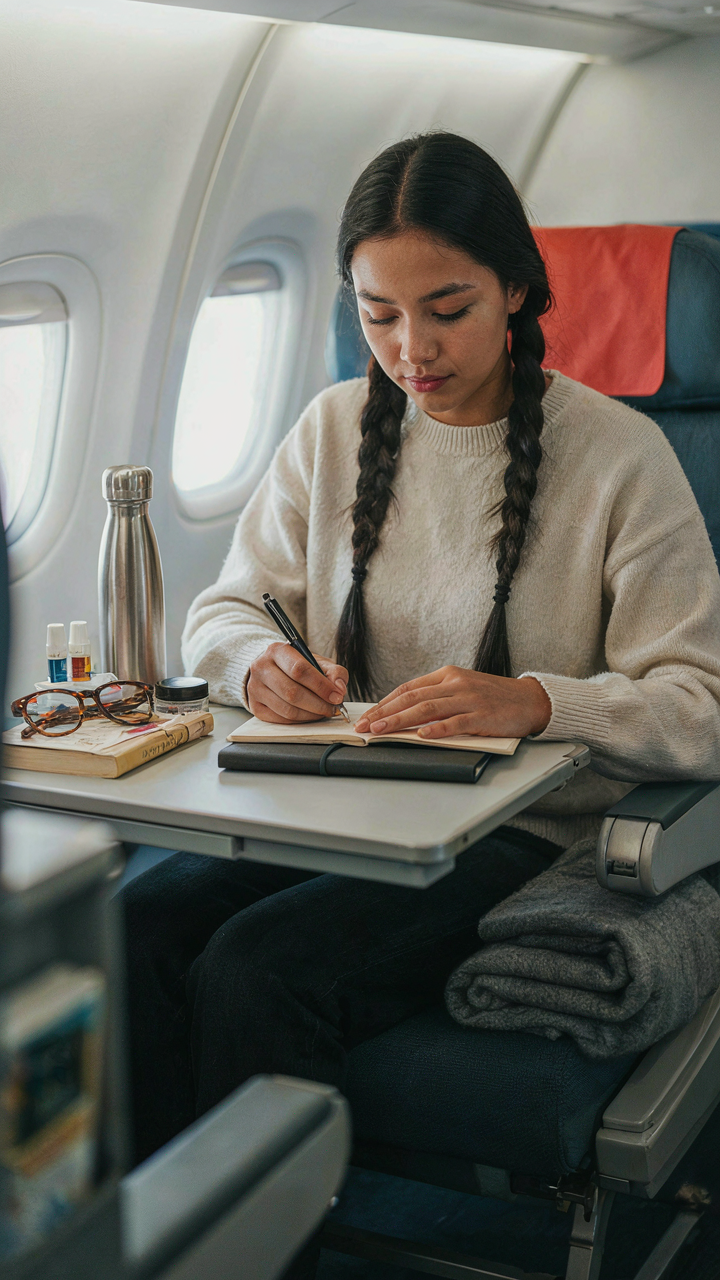
Intentionality mid-air means deciding before takeoff what you will and will not do with those hours. You’re not trying to be productive in the startup sense—you’re trying to be deliberate. That means picking one or two focal points: reading a specific book, writing in a physical notebook, or doing nothing except resting. The noise canceling headphones, the compression socks, the neck pillow—they all serve this one function: they remove friction between what you decided and what you actually do.
The real protocol is simple. Before you board, write down what you’ll do during three specific time blocks: early flight, mid-flight, and descent. Your comfort kit items now have assigned purposes tied to those blocks. The neck pillow aligns with rest time. The book aligns with focused reading time. The water bottle aligns with every time block. When your mind tries to wander into doom scrolling or seat switching, your kit reminds you of the decision you already made. Stick to the decision, not the impulse.
The Real Obstacle Isn’t The Flight; It’s Your Unexamined Belief That More Input Equals More Output
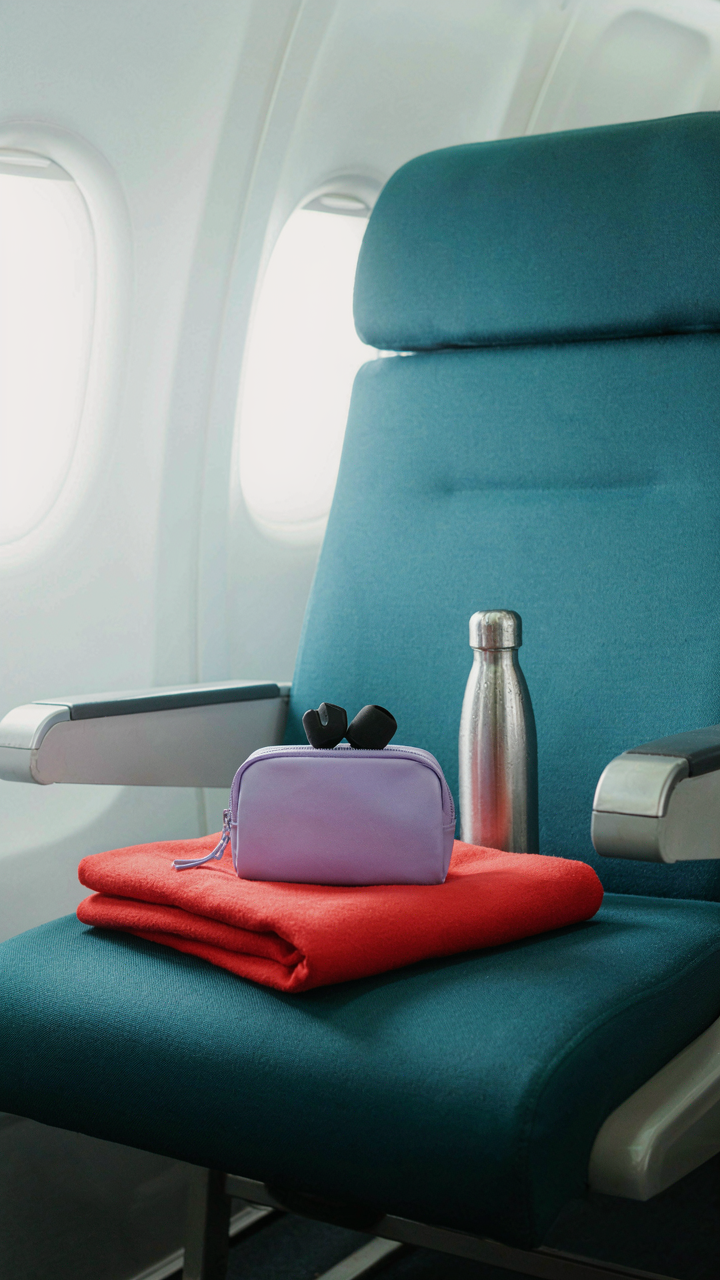
You think packing more comfort items fixes fatigue. It doesn’t. The real problem is you’re treating a long flight like a problem to solve instead of a constraint to work within. A neck pillow doesn’t give you energy. Sleep does. Noise-canceling headphones don’t restore you. Silence does. Stop collecting solutions and start eliminating distractions. Pack your kit today, but understand this: the comfort you’re chasing already exists in what you remove, not what you add.