Introduction
Therapy Room Design Ideas For Calming Digital Marketing Workspaces focus on creating a space that promotes peace and focus. Marketers who work in digital spaces can benefit greatly from a calming environment, enhancing productivity and reducing stress.
In this article, you will learn practical tips and effective strategies to design a therapy room-inspired workspace. These ideas will help transform your workspace into a place that supports calmness and creativity, essential for digital marketing success.
Steps To Design A Therapy Room Workspace
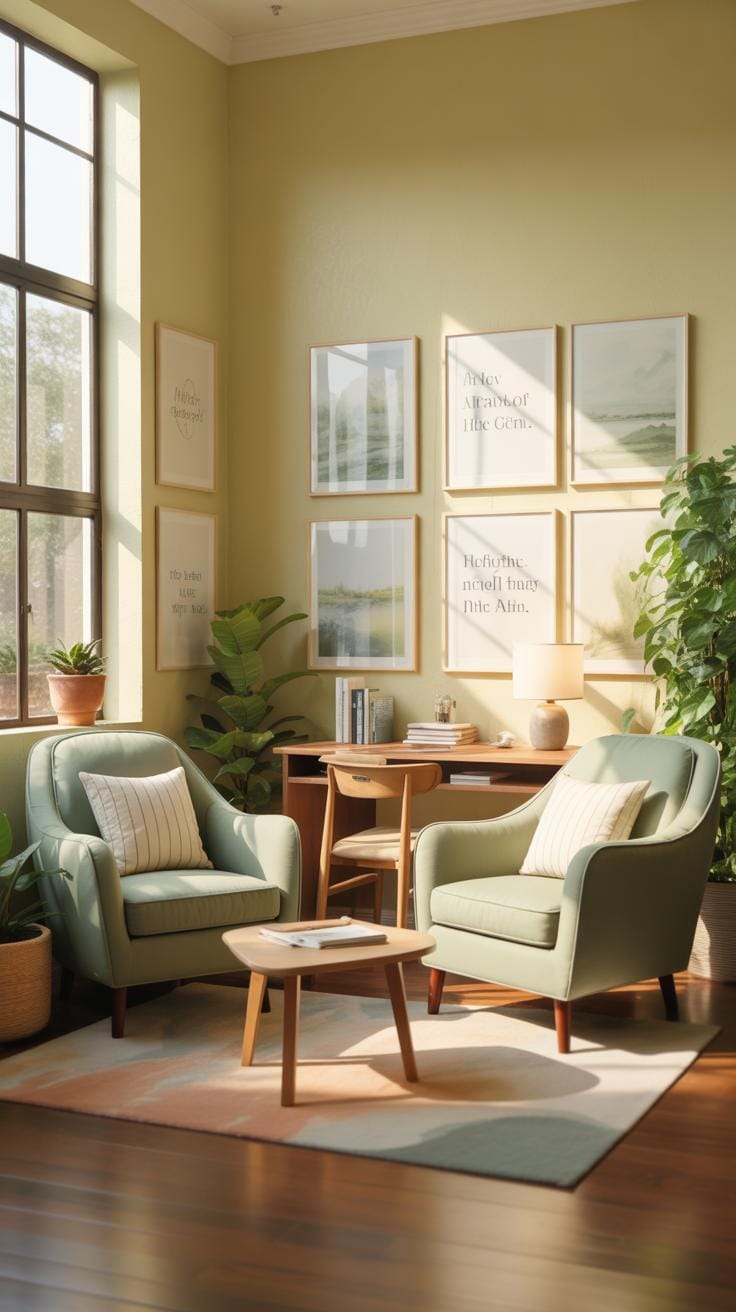
Designing a workspace inspired by therapy rooms means creating a space that encourages calm and focus, quite crucial for digital marketers. Start by envisioning a minimal, distraction-free environment—think uncluttered surfaces and soft, neutral colors. These help the mind breathe. Including elements that engage the senses gently, like a smooth textured rug or a plant, can subtly anchor your attention.
Next, think about the arrangement of your space. Position your desk where you can receive natural light, but avoid glare on screens. Introduce a comfortable zone for breaks, maybe a soft chair or cushion nestled in a quiet corner. This spot isn’t for work, but for re-centering, essential for maintaining concentration throughout long work sessions. It’s a small shift, but one that quickly shows benefits.

Finally, consider incorporating personally meaningful items or calming visuals. A photo, a soothing piece of art, or even a simple essential oil diffuser might create that subtle psychological space to decompress. The goal isn’t to turn your workspace into a clinic, but to borrow therapy room elements that foster peace and sustain your mental energy.
Choosing The Right Furniture
Furniture sets the tone, quite literally, for your workspace atmosphere. Instead of opting for rigid, purely functional pieces, think comfort with a calming presence. Soft chairs with rounded edges invite you to sit and relax, reducing body tension. Materials matter—natural wood or bamboo bring a touch of the outdoors, which can be surprisingly grounding.
Some cozy armchairs or a plush ottoman can provide a comforting nook for reflection or reading. Moreover, adjustable desks and chairs that support ergonomic needs indirectly contribute to calmness by preventing physical discomfort. Avoid overly clinical or metallic furniture that might feel cold or impersonal. The right furniture subtly eases your mind, supporting not just your posture but your overall sense of well-being.
Setting Up Effective Lighting
Lighting is a tricky but powerful tool in creating a peaceful workspace. Natural light is ideal—if you can work near a window, great, but watch for harsh direct sunlight causing screen glare. A sheer curtain can soften incoming light beautifully. When natural light isn’t an option, choose artificial lighting that mimics daylight without being glaring.
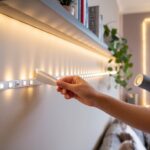
Soft, warm-toned bulbs generally work best. Avoid blue-toned, intense overhead lights that cause eye strain or heightened alertness at the wrong times. Lamps placed with adjustable brightness let you control intensity based on task and mood.

Try layering your lighting—combine indirect and direct sources. A desk lamp can provide focused light while ambient lamps maintain a cozy glow overall. Experiment with positioning until the light feels soothing rather than intrusive. It’s surprising how much lighting can affect not just visibility but your emotional state during work.
Benefits Of A Calm Workspace For Marketers

Having a workspace that feels like a therapy room isn’t just about aesthetics—it really can shape how you work. For digital marketers, whose jobs demand constant multitasking and creative thinking, a calm environment lessens the mental clutter. You might notice how a quiet corner with muted colors and minimal distractions lets your mind settle instead of jumping from one alert to another.
Stress fades when the space around you is soothing. The low hum of noise or even the presence of soft textures can lower tension in surprising ways. When stress dips, focus sharpens. You don’t have to force yourself to concentrate as much, things just flow more naturally. I find it easier to dive into campaign analysis or brainstorming sessions in a room that feels peaceful.
Then, there’s creativity. It seems a calm space clears the fog around your thoughts. Without constant interruptions, your brain can link ideas better and solve problems that seemed stuck before. It’s like having a quiet backdrop where your best strategies slowly emerge rather than rushing through chaotic noise.

Thinking about your own workspace, could adding a few therapy room touches help unlock your best marketing ideas?
Therapy Room Colors Versus Digital Workspace Colors
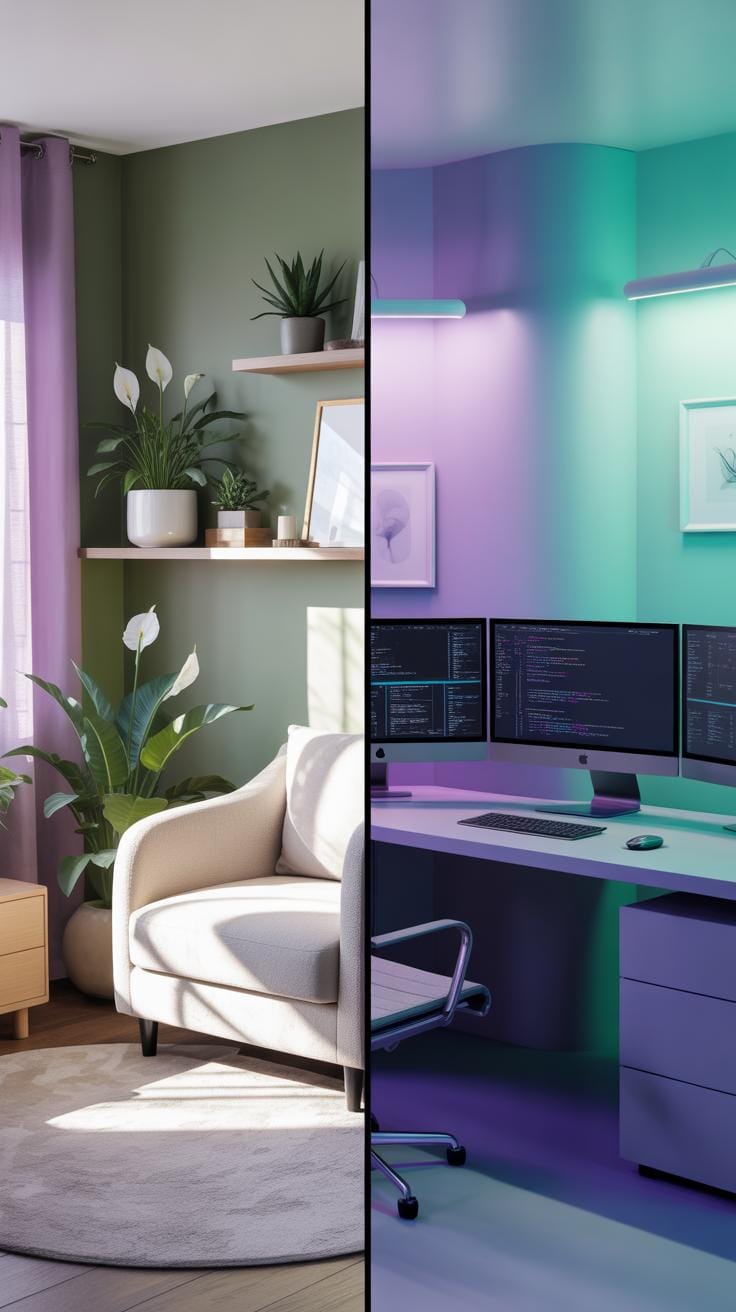
When you think about therapy rooms and digital marketing workspaces, the colors used in each serve very different purposes, yet they both aim for calm and clarity—just approached in unique ways. Therapy rooms commonly lean toward soft, muted hues that soothe the mind and encourage openness. Imagine gentle blues and greens, shades that whisper tranquility and safety, making it easier for someone to relax and feel understood.
In contrast, digital marketing workspaces might demand a bit more energy without overwhelming the senses. These spaces can use a balance of calm bases with bursts of stimulating colors to keep creativity flowing. While a therapy room prefers stillness, digital environments need to foster movement and idea generation, so colors like cool blues create a stable background, punctuated by energetic yellows or oranges that motivate without distraction.
Calming Colors For Walls And Decor
Blues and greens have long been favorites for calming environments—they replicate natural elements like sky, water, and foliage, which can make a space feel peaceful and refreshing. In therapy rooms, soft pastel blues and muted sage greens subtly lower heart rates and ease breathing. Such hues encourage comfort and safety, important in places meant for vulnerable conversations.

Digital marketing workspaces can also benefit from these colors, especially where concentration is key, but you might want to choose shades that feel a little livelier or more crisp to keep alertness. For instance, a brighter teal or apple green might maintain calm but avoid creating too much sedation in a busy workday.
Accent Colors To Energize Space
It’s tricky to add energy in a therapy room without breaking its peaceful vibe, so accent colors tend to be very subtle. Gentle ivory, soft peach, or warm taupe can add warmth and a touch of optimism without shouting for attention.
In digital workspaces, accent colors can be a bit bolder—think mustard yellow or burnt orange. These tones spark creativity and enthusiasm but aren’t so bright that your eyes start to wander or your mind feels scattered. Choosing your accents wisely means you get that motivational boost without the stress or distraction often caused by overly intense colors.
So, when deciding on colors for either space, ask yourself: Are you aiming to calm racing thoughts or to ignite fresh ideas? The answers might lead you down surprisingly different color paths. And perhaps, it’s worth experimenting—sometimes what calms one person stirs another. Color psychology isn’t a strict rulebook but rather a guide full of possibilities.
Using Plants To Improve Workspace Calm
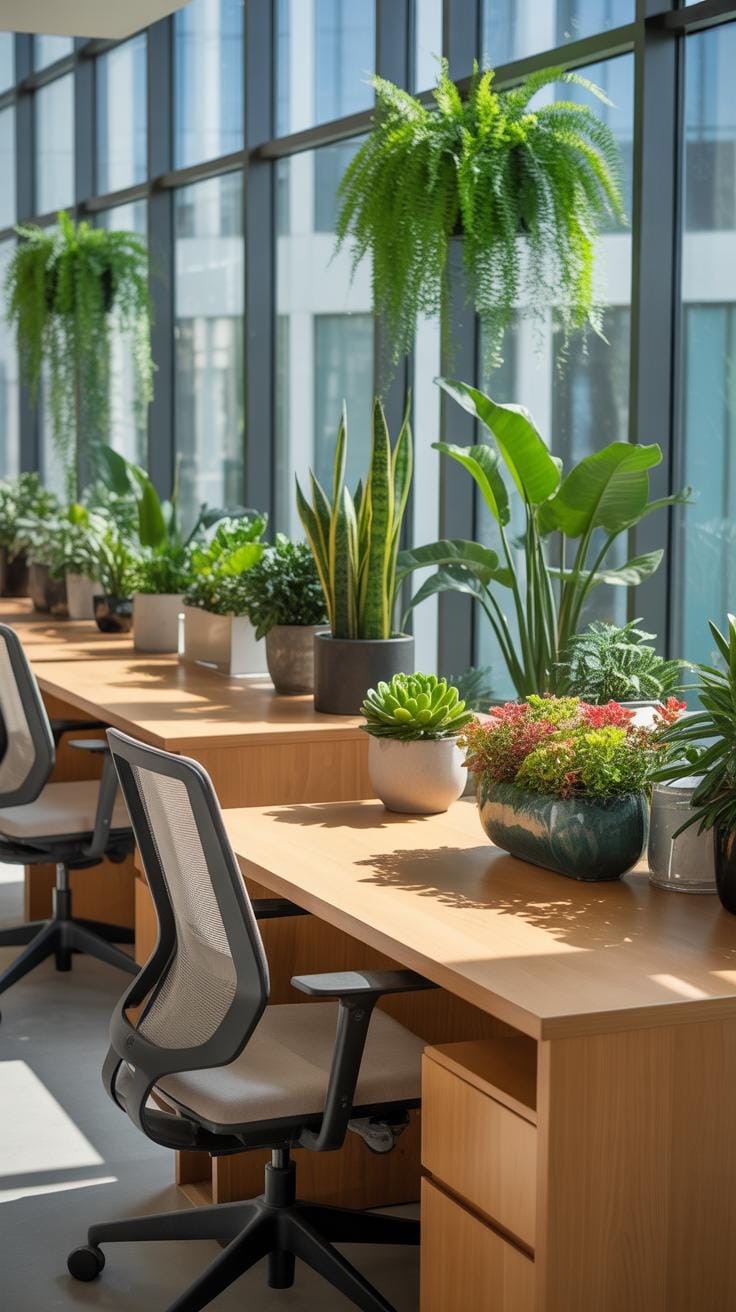

Adding plants to your therapy room style workspace can shift the mood in subtle but meaningful ways. It’s not just about decoration—plants actually change how we feel and breathe in a room. For digital marketers, whose work often involves long hours and screen time, the presence of greenery can reduce stress and improve concentration. There’s something oddly calming about a bit of nature indoors, even if it’s a carefully placed low-maintenance plant.
Plants also tweak the air quality. They absorb carbon dioxide and release oxygen, but more importantly, many filter toxins commonly found indoors. This means less fatigue and maybe fewer headaches over time. Still, you don’t want to overdo it—too many plants cramped together can feel cluttered rather than peaceful. Finding the right balance can be tricky, but the payoff is worth it.
Best Plants For Indoor Workspaces
Choose plants that are easy to care for because, frankly, not everyone has a green thumb. Some of the best include:
- Snake Plant – Known for filtering toxins and requiring minimal water
- Spider Plant – Hardy and effective at improving air quality
- Peace Lily – Adds a touch of softness and blooms indoors
- Philodendron – Adaptable and thrives in low light
- ZZ Plant – Survives neglect and low light with ease
These plants not only add natural color but quietly keep the workspace fresh. You might think they’re just decorative, but they’re actually helping your brain and lungs in the background.
Arranging Plants For Maximum Effect
Placement matters a lot. Plants spread across uneven levels create a gentle visual rhythm without overwhelming the space.
Try these ideas:
- Place a taller plant in a corner to anchor the room without crowding your desk
- Use small pots clustered on a shelf or window sill to add interest
- Position plants where natural light reaches but avoid direct harsh sunlight that some species hate
- Keep some plants at eye level or lower to integrate them into your line of sight during work

The goal isn’t perfect symmetry but a sense of harmony. If your setup leans a bit asymmetrical or feels casual—that’s okay. It can even make the workspace feel more natural and less clinical.
Organizing Desk Space For Clear Thinking
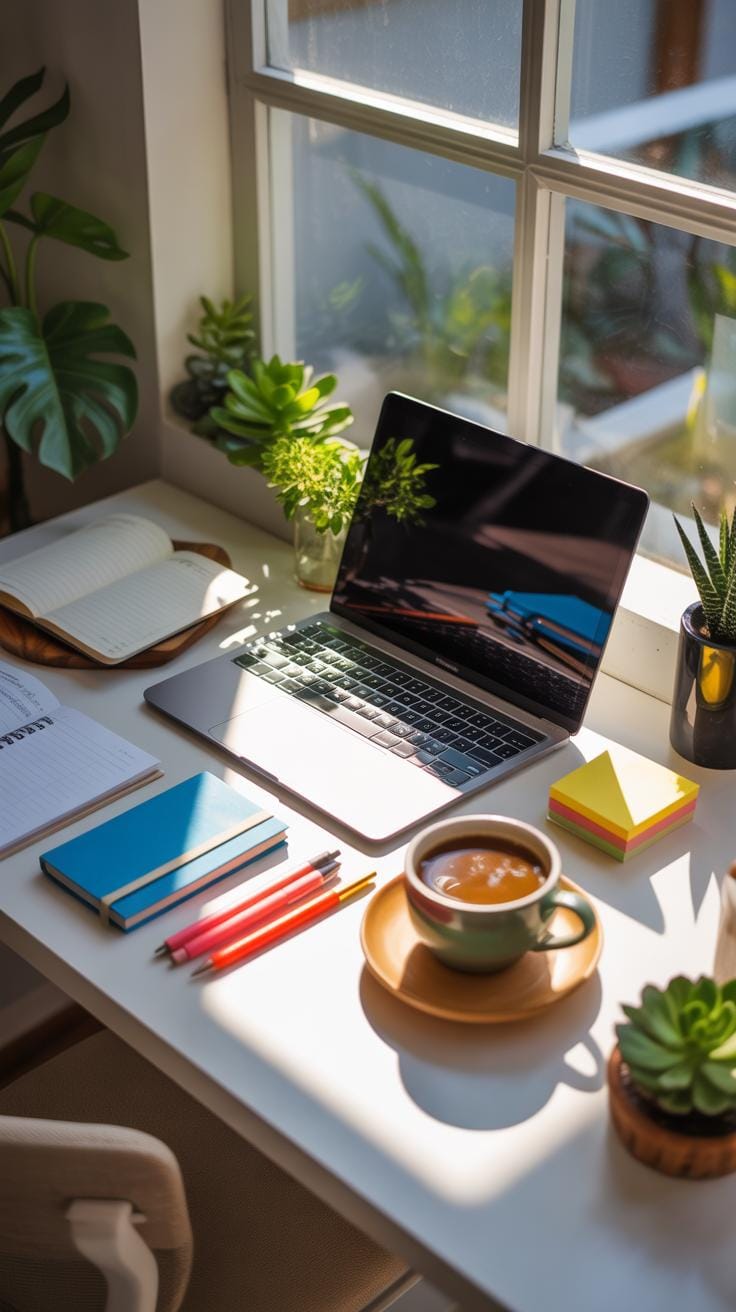
Working in a therapy room-inspired space means your desk shouldn’t be anything like a clutter magnet. Instead, it should feel calm, simple—a place where distractions don’t sneak up on you. Try keeping only the essentials on your desktop. Pens, a notebook, maybe a small plant for a bit of life. Other items? They can go in drawers or containers nearby.
Build habits for clearing your desk at the end of each workday. It might seem a minor thing, but trust me, when everything’s put away, your mind feels lighter. You don’t have to strive for perfection every day—just enough tidiness that you start your next day without that nagging feeling of chaos.
Decluttering Techniques That Work
Start simple—take five minutes before you leave work to put things back where they belong. A basket or tray works well for loose items like chargers or sticky notes. Don’t let piles of paper build up; a system of file folders or an inbox tray helps. And, maybe this sounds obvious, but resist holding onto things “just in case”—the less you hoard, the freer your mind will be.
Tools To Keep Essentials Handy

Think about small bins, drawer dividers, or desktop organizers. Some therapists use multi-level trays to separate items by function: one for tech stuff, one for writing tools, and one for personal items. That way, everything feels purposeful and easy to reach. And this might sound quirky, but I find that labeling drawers or boxes can guide you back to order when you’re in a rush or stressed.
Sound Control In Therapy Designed Workspaces
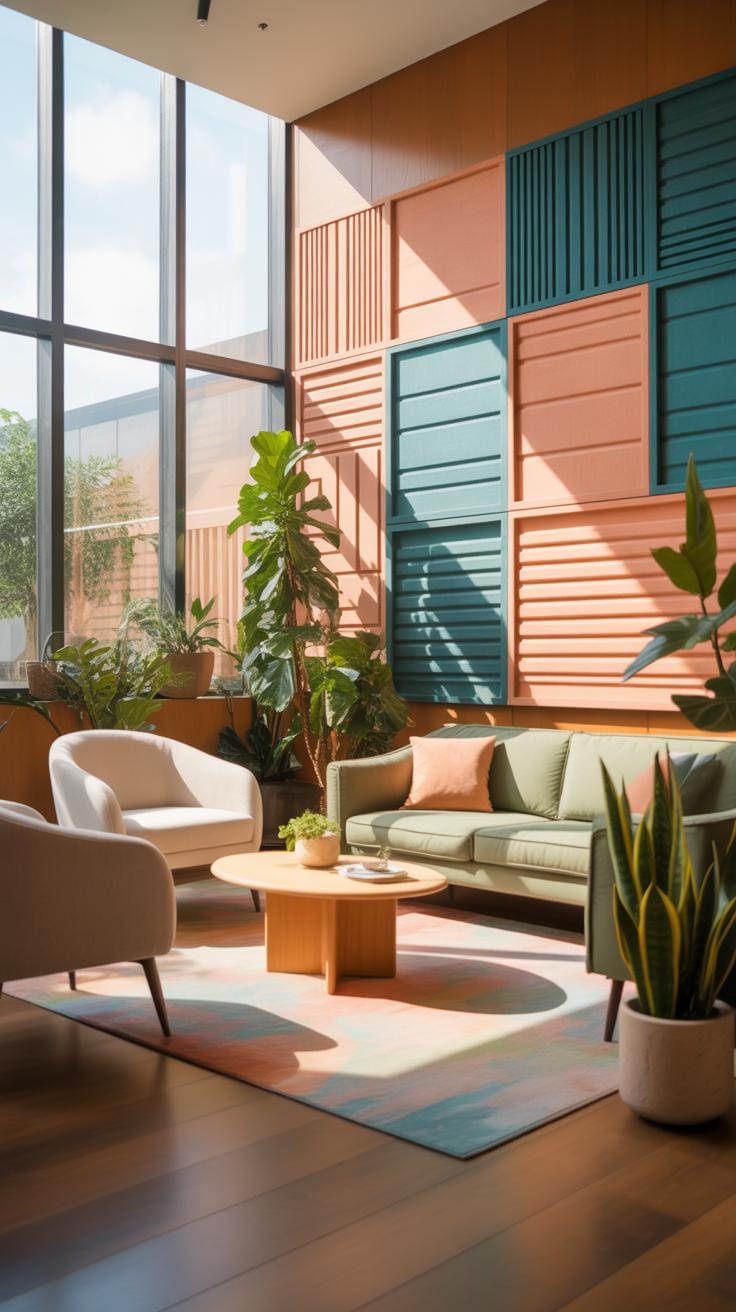
Sound can be a sneaky distraction, especially in a workspace inspired by therapy rooms where calm is crucial. Simple approaches to control noise often make the biggest difference. Think about the environment you want to create — quiet yet not too sterile. It’s a delicate balance, isn’t it?
Soft materials are your best friends when it comes to absorbing excess noise. Rugs on the floor dampen footsteps and reduce the echo that bounces off hard surfaces. Curtains, especially thick or layered ones, work wonders not just for lighting control but for muffling sounds from outside or adjacent rooms. Cushions scattered on chairs or benches don’t just add comfort but also help stop sound from ricocheting around.
I’ve noticed that sometimes, a simple wool rug at the center of a room absorbs so much noise that conversations feel more private and focused. It doesn’t even have to be expensive. Just something dense and covering enough of the hard floor can do the trick.

White noise or calming music offers an interesting option, too. White noise machines create a steady sound that masks more jarring interruptions. Sometimes, quiet instrumental music or nature sounds can help maintain focus, as long as it’s subtle and doesn’t pull attention away. Do you prefer silence or a gentle background hum? It’s personal, and what works well in one therapy-inspired workspace might not suit another.
When setting up your digital marketing workspace, try a few sound control options and see how they affect your concentration. Sometimes, what feels peaceful at first can shift as your workflow changes. It’s a bit of trial and error, but the effort pays off in creating a space where focus thrives.
Common Mistakes When Designing Calming Workspaces
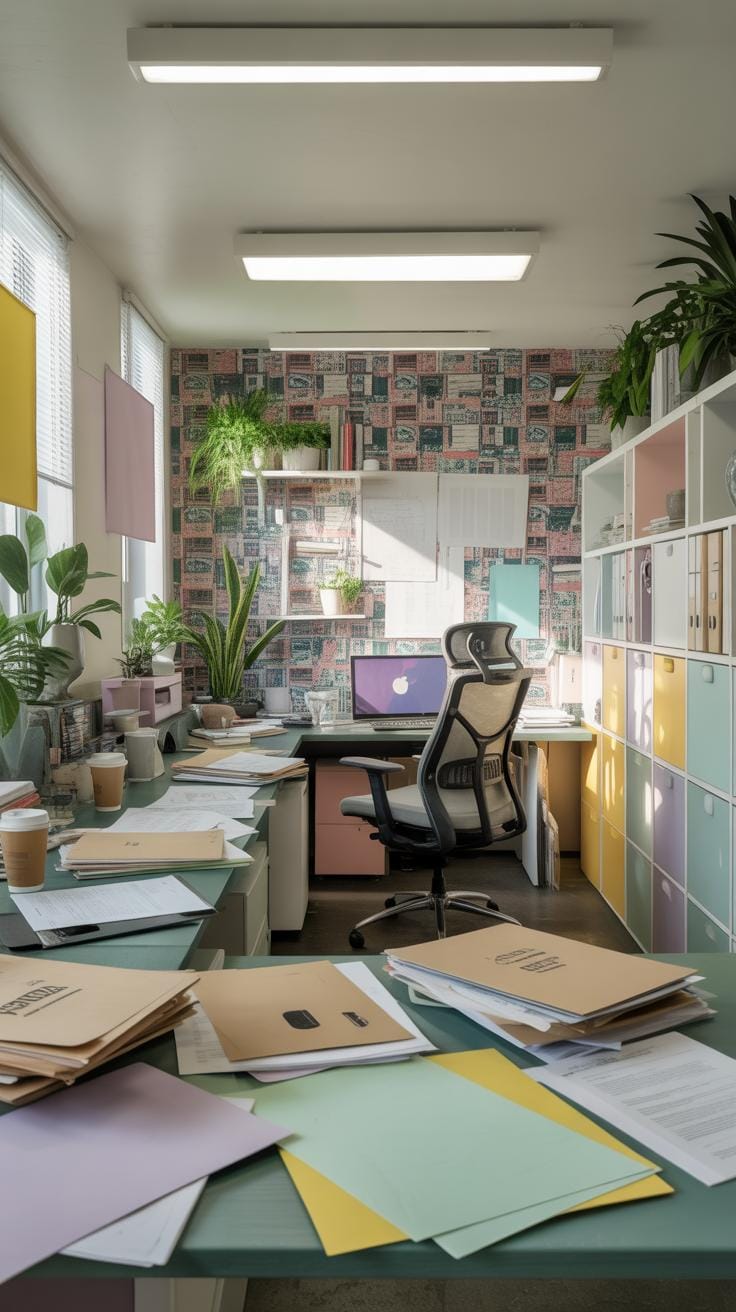
Overloading The Space
One mistake that often trips people up is cramming the room with too much stuff. It might feel like more furniture and decor would make the space cozy. But, in reality? It usually has the opposite effect. Too many items clutter the mind as much as the eyes. Instead of soothing you, they can create stress. Your focus scatters, and the calm you sought gets elusive. Therapy rooms—where calm is key—show us why minimalism matters. A few well-chosen pieces work better than a crowded environment.
Ignoring Personal Comfort Needs
Comfort is personal, and that means you might need to fine-tune your chair height or desk angle. It’s easy to overlook such adjustments, thinking they are minor details. But when you’re in your workspace for long hours, these small misalignments can drag down your mood and productivity. Therapy rooms are often designed with comfort at the forefront, which is something you should bring into your digital marketing workspace. Take the time to customize these elements; your body will thank you. And oddly enough, comfort can sometimes be about small things you didn’t expect, like where your light falls or the temperature around you. Don’t ignore these.
Case Study Examples Of Therapy Room Workspaces
Small Home Office Setup
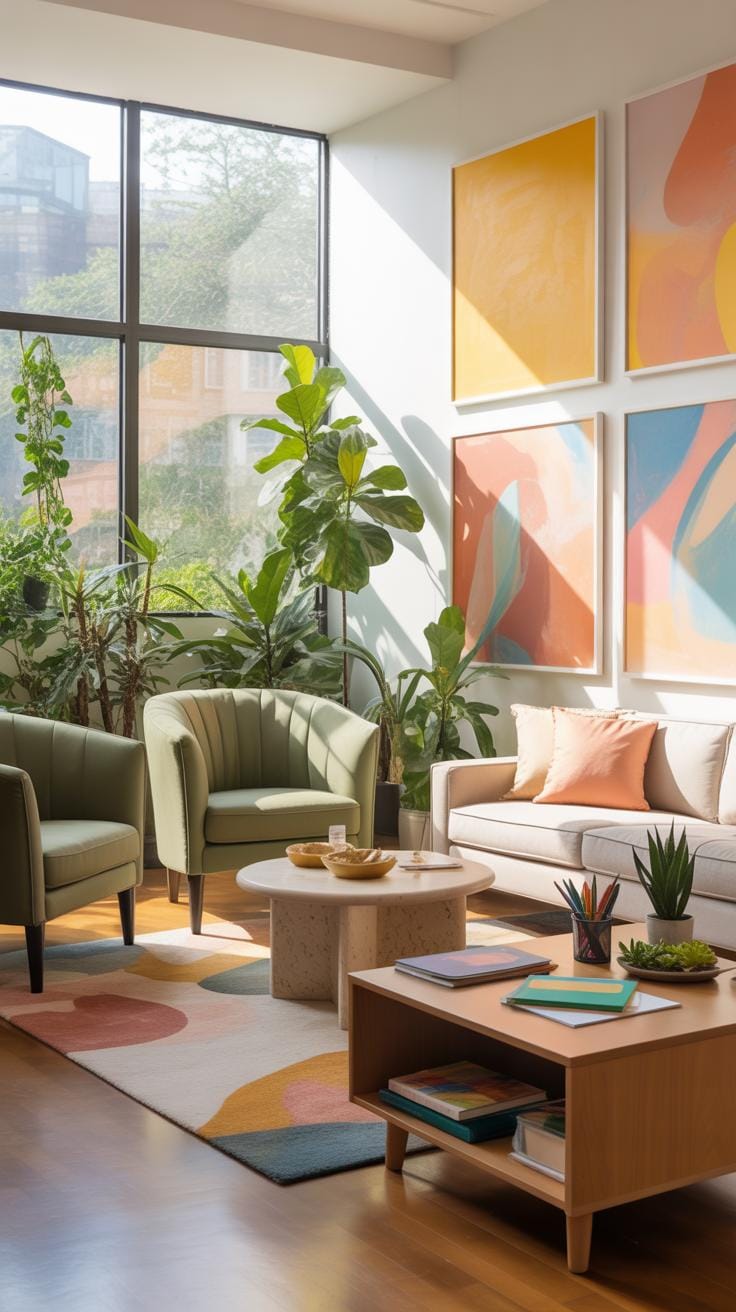
Imagine a small home office designed with therapy room principles in mind. Instead of clutter, the space embraces simplicity—an uncluttered desk, soft lighting, and soothing earth tones paint a calm atmosphere. A comfortable ergonomic chair supports posture, while natural elements like a small plant or a stone sculpture subtly connect the space to nature. Perhaps there’s a white noise machine or soft instrumental music playing quietly in the background, blocking out distractions yet remaining unobtrusive.
Practical tips here include using calming colors such as muted blues or greens, and incorporating tactile elements like a weighted blanket draped over the chair for moments of stress relief. The computer sits off to the side rather than dominating the space, reminding you not to get lost in the screen endlessly. Personal experience has shown that even this modest setup encourages focus and ease, offering a retreat in your own home without overwhelming with too many ‘tools.’
Team Workspace Adaptation
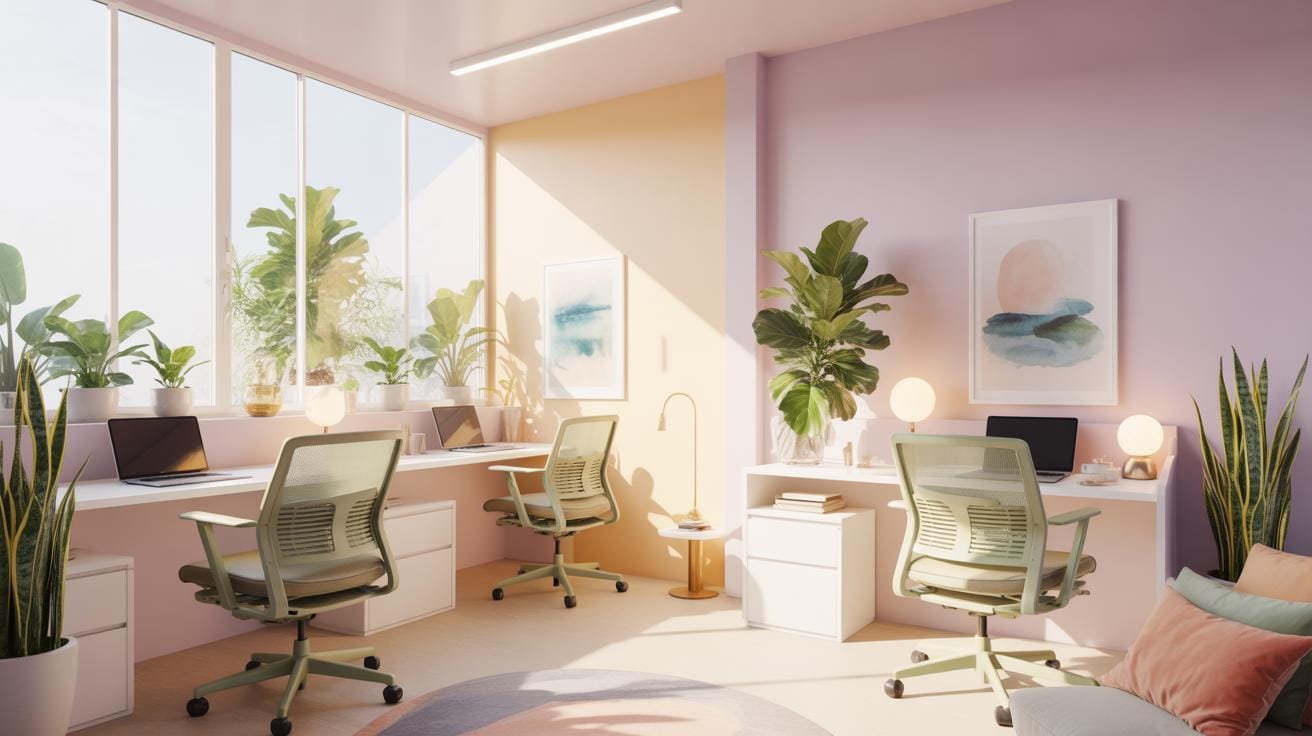
For a larger team, therapy room ideas take on a different scale. Instead of isolated desks, zones are created for quiet work and soft social interactions. Sound-absorbing panels and gentle, adjustable lighting help reduce sensory overload. Plants divide spaces subtly, adding color and a sense of life without noise. Comfortable seating areas with cushions invite relaxed collaboration, while separate quiet booths allow for mental breaks.
One digital marketing team adapted these concepts by installing adjustable light panels that mimic natural daylight cycles, improving mood and alertness throughout the day. They also introduced “pause zones” with soft rugs and calming art—places where employees could step away from their screens to reset. Though not perfect for every personality, the balance between open and private spots helped reduce stress and improved overall productivity. Curious if such designs could fit your workspace? It really depends on how much flexibility feels natural for your team’s flow.
Conclusions
Designing a therapy room-inspired digital marketing workspace calls for deliberate choices in colors, lighting, furniture, and decorations. These elements create an environment that reduces distractions and supports mental clarity.
Use the ideas shared here to build your calm workspace. Regular updates and thoughtful personal touches ensure the space stays inviting. Your work performance can improve as your workspace fosters focus and well-being.