
The Magic Of Kitchen Toys For Kids And Creative Play
Developing Culinary Interest Early
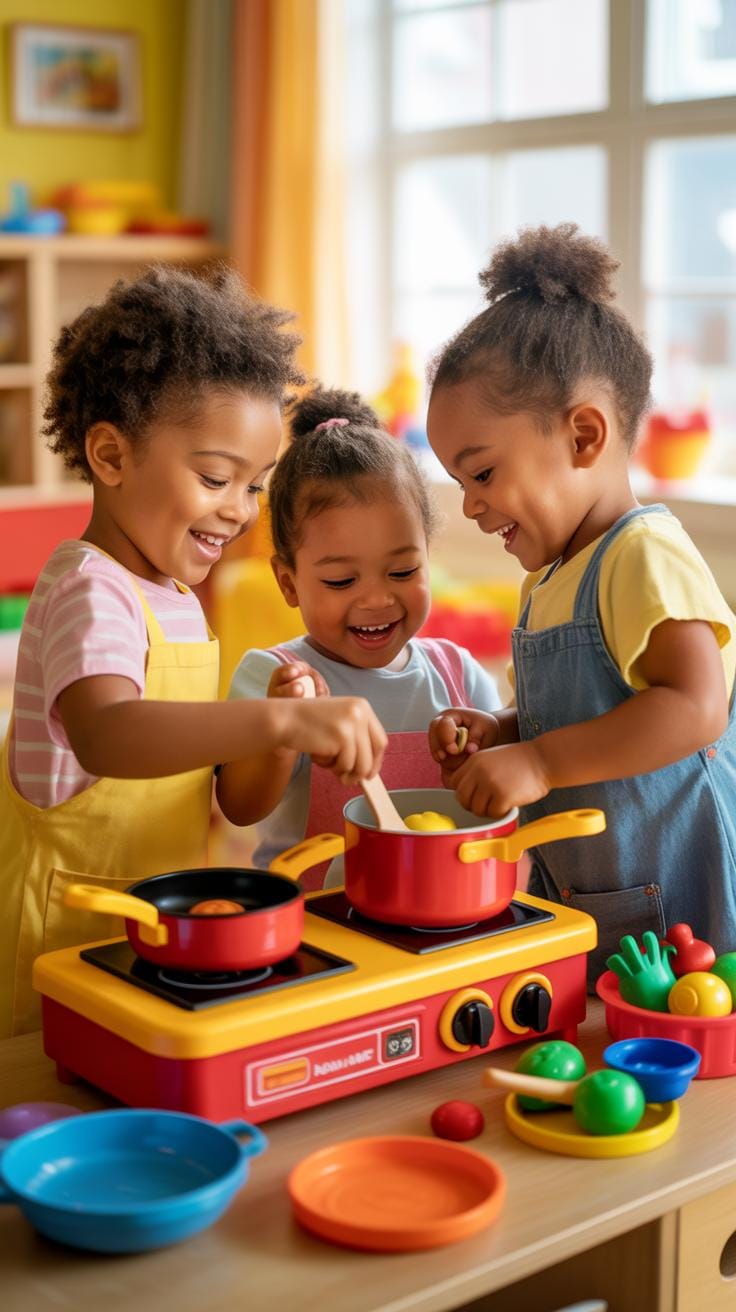
Kitchen Toys For Kids serve as functional tools for cognitive development and sensory processing. When children engage in Toy Cooking, they mirror the sequence and organization required in a professional environment. This mimicry builds confidence and introduces the concept of food preparation without the physical risks of heat or sharp edges. Early exposure through these tools establishes a positive association with nutrition and helps normalize a variety of ingredients.
Cooking With Toys allows children to refine fine motor skills through grasping, pouring, and stirring actions. These repetitive motions strengthen hand muscles and improve hand-eye coordination. By integrating Food Toys into daily play, parents encourage creative expression and problem solving. Children learn to follow multi-step processes and understand cause and effect. This tactical engagement transforms a simple Kitchen Set For Kids Toys into a foundational learning platform for life.
The Evolution Of Play Kitchens
Kids Kitchen Toy Design has transitioned from rudimentary 19th-century wooden miniatures to sophisticated modular systems. Early models focused on basic aesthetics and structural durability. Modern versions prioritize realism, incorporating functional hardware and electronic components. These advancements reflect changing domestic architecture and the shift toward professional-grade equipment in residential homes. Manufacturers now emphasize ergonomic layouts that allow for more complex and fluid Cooking Toys For Kids.
Current Kitchen Toys utilize high-quality composites and sustainable plastics to withstand rigorous use. Producers often integrate light-emitting diodes and digital sound modules to simulate boiling or frying. These features enhance the sensory experience during Food Cooking Toys sessions. As technology progresses, the distinction between utility and play blunts. This evolution ensures that Kitchen Toys remain relevant to children who observe high-speed, modern culinary environments in their own homes every day.

Exploring Different Types Of Kitchen Toys In Every Drawer
Essential Utensils For Mini Chefs
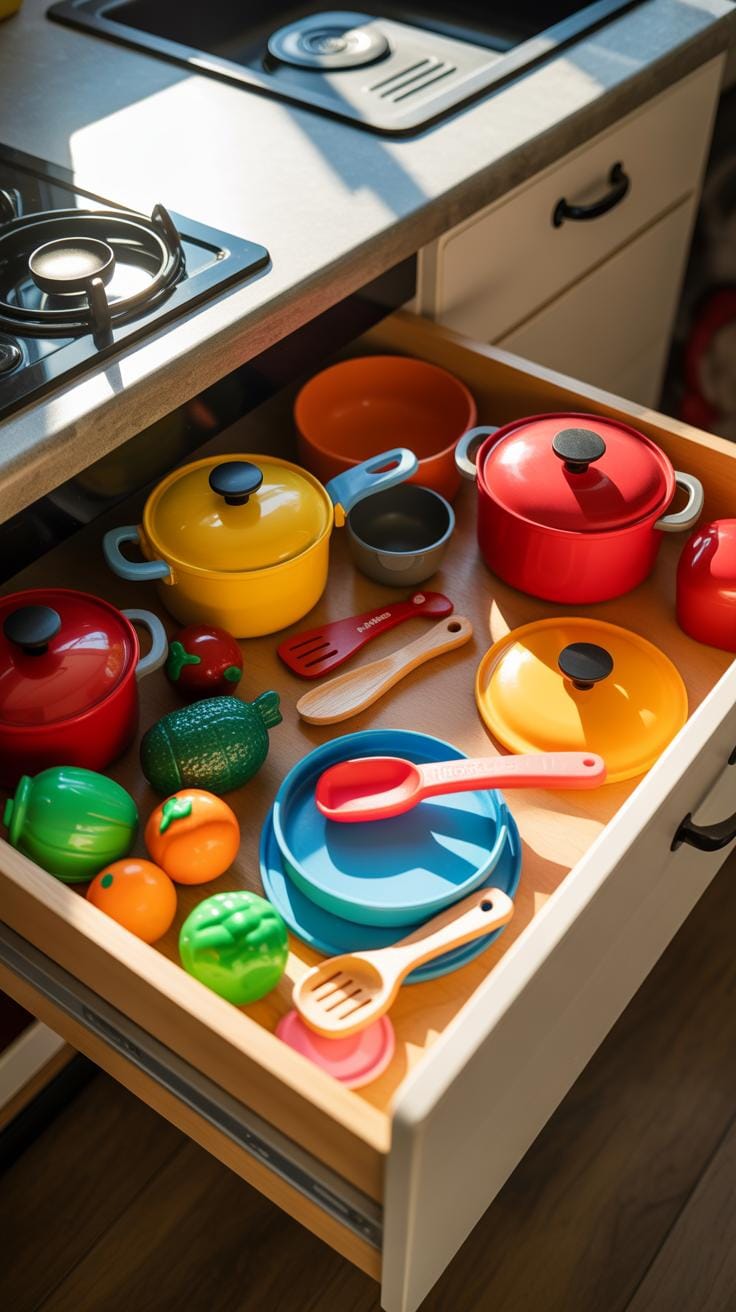
Modern Kids Kitchen Toy Design prioritizes ergonomic utility for small users. Hidden drawers often conceal scaled-down versions of professional tools. These include spatulas, ladles, and tongs made from food-grade silicone or durable plastic. Manufacturers focus on grip diameter to ensure Kitchen Toys For Kids facilitate proper motor skill development. These tools allow children to mimic adult movements during Food Cooking Toys play sessions without safety risks.
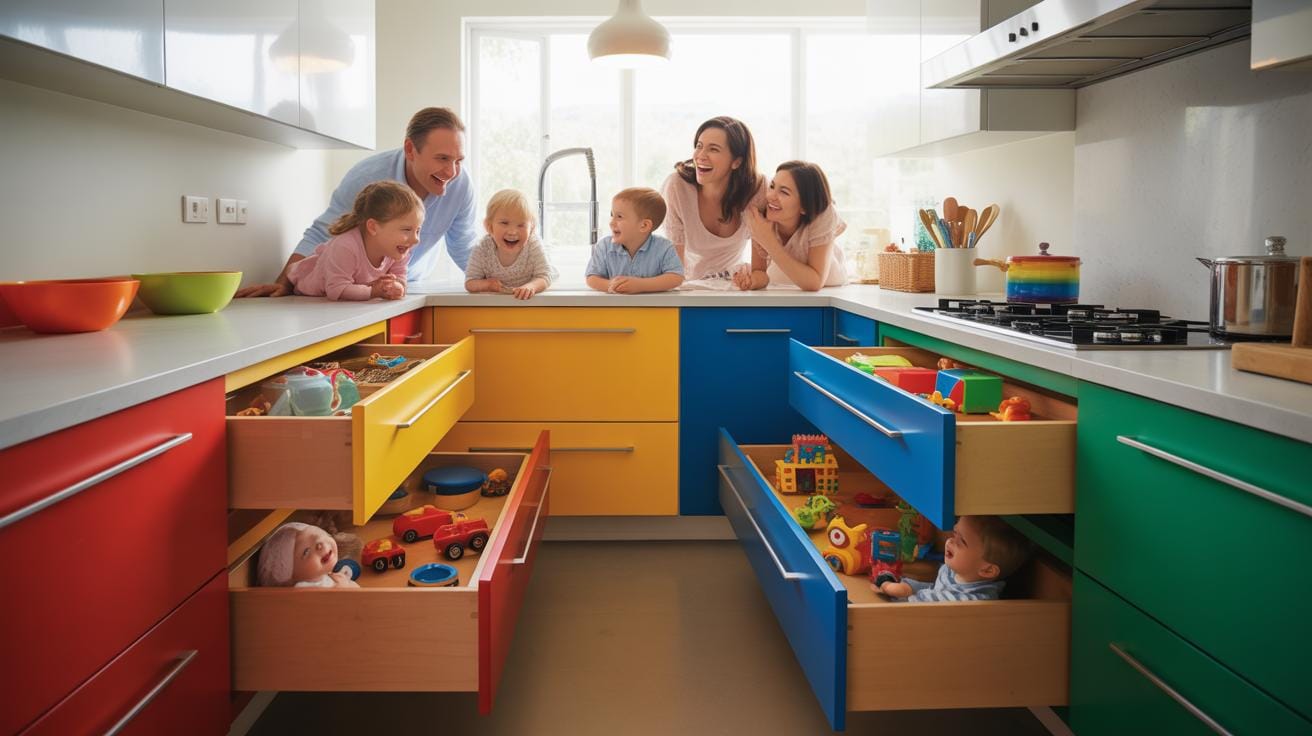
Tactical placement of these Kitchen Toys ensures a realistic workflow in a U-shaped layout. Proper storage teaches organizational logic as part of Toy Cooking activities. Every tool serves a specific mechanical purpose in the simulation. High-quality Cooking Toys For Kids use materials that withstand repetitive impact. Storing these items in specific compartments promotes the idea that every piece of a Kitchen Set For Kids Toys has its own functional home.
Electronic And Mechanical Features
Advanced Kitchen Toys now integrate electronic feedback systems to heighten sensory engagement. These components frequently hide within stove blocks or sink modules. Battery-operated sensors trigger audio clips of boiling water or rhythmic chopping when children engage in Cooking With Toys. This technology bridges the gap between static plastic and real-world physics. It transforms Food Toys from simple props into interactive learning systems that react to user input.

Mechanical features also play a critical role in modern Kids Kitchen Toy Design. Spring-loaded knobs and clickable dials provide tactile resistance during play. These elements mimic the physical feedback of actual appliances without the danger of heat or blades. Utilizing these features in Food Cooking Toys helps children understand cause and effect. Selecting a Kitchen Set For Kids Toys with integrated sound and movement increases the duration of focused play.
The Role Of Food Toys In Educational Development
Benefits Of Playing With Food Replicas
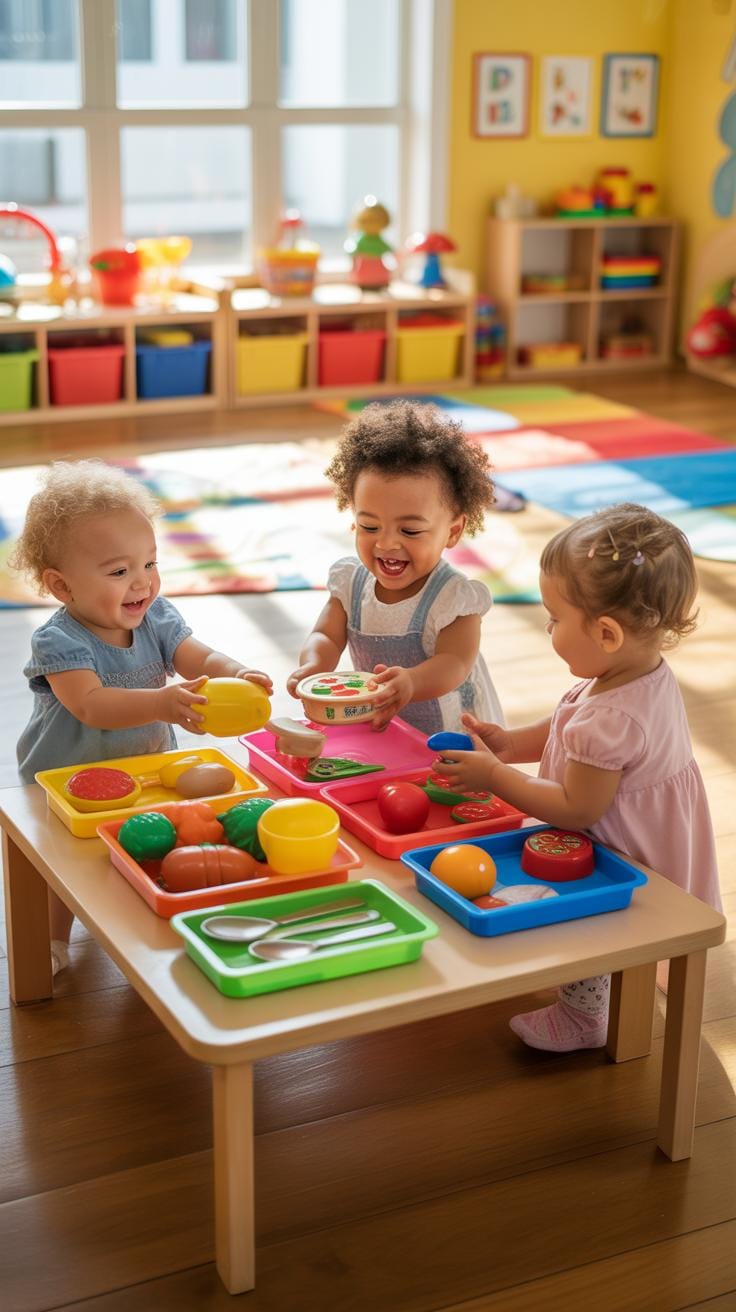
Food Toys serve as high-utility cognitive tools during early development. Using these replicas allows children to bridge the gap between abstract concepts and physical reality. Kids interact with tactile markers to build essential neural pathways. This method prioritizes functional recognition over passive observation. Integrating Kitchen Toys For Kids into daily play cycles builds foundational knowledge in science and health without formal Instruction.
- Geometric Identification: Replicas provide consistent physical forms that teach children to distinguish spheres, cylinders, and cubes. Linking Food Toys to specific geometric shapes reinforces spatial awareness and mathematical foundations through manual handling and close visual Inspection.
- Nutritional Categorizing: Children use varied Food Cooking Toys to sort items into groups like proteins, vegetables, or fruits. This exercise builds early understanding of dietary balance. It teaches kids how to organize complex data sets into logical and functional categories.
- Linguistic Expansion: Handling exotic replicas introduces specialized vocabulary for rare ingredients. As kids engage with Toy Cooking, they learn names for bok choy or dragon fruit. This expands their verbal range beyond basic household terms and increases general cultural literacy.
- Color Recognition: Brightly colored replicas provide high-contrast visual stimuli for toddlers. Differentiating between a green lime and a yellow lemon builds chromatic precision. This skill is vital for visual processing and helps children describe their environment with much higher accuracy.
- Tactile Feedback: Modern Kids Kitchen Toy Design utilizes diverse textures like wood, plastic, or silicone. Each material provides unique sensory input. This helps children develop fine motor skills and grip strength while they manipulate various Kitchen Toys during their simulated meal preparation.
Effective Kitchen Set For Kids Toys utilize realistic scales and textures to enhance the learning experience. Proper design ensures that children do not just play but actually analyze the world. Sorting exercises using these items teach logic and sequence. These activities turn a simple playroom into a laboratory for cognitive growth. Tactical engagement with replicas creates a permanent mental map for future nutritional choices and scientific observation.
Practicing Portion Control And Sharing Workshops
Cooking Toys For Kids provide a controlled environment for learning mechanical math and social labor. When children use a wooden knife to divide a Velcro cake, they perform basic fractions. They learn that a whole unit consists of several equal parts. This physical representation of division makes abstract math tangible. It eliminates confusion by showing the immediate result of an equation in a real-world scenario.

Cooking With Toys also forces children to manage limited resources among multiple participants. They must decide how to distribute a finite amount of food to imaginary or real guests. This practice builds negotiation skills and logistical planning. It removes the ego from the dining process. Children learn to prioritize the needs of the group over individual desires. These workshops turn social interaction into a measurable strategic exercise.
Mastering The Art Of Toy Cooking In A U Shaped Setup
Simulating The Cooking Process
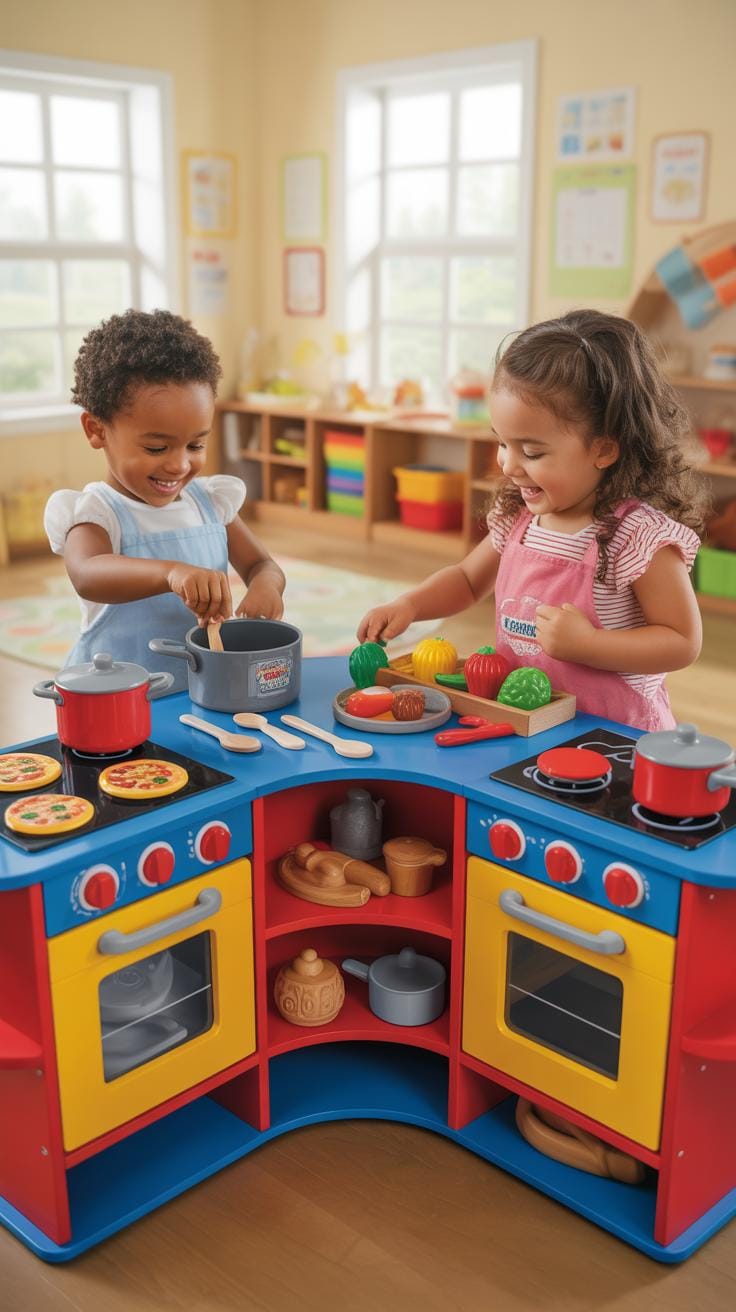
A U-shaped layout optimizes the workflow for Toy Cooking by mimicking professional culinary workspaces. This Kids Kitchen Toy Design places the stove, sink, and prep area within easy reach. Children use Food Toys to practice specific movements like stirring and flipping. These actions build motor skills while teaching the logical order of a recipe. This structural flow turns play into a training ground for task management.
The process of Cooking With Toys requires organizing ingredients before starting the heat. Kids learn that preparation prevents mess and confusion during the assembly phase. Using a Kitchen Set For Kids Toys allows for a clear divide between raw and finished items. This spatial awareness helps children understand how a real kitchen functions. High-quality Kitchen Toys facilitate this learning through realistic shapes and functional moving parts.
Safety First In Mock Kitchens
Safety education thrives when Kitchen Toys For Kids simulate potential hazards without the actual danger. A well-designed Kitchen Set For Kids Toys uses colored lights or dials to signal a hot surface. Parents use these visual cues to teach boundaries around heat sources. This exposure builds a foundation for safe habits before the child ever touches a real stove. Early training prevents future accidents in high-stakes environments.
Food Cooking Toys also introduce the concept of sharp edges and careful handling. Many Cooking Toys For Kids include dull knives and textured food that requires pressure to cut. This teaches children how to hold tools and position their fingers away from blades. Developing these reflexes early is critical for long-term safety. Practical experience with Food Toys ensures that safety becomes a built-in instinct rather than a list of memorized rules.
Innovations In Kids Kitchen Toy Design For Better Play
Ergonomic Layouts For Accessibility
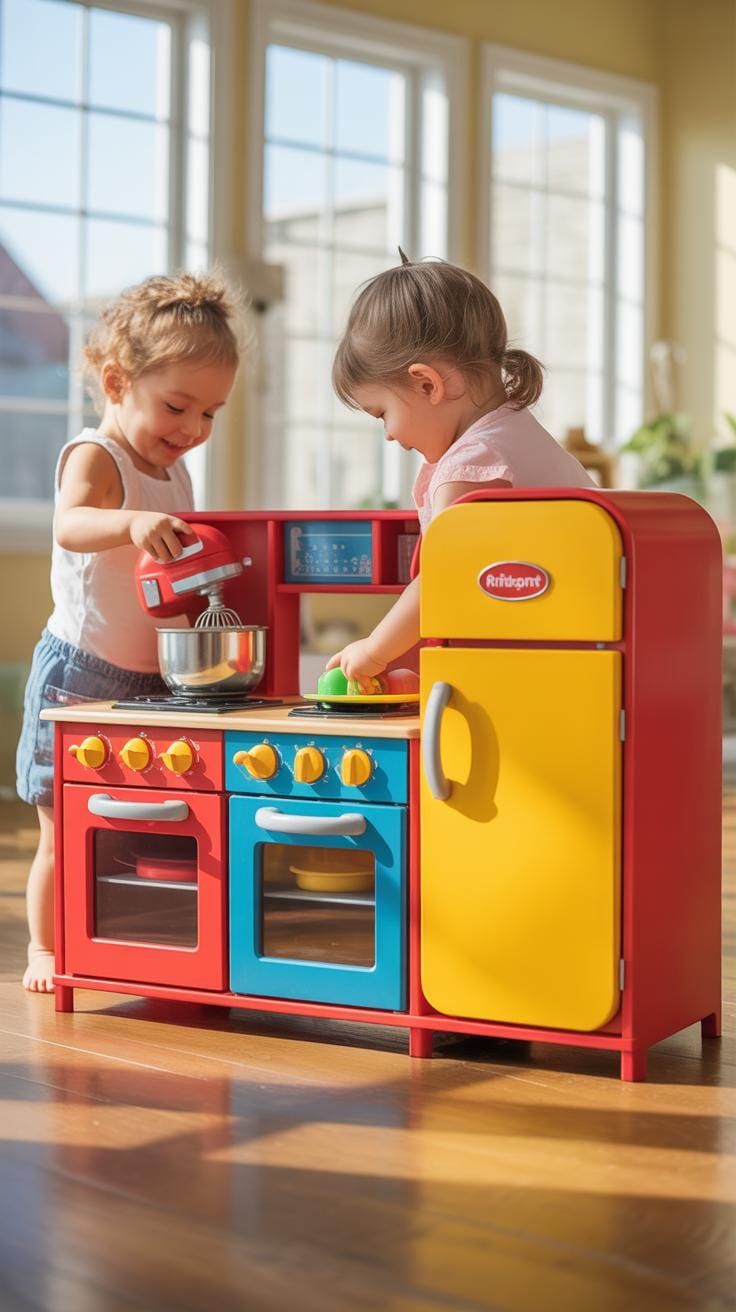
Strategic Kids Kitchen Toy Design focuses on spatial efficiency. A U-shaped configuration shortens the distance between functional zones. This mimics industrial kitchen standards where speed and movement matter. It allows a child to pivot rather than walk. This layout keeps Kitchen Toys For Kids within easy reach. Small users maintain a steady flow during Toy Cooking without physical strain or distraction from their tasks.
Designers prioritize the golden triangle rule for Kitchen Set For Kids Toys. This connects the stove, sink, and storage areas. Every drawer contains Kitchen Toys that serve a specific purpose. This organization teaches spatial awareness and logic. It turns Food Cooking Toys into tools for skill development. Correct height and depth ensure the user remains engaged. Accessibility increases the time spent Cooking With Toys by reducing frustration.
Sustainable And Durable Toy Materials
Material selection dictates the lifespan of Cooking Toys For Kids. Manufacturers now use FSC-certified wood for frames and Food Toys. This shift ensures structural integrity and environmental safety. Dense hardwoods resist splintering and wear. These materials provide a tactile weight that plastic lacks. High-quality construction means the secret items in each drawer last through years of heavy use and repeated play cycles.

Safety standards require non-toxic finishes for all Kitchen Toys. Modern designs use BPA-free plastics for internal components and accessories. This prevents chemical leaching during simulated heat play. Using recycled composites for Food Cooking Toys reduces waste. Durable materials support the long-term value of the set. Cleanable surfaces are essential for maintaining hygiene. Quality builds ensure that every hidden component remains safe for intensive daily interaction.
Enhancing Imaginative Play With Food Cooking Toys
Creating Realistic Menu Scenarios
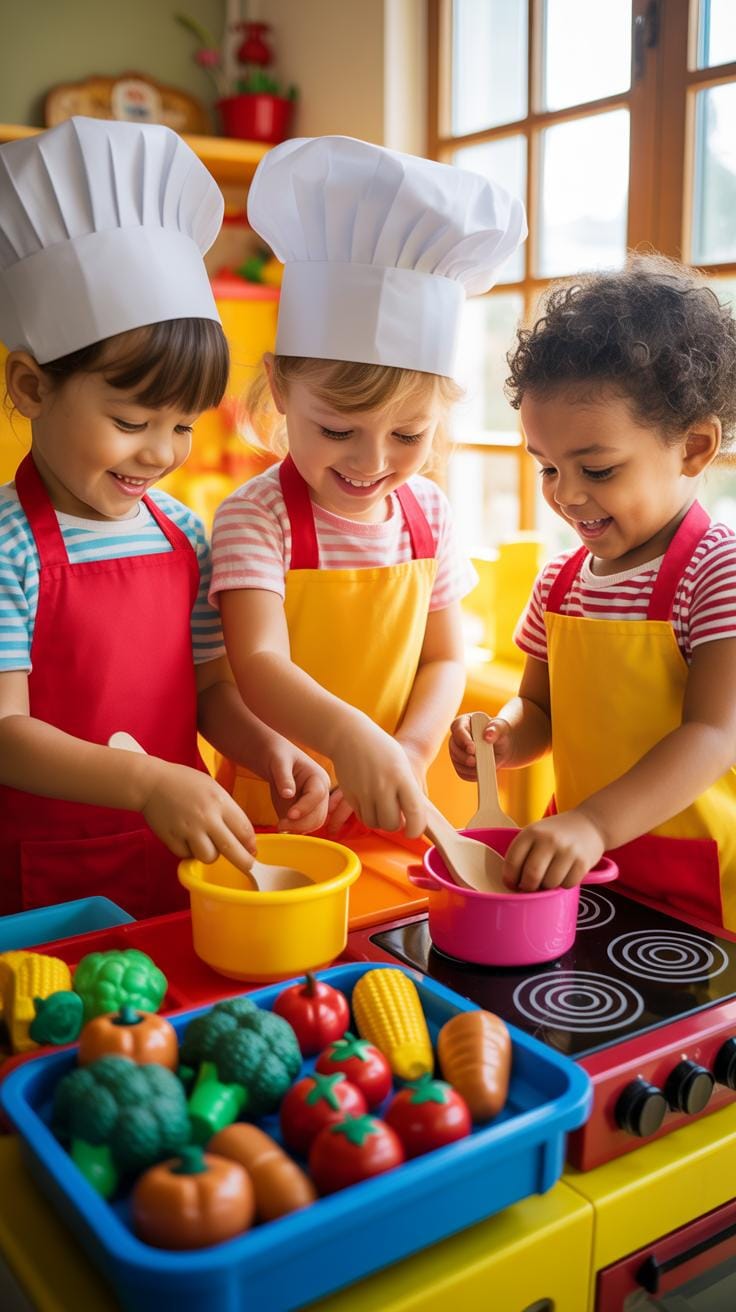
Realistic Food Cooking Toys allow children to categorize ingredients based on specific mealtimes. This Toy Cooking process teaches logistics and planning. Kids learn that breakfast requires different tools and steps than dinner. Using Kitchen Toys For Kids to simulate a menu builds cognitive links between raw materials and finished products. These activities transition from simple play to complex mental modeling of kitchen workflows.
Functional Kids Kitchen Toy Design focuses on modularity to support these scenarios. Children use Food Toys to mimic the rapid pace of a restaurant or the steady rhythm of a home. This repetitive Cooking With Toys reinforces memory and sequence. When children use a Kitchen Set For Kids Toys, they master the order of operations. Strategic play involving Cooking Toys For Kids prepares them for real environmental responsibilities.
A house that does not have one warm, cluttered area of spirit is a house without a soul. Every drawer holds a memory waiting to be rediscovered.
The Sensory Appeal Of Different Textures
Modern Kitchen Toys utilize varied materials to mimic real world physics. Weighty wood Kitchen Toys give a sense of density that plastic cannot match. Felt components offer soft friction for stacking ingredients. Silicone provides a heat resistant feel that adds a layer of safety education. These material choices are deliberate in professional Kids Kitchen Toy Design. Tactile feedback helps children identify structural differences between items.

Effective Food Cooking Toys must provide high haptic contrast to be educational. Soft felt bread versus hard wooden vegetables forces the brain to adjust grip and pressure. This physical interaction clarifies the distinction between organic shapes and processed goods. Using high quality Cooking Toys For Kids improves fine motor skills through these varied surfaces. Every interaction with Food Toys serves a specific developmental purpose in the sensory learning cycle.
Engaging With Cooking Toys For Kids For Social Skills
Collaborative Play In The U Kitchen
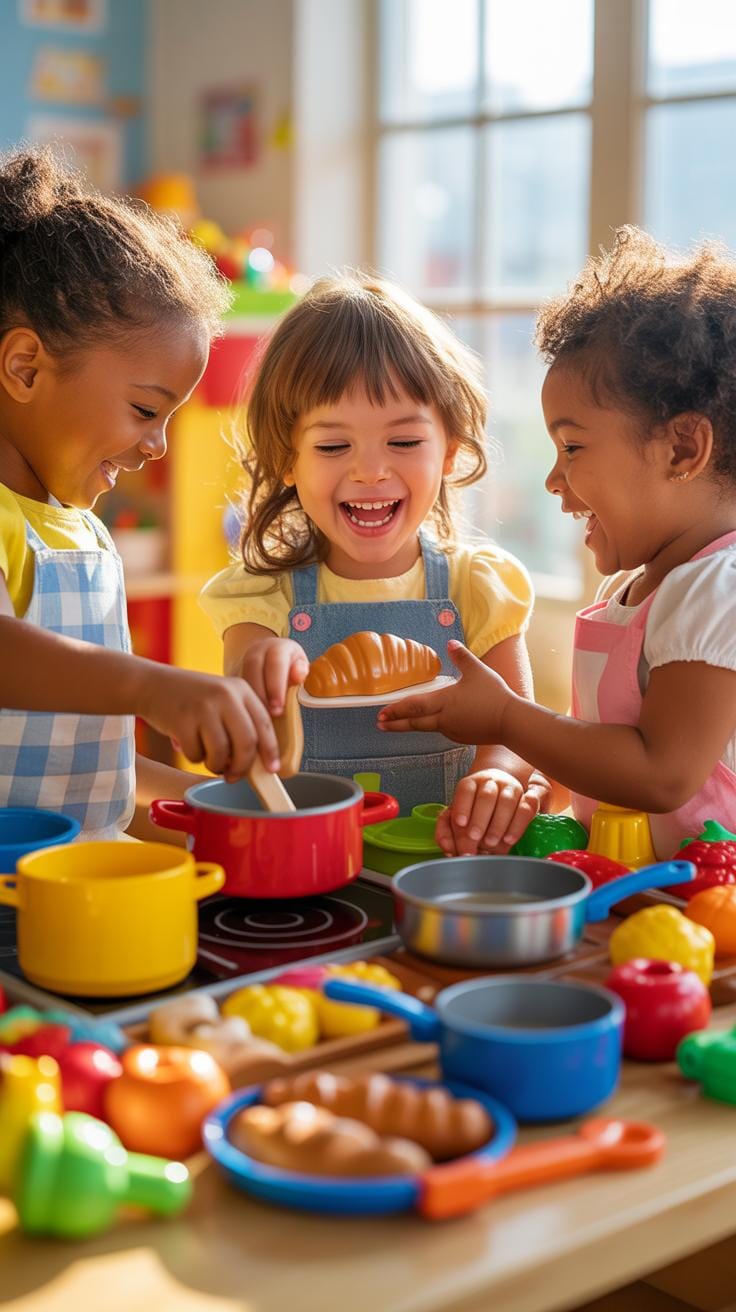
The U-shaped Kids Kitchen Toy Design maximizes efficiency for multiple users. This layout creates distinct zones for Toy Cooking and cleaning. One child manages the central stove while another handles Food Toys at the side counters. This physical separation prevents collisions and forces children to coordinate their movements. They must share space and resources to complete a meal, mimicking a real commercial kitchen environment.
A Kitchen Set For Kids Toys serves as a tool for division of labor. Effective play requires children to assign roles like head chef and sous chef. They learn to delegate tasks and trust their peers. This teamwork builds confidence and teaches conflict resolution when space gets tight. Using Food Cooking Toys in a structured U-shape ensures every participant has a clear job and contributes to the group goal.
Developing Communication Through Roleplay
Roleplay involving Kitchen Toys For Kids forces children to use verbal cues. When one child acts as the server and another as the cook, they must exchange clear instructions. This interaction improves vocabulary and teaches children how to give and follow directions. Using Kitchen Toys to simulate a restaurant setting introduces professional language and polite social standards. It turns a simple game into a functional communication workshop.

Cooking With Toys requires negotiation and active listening. Children must decide on a menu and handle customer complaints during their Toy Cooking sessions. These scenarios build empathy as players consider different perspectives. Using a Kitchen Set For Kids Toys allows children to practice social scripts needed for real life. This structured interaction reduces anxiety in social settings and helps kids develop the ability to read non-verbal body language and tone.
The Benefits Of Cooking With Toys For Cognitive Growth
Problem Solving And Resource Management
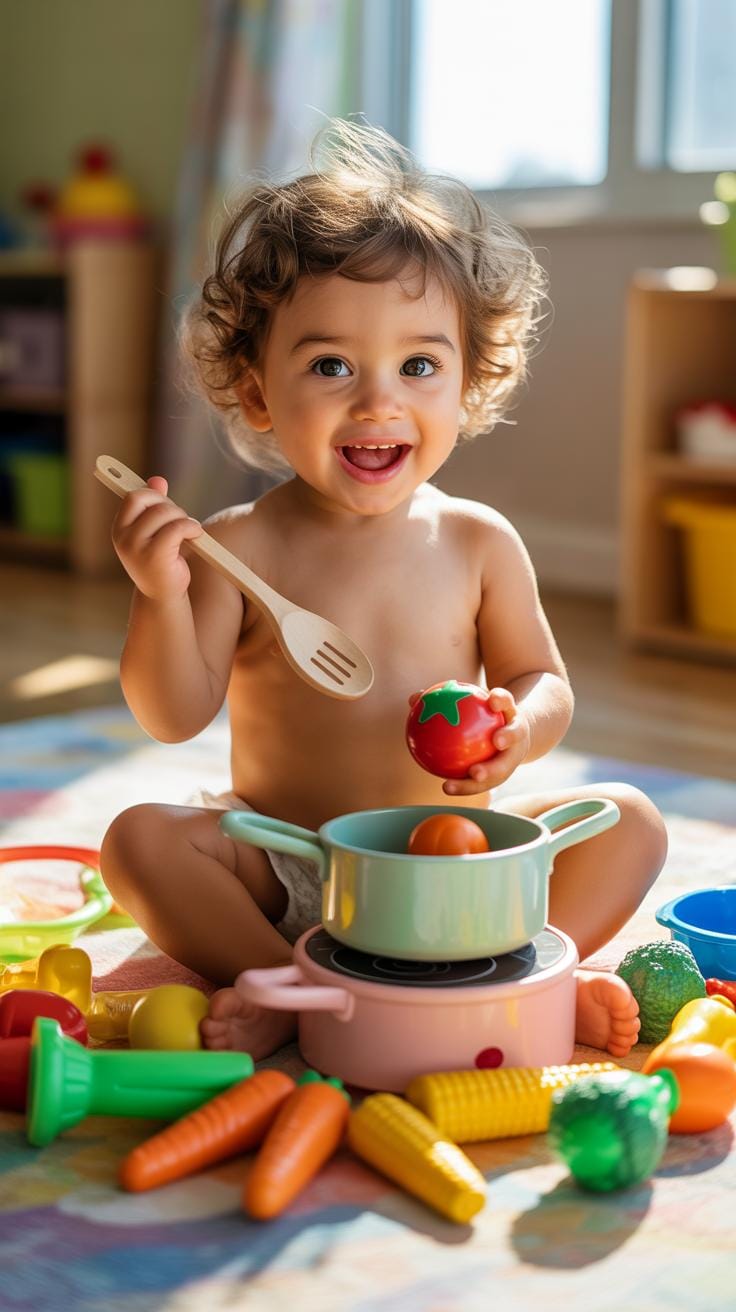
Kitchen secret toys force a child to adapt when a specific item is not available. This scarcity drives rapid decision-making and creative substitution. Using Kitchen Toys For Kids requires identifying a tool or ingredient that fits the immediate need. If a drawer lacks a plastic knife, the child must find another object to represent that tool. This process builds the foundations of resource management.
Effective Kids Kitchen Toy Design encourages this behavior by including non-obvious shapes and parts. Toy Cooking relies on the child’s ability to assign new roles to existing items. When children engage in Food Cooking Toys play, they learn to analyze their inventory and react to gaps in their supplies. This skill transfers directly to real-world tasks that require unconventional thinking and efficient use of limited materials.
Following Complexity In Imaginary Recipes
Executing multi-step routines with Food Toys sharpens short-term memory and focus. Kitchen Toys serve as visual anchors for a sequence of events. A child must remember which ingredients to mix first and how long the imaginary heat should be applied. This structured play with Cooking Toys For Kids mimics the logical progression found in early math and reading exercises. Sequential thinking is the primary benefit here.

Memory retention improves significantly when children repeat specific patterns during Cooking With Toys sessions. They learn to track multiple moving parts within a single activity. A Kitchen Set For Kids Toys provides the necessary physical props to make these mental steps concrete. Mastering these imaginary recipes builds the concentration needed for academic success. Children who practice these complex sequences develop a higher capacity for following instructions and managing several tasks.
Selecting The Perfect Kitchen Set For Kids Toys
Top Features To Look For In A Set
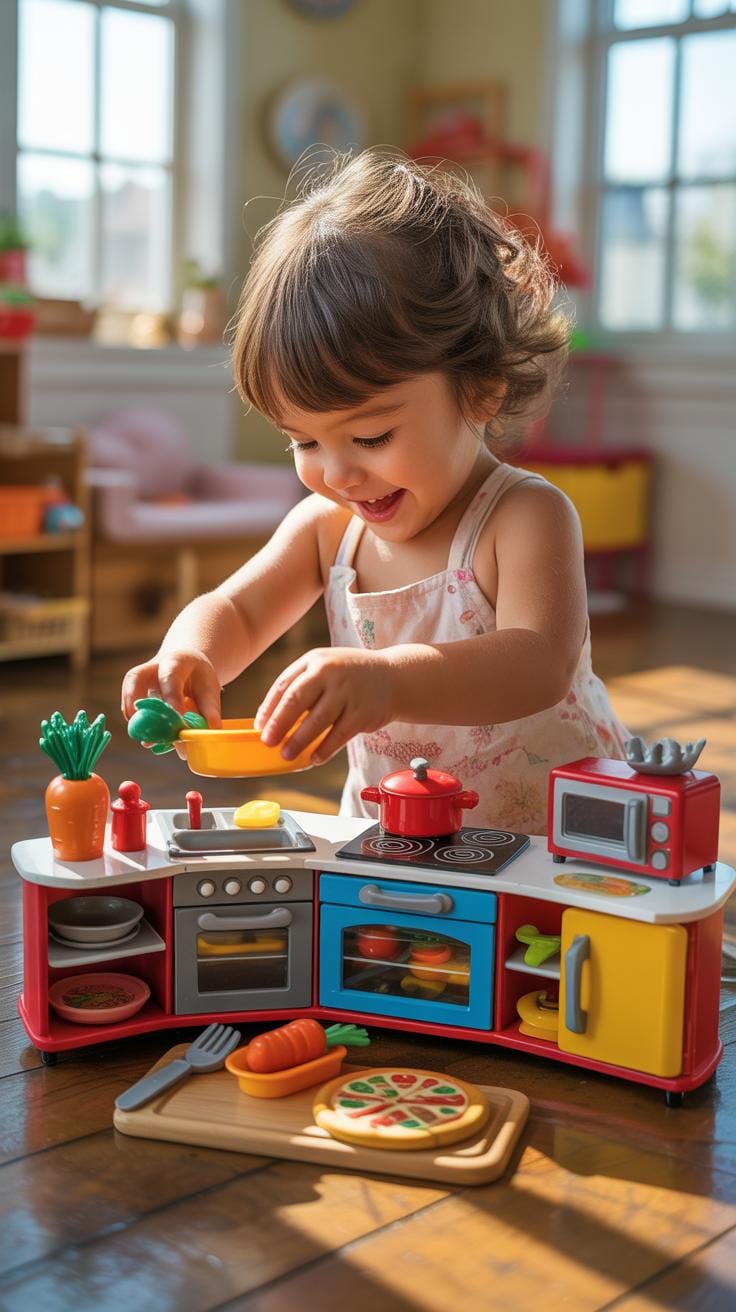
Durability dictates the lifecycle of a Kitchen Set For Kids Toys. High-quality models use solid wood or high-density polymers to withstand heavy play. Prioritize units with integrated storage to organize small Kitchen Toys and accessories. A stable base prevents tipping during active sessions. Look for hardware like metal hinges and rotating knobs that mimic real kitchen mechanics for a better user experience.
- Sturdy base construction: Robust materials like birch plywood or reinforced plastic ensure the unit remains upright. This stability is critical when children apply downward pressure on countertops or open heavy oven doors during play.
- Ample storage for secret toys: Dedicated cabinets and drawers allow children to hide Food Toys and specialized gadgets. Systematic storage teaches organization and keeps the play area clear of debris while protecting smaller, fragile components.
- Realistic door hinges and knobs: Functional hardware improves tactile feedback during Toy Cooking. Spring-loaded hinges and clicking dials provide sensory rewards. These mechanical details simulate the resistance and sounds found in professional-grade adult kitchen environments.
- Removable sink for easy cleaning: A detachable plastic basin allows parents to sanitize the area after use with real water or messy Food Cooking Toys. Hygiene is vital in play environments to prevent the buildup of bacteria or grime.
- Modular accessory hooks: Built-in pegs or rails provide immediate access to spatulas and spoons. This design feature maximizes vertical space and keeps essential Cooking Toys For Kids within reach during fast-paced roleplay scenarios.
Effective Kids Kitchen Toy Design maximizes the utility of every inch. Look for magnetic latches that keep doors closed securely. Countertop height should allow for a natural arm position to prevent fatigue. Quality sets often include extra shelving for displaying Kitchen Toys For Kids. Choosing a model with a neutral palette ensures it blends into modern home decor without sacrificing the fun of play.
Matching Age Appropriateness To Design
Selecting the right height is the first step in successful Toy Cooking. Toddlers require low, open shelving that prevents pinched fingers. Modern design movements favor open-concept layouts for younger users to improve visibility. Avoid sets with small, detachable parts like plastic grapes or tiny buttons for children under three. These items pose significant choking risks despite their appeal as realistic Food Toys.
Scale determines how effectively a child can engage with Kitchen Toys. School-aged children need taller countertops and more complex features like pretend ice makers or digital displays. This age group benefits from Cooking With Toys that simulate adult tasks with high precision. Ensure the materials meet safety standards like ASTM F963 to guarantee non-toxic finishes. Proper sizing prevents strain and encourages longer periods of focused play.
Organizing Your Kitchen Secret Toys For Maximum Fun
Effective Storage Solutions In Drawers
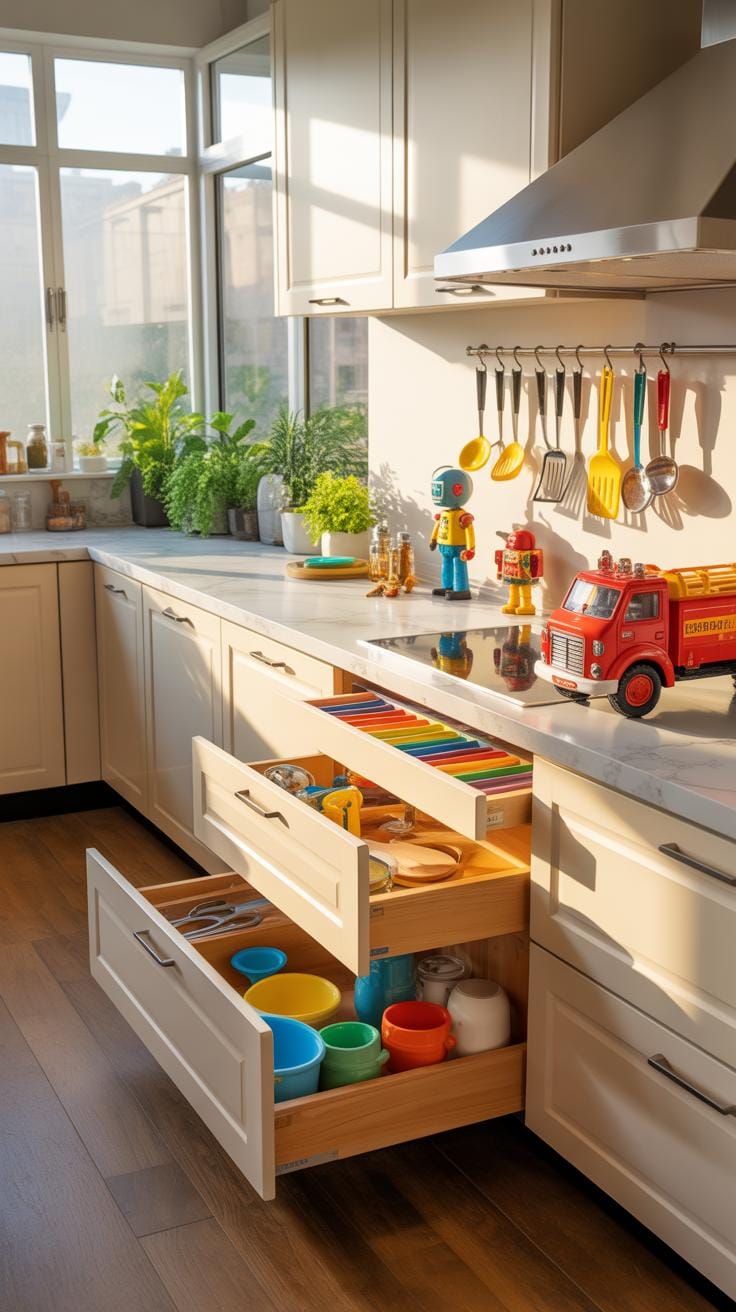
Strategic placement of Kitchen Toys For Kids within lower cabinets ensures safe and easy access. Use heavy-duty plastic bins to divide the space. Labeling each container with pictures and words helps toddlers identify where Food Toys belong. High-quality Kids Kitchen Toy Design focuses on ergonomics and accessibility. Clear boundaries prevent clutter from overwhelming the room and allow children to manage their own play area during Toy Cooking sessions.
Teaching children to sort Kitchen Toys by function builds cognitive skills. Group Food Cooking Toys together in one drawer while placing pans in another. This system makes clean-up time an educational task rather than a chore. Maintaining a Kitchen Set For Kids Toys requires durable dividers that withstand constant movement. Systematic organization ensures that every secret toy remains functional and easy to locate for immediate use during daily activities.
Rotating Toy Selections For New Discoveries
Storage rotation prevents boredom and extends the life of Cooking Toys For Kids. Store half of the collection in a closet and swap items every month. This tactic keeps the presence of Kitchen Toys exciting for the child. When children rediscover forgotten items, they engage in deeper play. Limiting the number of Cooking With Toys options at one time reduces sensory overload and encourages more focused creative interaction.
A fresh set of Food Toys every few weeks stimulates the imagination. Use the top drawers for seasonal items and move them to lower levels periodically. This strategy maximizes the impact of your Kids Kitchen Toy Design by keeping the environment dynamic. Rotating a Kitchen Set For Kids Toys ensures that pieces stay in good condition. Parents maintain a sense of novelty and surprise which keeps the child interested in their play space.
Frequently Asked Questions

What exactly are kitchen secret toys and why are they becoming popular in home design?
Kitchen secret toys refer to specialized, hidden gadgets and high-tech organizational tools integrated directly into cabinetry to enhance functionality. They are gaining popularity because they allow homeowners to maintain a minimalist, clutter-free aesthetic while keeping powerful tools at their fingertips. From motorized spice racks to hidden charging stations, these clever additions transform a standard U-shaped kitchen into a high-performance space that feels both magical and highly efficient for daily cooking tasks.
How can I incorporate hidden features into my existing U-shaped kitchen layout?
To successfully integrate kitchen secret toys into an existing layout, start by identifying underutilized gaps, such as the space behind toe kicks or deep corner cabinets. You can install pull-out workstations, pop-up power outlets, or custom drawer inserts designed for specific appliances. Working with a custom cabinet maker allows you to tuck away bulky mixers or espresso machines, ensuring your counters remain clear while keeping your favorite tools easily accessible.
Is it possible to create a high-tech kitchen with clever hidden gadgets on a limited budget?
Absolutely! You don’t need a massive renovation budget to enjoy the convenience of kitchen secret toys. Many affordable DIY solutions exist, such as tension-rod dividers, magnetic strips hidden inside cabinet doors, or aftermarket slide-out organizers. By prioritizing one or two high-impact areas—like a hidden coffee station or a tiered drawer organizer—you can achieve a sophisticated, custom feel that maximizes your kitchen’s potential without the hefty price tag of a full custom remodel.