
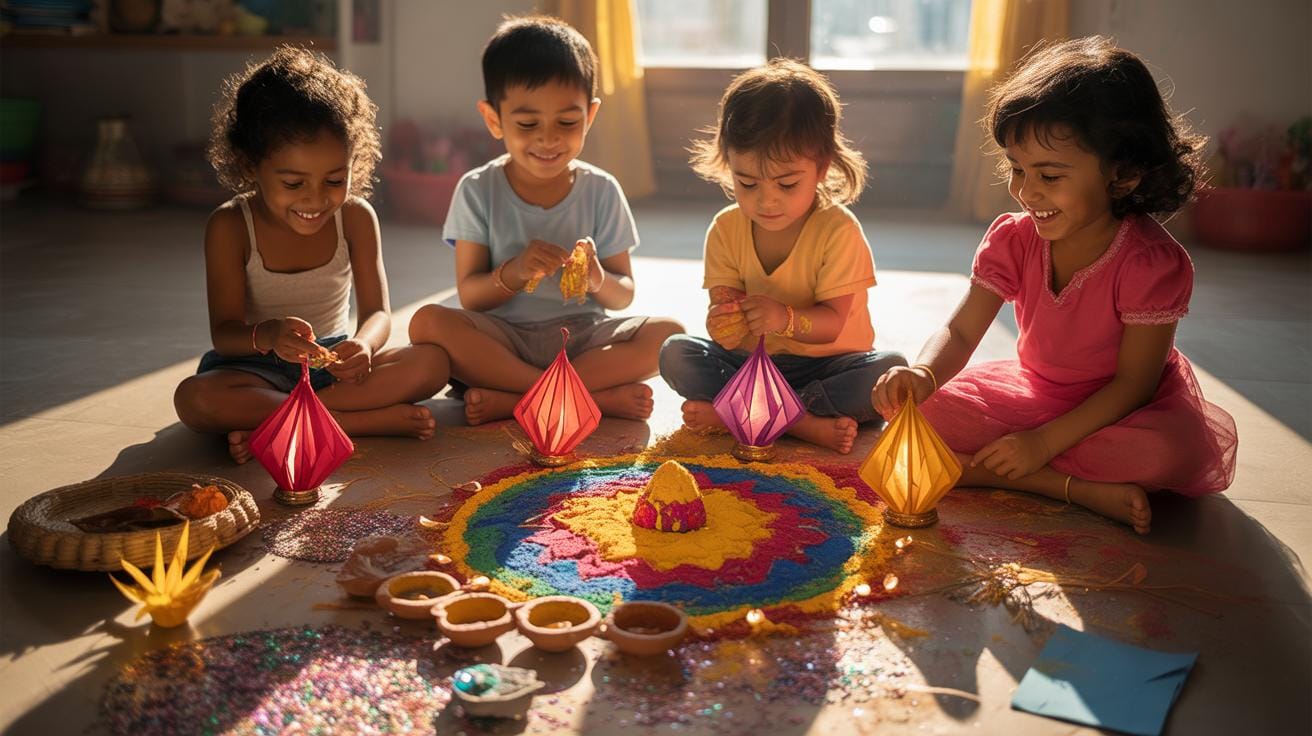
Creative DIY Diwali Decorations for Kids
Creative DIY Diwali decorations for kids using Diwali craft techniques offer a fun and educational way to celebrate the Festival of Lights. Kids can engage in making beautiful crafts that light up their homes and homes of their friends and family. These activities help children connect with the cultural significance of Diwali while expressing their creativity.
This article will show you easy and practical Diwali craft ideas suitable for children. You will learn about the materials needed and get a simple step-by-step guide for crafting decorations that brighten the festival mood. With these crafts, you can involve your kids in meaningful and memorable holiday preparations.
What Is Diwali Craft
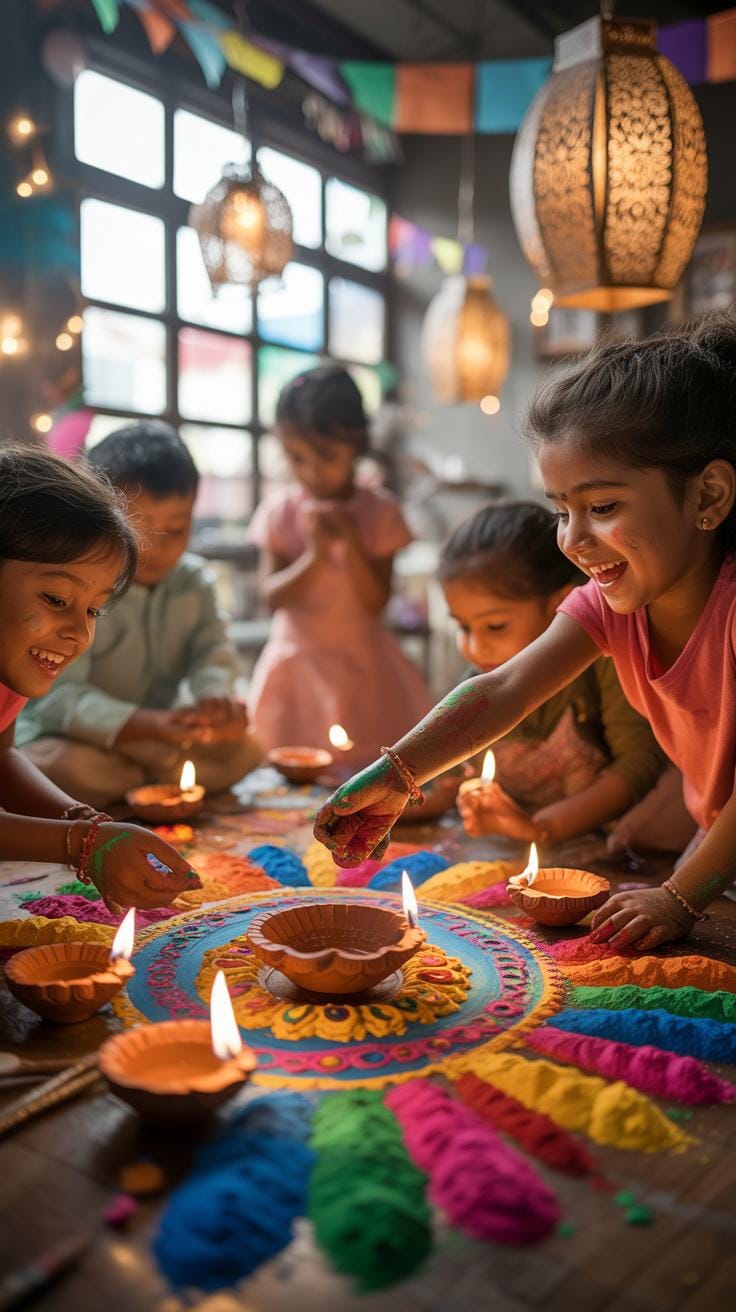
Diwali craft is a creative activity centered around making decorations and art for the Diwali festival. It includes making things like paper lanterns, colorful rangoli designs, and small diyas (oil lamps) to light up homes. This craft reflects Diwali’s core meaning – celebrating light overcoming darkness.
During Diwali, families try to brighten their surroundings, which makes the festival feel more joyful and special. Kids especially enjoy Diwali crafts because these activities let them express their creativity and connect with the traditions. Crafting is practical yet fun, combining learning about Diwali’s symbols with hands-on making. It feels rewarding for children and helps keep the cultural spirit alive through play and art.
Origins Of Diwali Crafts
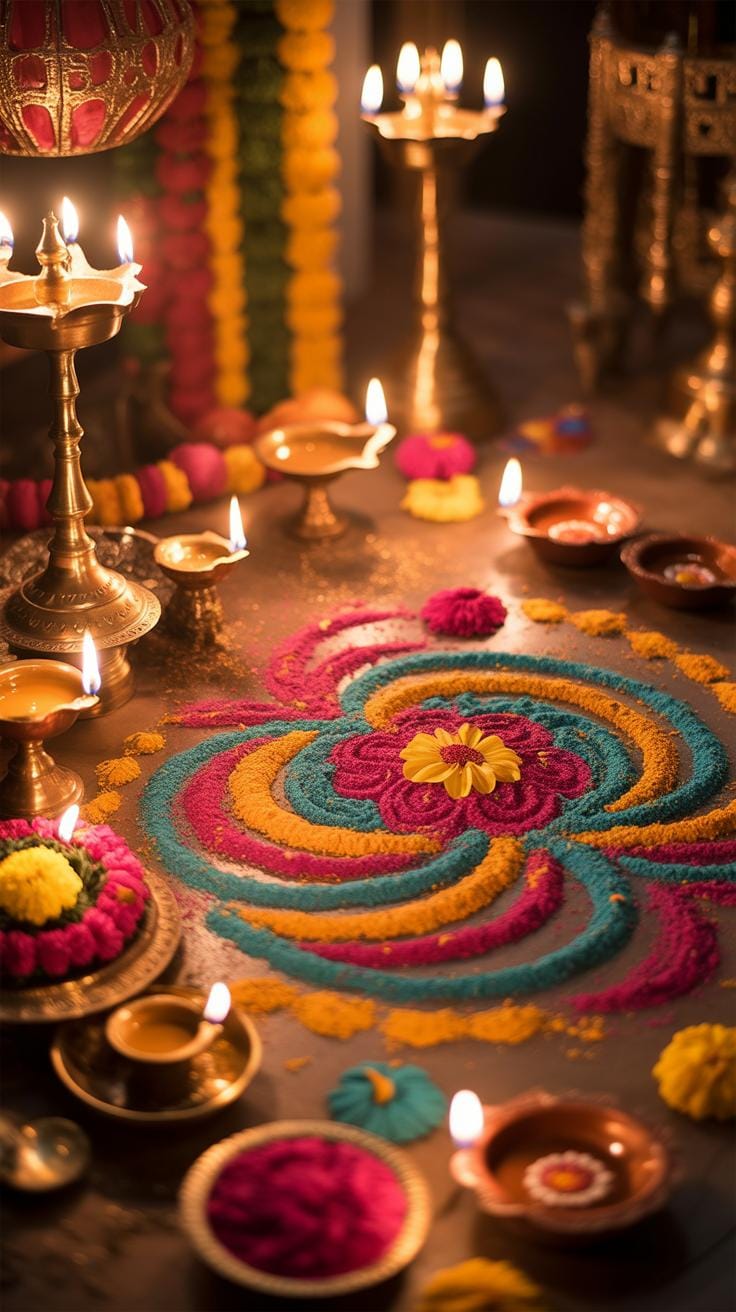

Diwali crafts have roots in ancient Indian traditions tied to the festival’s deeper meaning. Craft making links directly to rituals where light represents hope and prosperity. Historically, people decorated homes with natural materials and handcrafted lamps to invite the goddess Lakshmi, who symbolizes wealth and fortune.
These crafts were more than decoration; they were part of spiritual practice to show respect and welcome positivity. Over time, these traditions expanded beyond just practical rituals to become more artistic and diverse. Although the origins are traditional, the crafts evolved, reflecting local culture and available materials, making Diwali crafts dynamic and adaptable.
Role Of Crafts In Diwali
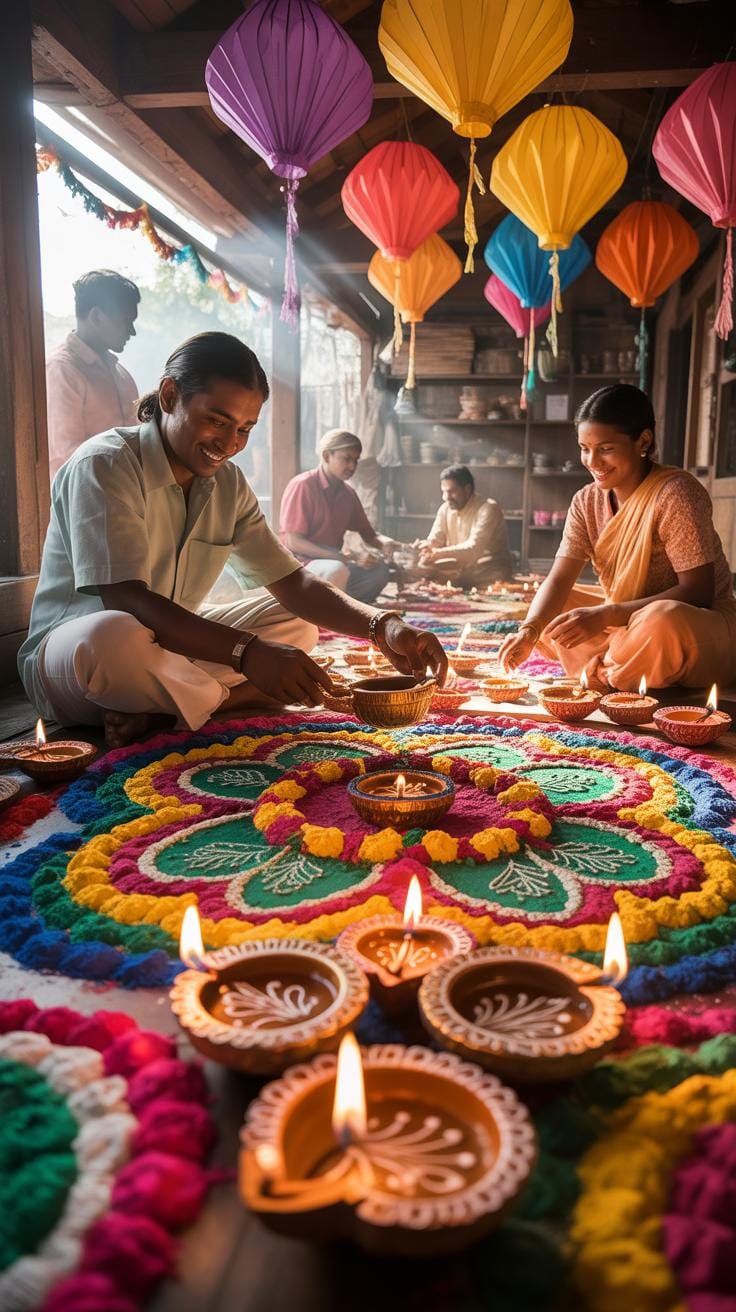
Crafts during Diwali are more than simple decorations. They set the festive mood, making homes feel welcoming and vibrant with light and color. They are key to family bonding, as making rangolis or paper lanterns often involves everyone—parents and children alike.
As kids participate in these crafts, they learn about Diwali’s values while having fun. Crafts make the festival accessible for children, engaging them in meaningful ways beyond just celebrations. Plus, crafting serves as a way to pass on culture through hands-on experience, keeping traditions fresh and alive year after year.
Why Make Diwali Crafts With Kids
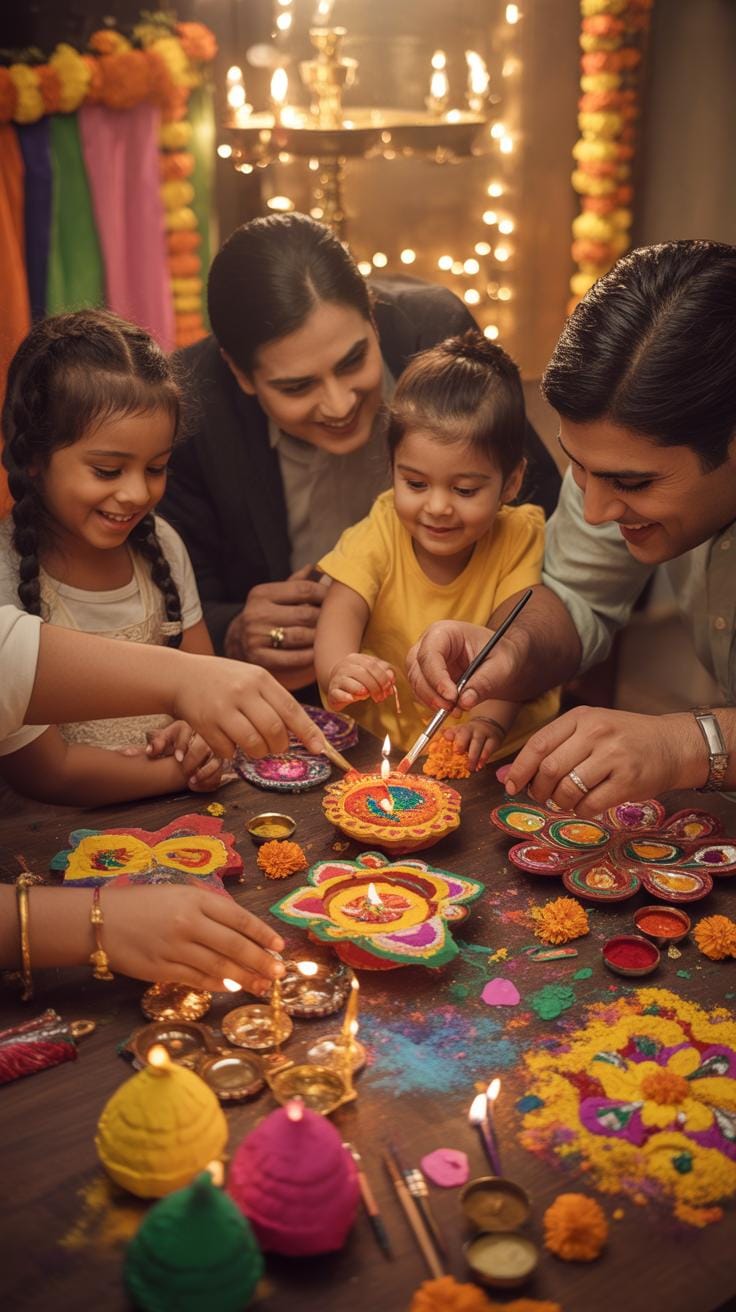

Making Diwali crafts with children offers more than just a fun pastime—it opens doors to learning and growth that might surprise you. When kids engage in hands-on activities during this festival, they are not only keeping tradition alive but also developing important skills. Think about how crafts can boost fine motor abilities—small hands maneuvering scissors, glue, and colors. There’s a lot going on cognitively.
From a cultural perspective, crafting ties kids directly to Diwali’s stories and symbols. It turns abstract ideas into tangible items: diyas, rangoli patterns, or paper lanterns. This interactive approach often makes the festival’s meaning clearer and creates emotional connections. I’ve noticed that when children make something themselves, they tend to ask questions about why we celebrate, which sparks valuable conversations about heritage.
Developmentally, crafting encourages patience and concentration. Kids experience a sense of achievement when they complete a project, which is a small but crucial confidence builder. Plus, it’s a calm activity amid Diwali’s excitement, offering a good balance.
Would you be surprised if I said that these moments also nurture empathy? While decorating or crafting, children often share ideas and materials, learning cooperation naturally. So, making Diwali crafts isn’t just about art; it’s about growth in many forms that might not be obvious at first glance.
Encouraging Creativity In Children
Diwali crafts offer a unique playground for children’s creativity. When kids work on creating diyas or festive decorations, they’re not just copying patterns; they’re inventing. Sometimes, a child might decide to mix colors in unexpected ways or use materials differently. This experimentation is a key part of developing imagination.

What’s interesting is how problem-solving weaves into these activities. For example, while crafting a paper lantern, a child might realize a certain fold doesn’t work as planned. They then try a new way, learning through trial and error. This hands-on challenge can enhance their ability to think flexibly, a skill useful beyond crafts.
Crafting during Diwali also allows children to express their personal take on the festival. Not every decoration has to follow tradition strictly—some kids add their own flair, which is perfectly fine. Encouraging this freedom can help them feel confident in their ideas, something that can translate into everyday creativity.
Teaching Cultural Values
Making Diwali crafts is a way for children to connect with the festival beyond just lights and sweets. When kids create decorations like rangoli or diyas, they engage directly with symbols that carry deep meaning. This hands-on interaction can make cultural values more understandable and memorable.
Crafting can prompt stories about Diwali’s origins, such as the return of Lord Rama to Ayodhya, which kids might find more engaging than just hearing the tale. It also introduces concepts like the victory of light over darkness, a value many families hold dear during this time.
Through these activities, children often develop pride in their heritage. They see the effort put into traditions and might better appreciate why families come together to celebrate. At times, this process can even inspire questions about other customs and ways to honor culture in everyday life.
Gathering Materials For Diwali Crafts
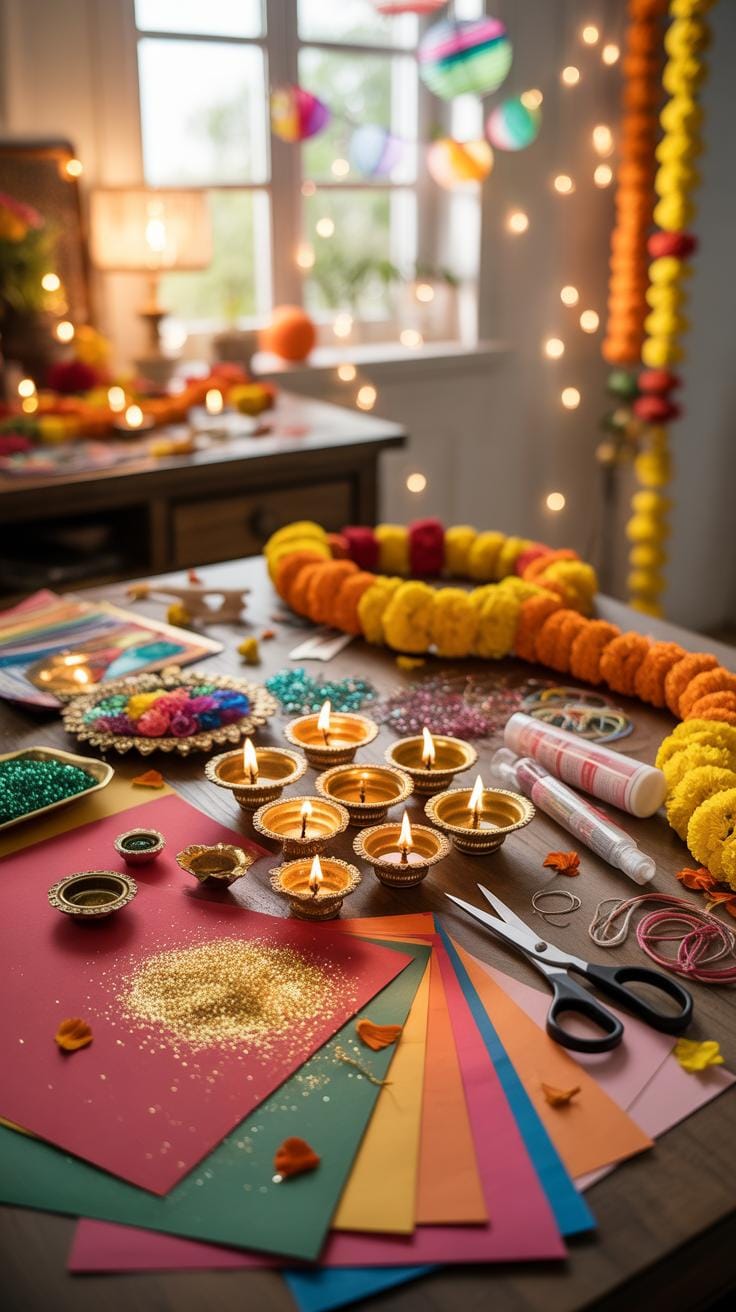

When getting ready for Diwali crafts with kids, the first step is gathering basic materials that are safe and easy to use. Common supplies include colored paper, glue sticks, child-safe scissors, non-toxic paints, and markers. You might also want to have some string or yarn, beads, and simple embellishments like sequins and stickers. These items work well for various Diwali decorations such as lanterns, rangoli patterns, and greeting cards.
Choosing the right tools matters since kids’ hands are still developing coordination. For example, blunt scissors avoid accidents, and washable glue makes clean-up simpler. Also, avoid tiny beads or anything that could be a choking hazard if you’re working with very young children. Sometimes, simple household items—like old magazines or fabric scraps—can add texture and color without extra expense.
Wondering where to find these materials? Local craft stores often have dedicated kids’ sections with affordable kits. Dollar stores and discount retailers can also surprise you with useful finds. Besides, thrift shops or even a quick stroll around your home can turn up plenty of craft-worthy leftovers. I’ve found that keeping an eye out for sales before Diwali helps stretch the budget without missing out on fun supplies. Overall, the goal is to keep things simple, safe, and within reach for anyone eager to start crafting.
How To Make Basic Diwali Decorations
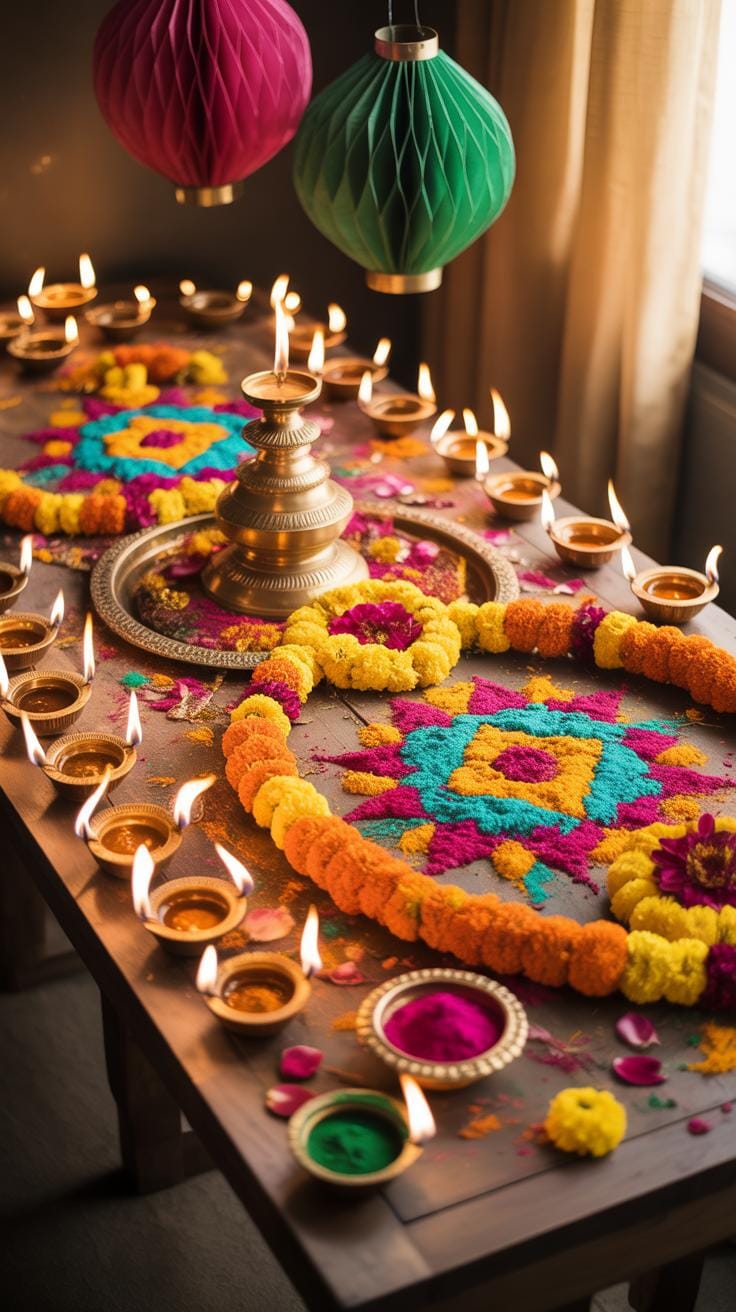
Making classic Diwali decorations with kids can be rewarding, even if you’re not an expert crafter. Start with small, manageable projects like diyas, paper lanterns, or simple rangoli designs that just need colored powders or chalk. Let’s break it down:

For diyas, you’ll need clay or thick paper, some paint, and a small wick with oil or a battery-operated light. Shape the clay into small bowls with a shallow well in the center—kids usually love molding the clay themselves, even if it gets messy. Paper diyas, on the other hand, can be folded from colored sheets and glued carefully. Testing which materials hold up better might be a bit trial-and-error, but that’s part of the fun.
Paper lanterns are surprisingly easy to create. Use brightly colored paper, scissors (with supervision), and glue. First, fold the paper in half lengthwise, cut parallel slits but don’t cut all the way through, then unfold and roll into a cylinder. The slits create the classic lantern look once it’s glued shut. Kids can decorate these with markers, stickers, or glitter to make each lantern unique.
Rangoli can be done with colored powders or colored sand, but for children, colored chalk or flower petals work nicely too. You might start with simple patterns like dots and circles, and then encourage them to try more complex shapes as they get comfortable.
What I find interesting is how these activities not only excite children but also help them remember the meaning behind the decorations. Perhaps you’ll notice they keep their favorite crafts somewhere special, revealing how much those simple projects matter to them.
Creating Diyas With Clay Or Paper
When kids make diyas, it’s best to use air-dry clay so it’s safe and doesn’t require an oven. Show them how to roll a small ball and press it flat, then push a thumb in the center to form the bowl. The shapes don’t have to be perfect — irregularities add charm.

If clay feels too messy, paper diyas are a good alternative. Cut out petal or teardrop shapes, then layer and glue them around a circle base. Let children paint their diyas with bright colors or metallic paints that mimic traditional brass ones.
Another tip: add some sequins or beads for sparkle but be cautious with small pieces if younger kids are helping. These diyas can later be safely lit with LED tea lights instead of oil to avoid accidents.
Making Paper Lanterns
Paper lanterns are a quick way to brighten your home for Diwali. Start with rectangular colored papers about 8 by 12 inches. Fold lengthwise, cut slits inside the fold — about an inch apart — staying careful not to cut through to the ends.
Unfold and gently curl the paper so the two shorter edges meet, securing with glue or tape. The slits then form the classic lantern pattern. Kids can personalize lanterns by adding stickers or drawing patterns with markers before assembling.
Hang the lanterns using string or thread, maybe even link several to make a colorful garland. They’re lightweight, so you can hang them anywhere, indoors or outdoors. This process is simple but feels oddly festive—like you made a little piece of the celebration yourself.
Diwali Craft Mistakes To Avoid
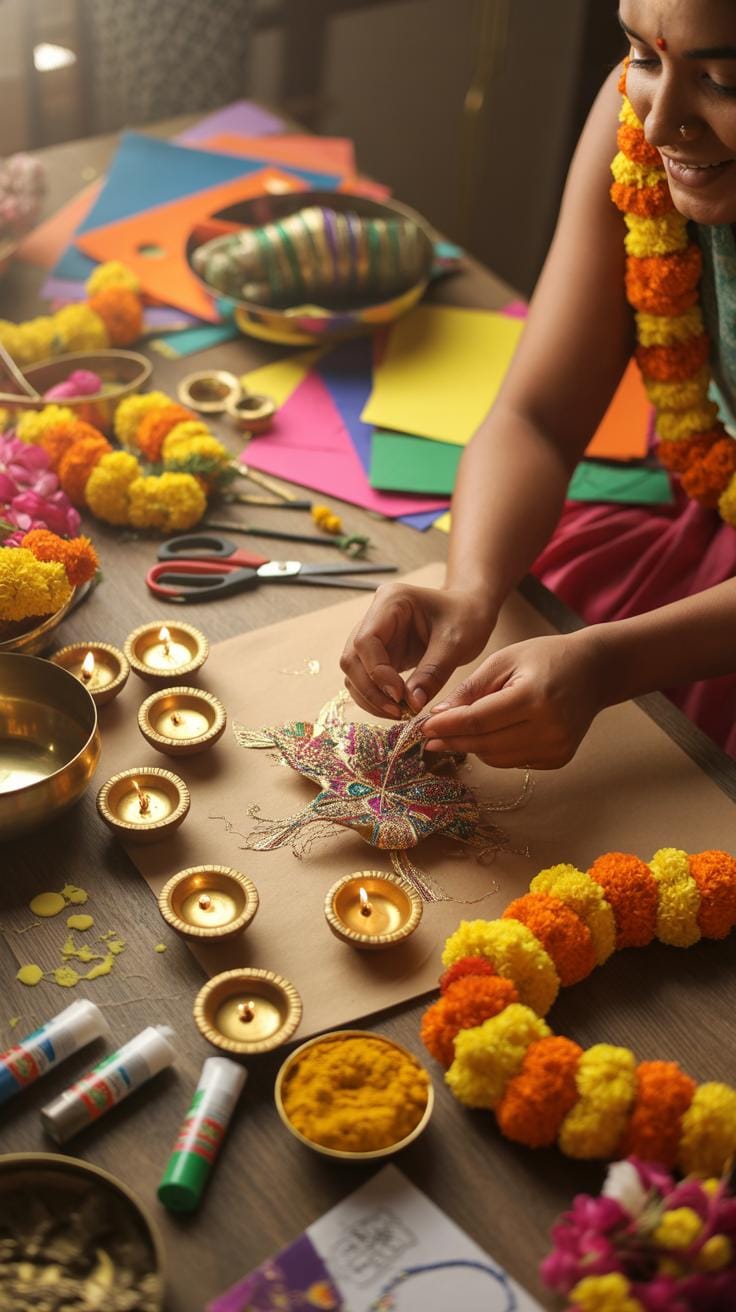

When you dive into making Diwali crafts with kids, a few things can easily go wrong. One common mishap is overusing glue or paint. It might seem like more glue will make the project sturdier or extra paint will make colors pop, but often it just ruins the texture or leaves a soggy mess. Instead, try using small dots or thin layers of glue and spread paint carefully with a brush or sponge. Waiting a moment between layers helps too—patience pays off here.
Another frequent issue involves the materials we choose. Kids are curious, but that means they might put things in their mouths or get allergic reactions without us realizing. Some glitters, for example, contain tiny particles that can be harmful if ingested or irritating if inhaled. Sharp edges from certain craft tools or decorations can also cause injuries. It’s good to stick to non-toxic paints, child-safe scissors, and large-sized decorations that don’t pose choking risks.
Have you ever noticed how a simple switch to safer materials makes the whole crafting experience calmer? It’s easy to overlook these details in the excitement of making, but they really matter when kids are involved. If a mistake happens, like too much glue causing a section to peel, quickly blot the excess glue or use a damp cloth to wipe off extra paint before it dries. Small fixes can save your work and keep spirits high.
Compare Diyas And Rangoli For Decorations
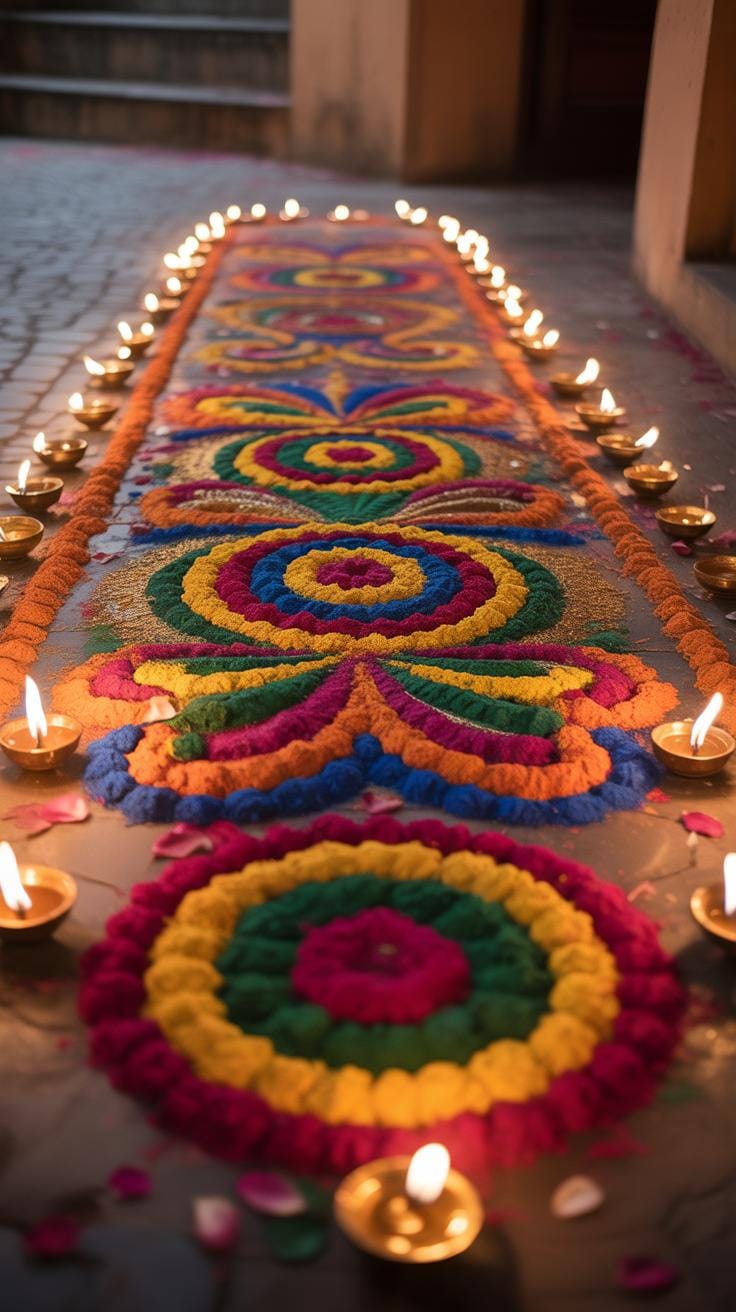
Materials Needed For Diyas Vs Rangoli
Diyas are small, oil-filled lamps usually made from clay. To create diyas, you’ll need clay molds, cotton wicks, and oil such as mustard or ghee. Sometimes, kids decorate these with paint, glitter, or beads for added charm. Crafting diyas involves shaping the clay yourself or using pre-made ones, then assembling and decorating them.

Rangoli, by contrast, relies on more varied materials. Basic rangoli requires colored powders like rice flour, colored sand, or rock powder. Sometimes flower petals or chalk are used, too. The technique here is more about creating patterns on flat surfaces by carefully placing or drawing these materials. It’s less about building something physical, more about arranging colors and shapes.
Visual Impact And Placement
Diyas emit a warm, flickering light that immediately draws the eye. They are often placed along staircases, windowsills, or doorways. Their glowing presence invites a sense of warmth and spirituality — visually captivating in dim or dark settings. Kids can line a pathway with diyas to light up the night in a simple yet meaningful way.
Rangoli creates a visual anchor on the ground level, often found at the main entrance of a home or near the pooja area. Its colorful patterns contribute a joyful, festive tone from the moment you step inside. Unlike diyas, rangoli doesn’t light up physically but enhances the décor with vibrant hues and intricate designs. The colorful contrast with the floor makes it stand out distinctly.
While diyas focus on illumination and rangoli on visual beauty, both share the goal of welcoming auspiciousness and joy. You might wonder which kids find more engaging — crafting delicate diyas or painting bold rangoli patterns? Probably both, depending on the mood and skill level.
Checklist For Hosting A Diwali Craft Day
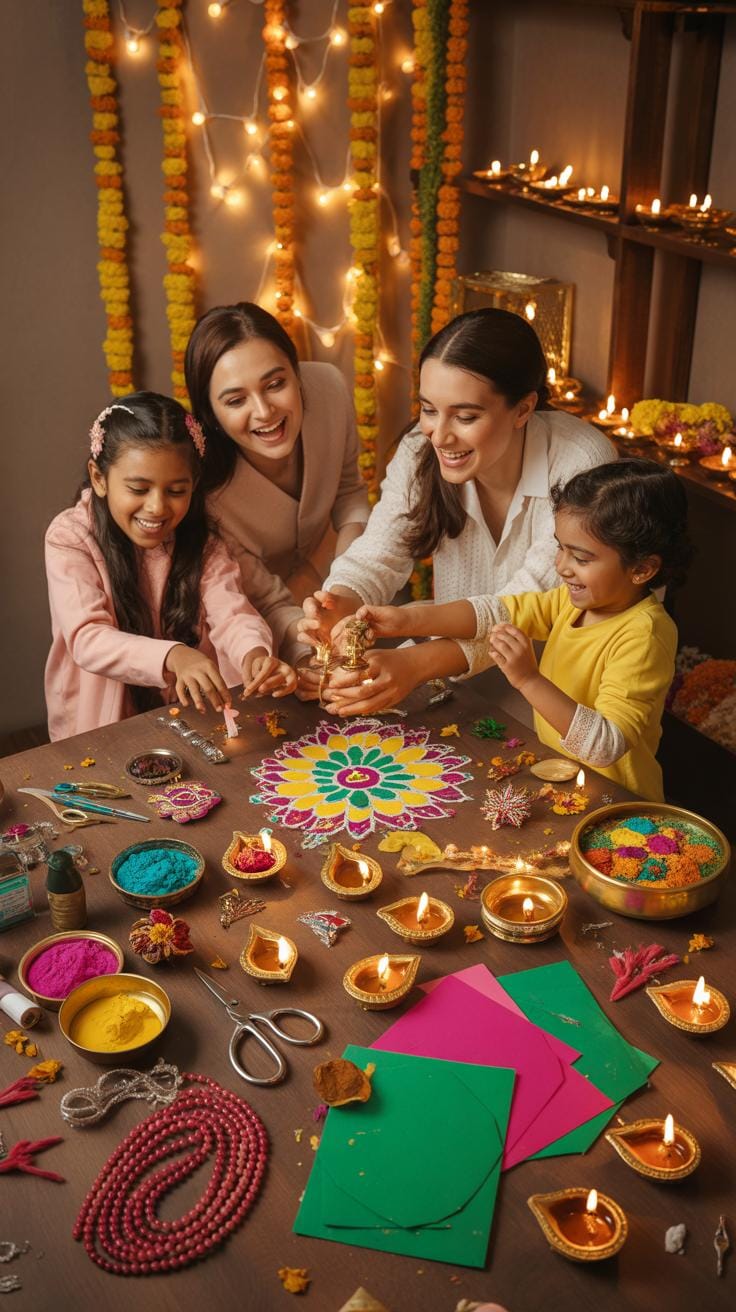
Setting up a Diwali craft session for kids involves a few key steps that help things run smoothly. First, gather materials like colored paper, glue, scissors (kid-friendly ones, please), glitter, and safe paints. Don’t forget simple decorations like strings and beads that can add flair. Think about providing templates or examples to guide little hands and spark ideas.
Next, choose a spacious area—perhaps a large table or a cleared floor spot—that can handle a bit of mess. Cover surfaces with old newspapers or a plastic sheet to keep cleanup manageable. Have cleaning supplies handy for quick wipe-downs. Instructions should be clear and simple; maybe demonstrate the steps first or use pictures to show outcomes.
Finally, plan your cleanup strategy ahead. Have bins or bags for trash and a spot for finished crafts to dry or be displayed. That way, the fun doesn’t end in chaos.
Preparing The Craft Space
Creating a safe and tidy workspace is more than just clearing the table. Arrange materials in small containers to avoid spills, and keep scissors or sharp items out of easy reach unless supervised closely. A bright, well-lit area helps kids see their work better—and reduces frustration.
Consider seating that fits their height. Sitting on the floor on mats can be comfy but might get messy. Chairs and tables encourage better posture and control. Also, keep distractions away—a quiet corner or a separate room often works best for keeping focus during craft time.
Keeping Kids Engaged And Safe
Kids’ attention spans can be, well, fleeting. It helps to mix up activities or switch between crafts that take different amounts of time. Have little breaks with some chatter or a quick game to reset their energy. Watch closely, especially when scissors or small beads are involved—accidents happen so fast.
Encourage sharing and teamwork—it keeps the mood light and the energy positive. And be ready to jump in with praise or help. Sometimes, just asking questions about what they’re making pulls them back into focus.
Example Diyali Craft Projects To Try
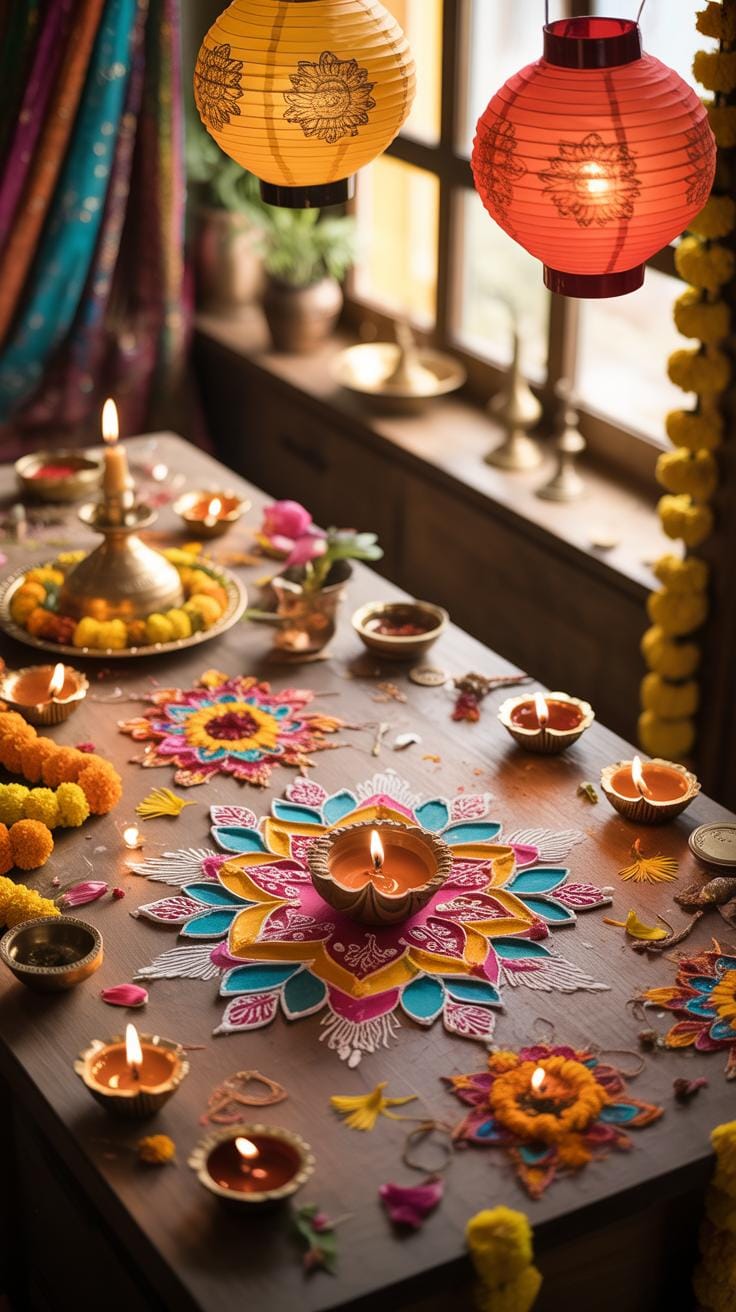
Engaging kids in Diwali crafts can be quite fun and straightforward. A popular project that suits children of nearly any age is making handmade paper diyas. You only need colored paper, scissors, and glue for this. Cut the paper into petal shapes, then fold and glue them together to form a diya shape. Kids enjoy decorating these with sequins or glitter, which adds a bit of sparkle, perfect for the festival of lights.
Then there is colorful rangoli using chalk—an excellent way for younger children to participate in outdoor decorating. Using chalk on floors or sidewalks, kids can create simple geometric patterns or hearts, flowers, and stars. Since chalk is easy to control, even toddlers can join in, making each design personal and unique. This activity also offers a chance to talk about the cultural importance of rangoli as a welcoming symbol during the festival.
Both these projects require minimal materials and supervision, letting kids express their creativity while learning about Diwali traditions. Maybe try setting up a small craft station at home or in classrooms and watch how different each child’s interpretation of these crafts can be.
Conclusions
Diwali crafts for kids provide a wonderful chance to spend quality time together while teaching children about this important festival. By using simple materials and following easy steps, anyone can create bright and cheerful decorations. These crafts make the festival more special and bring joy to everyone involved.
Remember to encourage your child’s creativity and patience throughout the crafting process. These homemade decorations not only beautify your home but also build lasting memories of Diwali celebrations filled with fun and learning. Start gathering your supplies and enjoy crafting with your kids today.